The year 2020 delivered an unprecedented stress test to the US trucking sector. A global pandemic triggered abrupt demand shifts, liquidity challenges, and labor dynamics that tested the resilience of fleets across sizes and regions. For logistics and freight operators, construction and engineering firms, fleet managers, and food & beverage distributors, understanding the drivers of disruption is essential to sustaining service levels, managing risk, and preserving cash flow. This piece synthesizes the core findings from the initial research and translates them into actionable insights. Each chapter examines a distinct facet of 2020—market volatility, financial strain, labor shortages, and shifting cost and demand patterns—while consistently tying back to practical implications for operations, procurement, and strategic planning. By connecting these threads, readers can map targeted responses to stabilise networks, protect margins, and position for recovery as the market evolves.
Weathering the Shock: Market Volatility and the Demand Collapse in U.S. Trucking, 2020
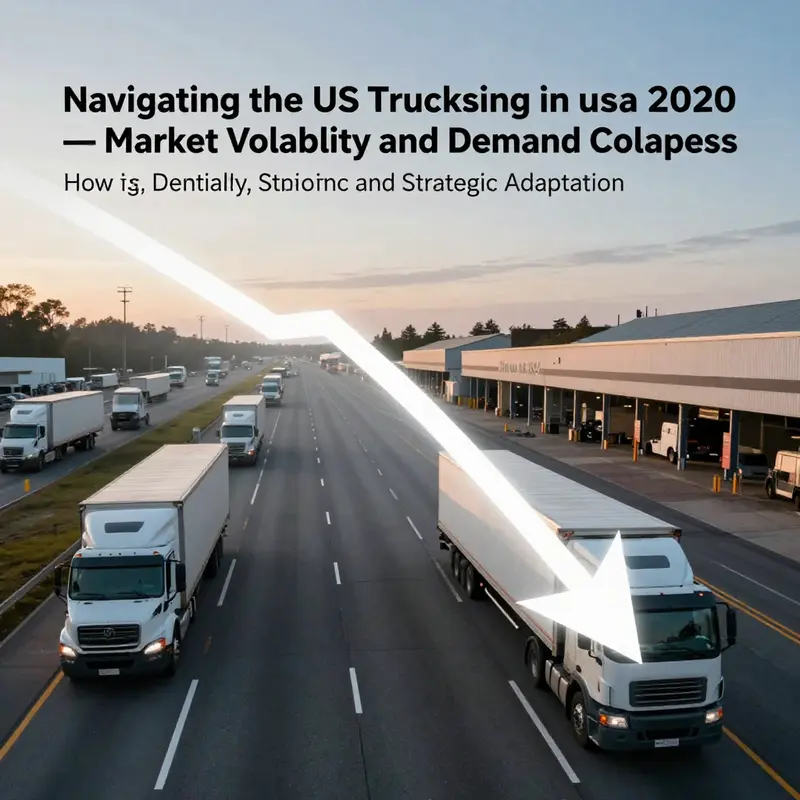
The year 2020 began with a health crisis that would soon ripple through every corner of the economy. For the U.S. trucking industry, the initial weeks were not about capacity or routes but about a sudden signal that the everything-everyday flow of goods could stall. The pandemic disrupted factories, shuttered stores, and altered consumer behavior in ways that no one could have anticipated. Lockdowns and fear converged to reshape how freight moved. What followed was a profound shift in the market’s rhythm, where volatility replaced predictability and the usual patterns of demand, pricing, and utilization were upended. In retrospect, 2020 can be read as a stress test for a system that had long relied on a balance between capacity and demand, a balance that proved extremely delicate when the public health crisis compressed multiple demand drivers at once. The result was a freight landscape marked by volatility, abrupt shifts in load availability, and a reevaluation of what it means to operate a trucking business in a market where today’s certainty can become tomorrow’s uncertainty in a matter of weeks.
At the core of the disruption was demand. As consumer activity slowed and nonessential manufacturing paused, freight volumes plummeted. The collapse did not unfold uniformly; it hit segments with different intensity, but the consensus across observers was clear: the market experienced a steep, rapid downturn in freight demand. This manifested in the spot market, where many operators depend on short-term, flexible bookings. In those conditions, pricing and margins became highly sensitive to shifts in headline news, government policy, and the pace of reopening or tightening across states. The magnitude of the downturn was underscored by the tendency of demand indicators to spike and retreat with the cadence of policy responses and consumer sentiment. A leading load-demand index fell to levels not seen in the period’s early years, signaling a contraction across the market that was deeper and more prolonged than many operators had anticipated. The downturn did not merely pause activity; it compressed the entire revenue fabric that carriers rely on to cover fixed costs and fuel the growth needed to weather downturns.
The consequences extended beyond the top line. For many operators, especially those with smaller fleets and thinner balance sheets, the rapid shift in demand translated into a brutal squeeze on profitability. Revenue declined quickly while fixed costs—loan payments, insurance, vehicle maintenance, and driver compensation—remained largely unchanged. The result was a tightening cycle in which margins eroded fast, threatening the very viability of smaller firms that lack deep reserves or diversified revenue streams. The disruption did not occur in isolation. It arrived amid a broader context of rising operating costs in the years that followed, including insurance and fuel, which began to tilt the economics of running a fleet toward the unfavorable side of the ledger even before volumes fully recovered. The 2020 experience laid bare a structural tension: the business model that had thrived on relatively steady demand and high utilization could falter quickly when demand collapsed, exposing vulnerabilities that had often been masked by a longer period of healthy freight activity.
From the vantage point of what happened to fleets themselves, 2020 was a year that separated the resilient from the fragile. Data from industry observers highlighted a surge in fleet closures that year. A notable handful of fleets shut their doors, with counts reaching into the low thousands and a year-over-year increase that surprised many analysts. The pattern was not evenly distributed across the market. Smaller operators—those with six or fewer trucks—comprised the vast majority of the shutdowns and faced outsized risk from sudden revenue drops. Their smaller cash buffers and limited access to capital made it harder to bridge the gap between fixed costs and curtailed revenue. The year’s toll on small operators was a stark reminder of how much the market relies on the health of a broad base of independent carriers, not just the large, integrated fleets. Even within larger firms, the mood shifted as the environment forced a reevaluation of routing, capacity planning, and capital allocation. The stress catalyzed a broader conversation about how to achieve greater resilience—through stronger balance sheets, diversified revenue streams, and more stable capacity arrangements in a marketplace that was changing faster than ever.
The labor picture in 2020 added another layer of complexity to an industry already navigating extraordinary market forces. The trucking sector had long contended with a driver shortage, a structural challenge that had lingered for years. In 2020, that dynamic intensified. The pool of qualified drivers remained finite, and the pandemic introduced health concerns and personal considerations that further narrowed the available workforce. Even as demand contracted, the industry’s labor demand did not disappear; in many cases, carriers increased efficiency expectations or adjusted operations in ways that tested the limits of the existing workforce. The result was a profession that, even in downturn, faced a dissonance between the supply of drivers and the demand for their services. This tension amplified the financial stress for carriers that had to maintain driver wages and benefits while contending with lower load volumes. The challenge of keeping qualified drivers on the road underscored why stable capacity management and workforce planning would become a central theme for the years ahead.
In this evolving mix of demand volatility and cost dynamics, it became clear that the industry would not immediately bounce back to pre-pandemic norms. The margins that could be earned in a strong market were eroded by a combination of lower volumes and rising costs. Costs per mile, a key profitability metric for carriers, began to trend higher as the market absorbed the uncertainty and the structural shifts in the operating environment. Fuel, maintenance, insurance, and regulatory costs were all part of a broader pressure cooker that could compress margins just as soon as volumes started to move in a more favorable direction. In the period that followed, those costs would remain elevated relative to the long-run average, complicating recovery plans for fleets of all sizes. The finance levers available to smaller operators—such as access to affordable credit, hedging for fuel, and insurance arrangements—proved crucial in determining how quickly a carrier could adapt or whether it would be forced to restructure.
The market’s response to this operating context also reflected a broader structural shift in how freight could be allocated and managed. Large, more capitalized players began to gain an edge in maneuvering through uncertain times. They could lean on deeper pockets to withstand revenue volatility, adjust capacity more rapidly, and invest in information systems that improved visibility into where demand would emerge next. Meanwhile, the rise of digital freight platforms began to alter the economics of finding loads, matching capacity with demand, and reducing the friction costs associated with dispatch and fuel consumption. These platforms, by offering a more flexible way to connect shippers with carriers, presented a pathway—though not a guaranteed remedy—for adapting to the volatility that defined 2020. The experience underscored the importance of resilience, not simply as a short-term objective but as a core capability that would determine which firms could survive the next uncertain cycle.
The narrative of 2020 also carried implications for how industry participants thought about risk and hedging. With demand stuttering and costs fluctuating, the incentive to diversify revenue sources and to strengthen balance sheets became more pronounced. A more volatile market raises questions about how best to pursue long-term profitability: to chase rate gains in short-term markets, to lock in stable contracts with reliable customers, or to invest in technology and people that can cut costs and boost efficiency over a longer horizon. Each path carries trade-offs, and the choices made during or immediately after 2020 would influence the trajectory of the sector for years to come. In this sense, the year functioned less as a temporary setback and more as a catalyst for rethinking fundamental business models in trucking—an invitation to build buffer, flexibility, and strategic foresight into every aspect of fleet operations.
The wider industry narrative, while centered on the United States, also bore the imprint of global supply chain dynamics that were suddenly under stress. As manufacturing and retail began to recalibrate, the flows of goods that once moved with predictable cadence became more reactive to the evolving public-health landscape and policy responses. The result was a freight market that could swing quickly from excess capacity to a tight spot, with price signals that grew more sensitive to micro-shocks in demand. This volatility did not fade with the passing of months; rather, it reorganized the competitive landscape, elevating the importance of data-driven decision-making, prudent cost control, and robust risk-management practices. The stage was set for the next chapters, which would explore how the industry responded to these pressures—through labor strategies, capital allocation, and the emergence of technology-enabled approaches to capacity management.
For readers charting the arc from disruption to adaptation, this chapter offers two through-lines. First is the stark simplicity of demand: when consumers spend less, a significant slice of the trucking market must contend with reduced volumes, tighter margins, and a higher risk of insolvency. Second is the lesson in resilience: operators that could align capacity with uncertain demand, hedge against volatile costs, and leverage technology to stay connected to loads would be better positioned to navigate the subsequent years. The year 2020 did not merely reveal weaknesses; it highlighted pathways to survival that emphasized balance sheets, diversified earnings, and disciplined, data-informed strategies. As the industry moved beyond the nadir of the downturn, those insights would inform decisions about how to recruit and retain drivers, how to structure contracts that provide stability without sacrificing flexibility, and how to invest in capabilities that could weather future storms.
For context and deeper exploration of the macro dynamics involved, the discussion of economic trends impacting trailer orders provides a useful complement to this narrative. See economic-trends-impacting-trailer-orders for a broader lens on how fluctuations in demand, financing conditions, and equipment investment interact with the market’s capacity and pricing signals. As we move into the next chapters, the focus will shift to the labor dimension—the drivers, the retention challenges, and the workforce strategies that became central to sustaining operations in a world of persistent volatility. The following sections will unpack how a driver shortage persisted even as demand fell, why smaller operators faced amplified risk, and how firms managed the delicate act of keeping wheels turning when the balance sheet was under pressure.
External context and sources illuminate the broader consequences of 2020 beyond company-level outcomes. For a comprehensive view of fleet closures and the scale of operational exits during the year, the 2020 Fleet Shutdown data provide a grounded reference point that helps connect micro-level company experiences to the sector-wide reality. This external resource helps frame the magnitude of the disruption and the urgency with which operators and policymakers began to rethink capacity planning, risk management, and support mechanisms for smaller fleets. See the external resource: https://www.broughtoncapital.com/insights/2020-fleet-shutdown-report
Pressure, Loss, and Consolidation: How 2020 Rewired the U.S. Trucking Fleet
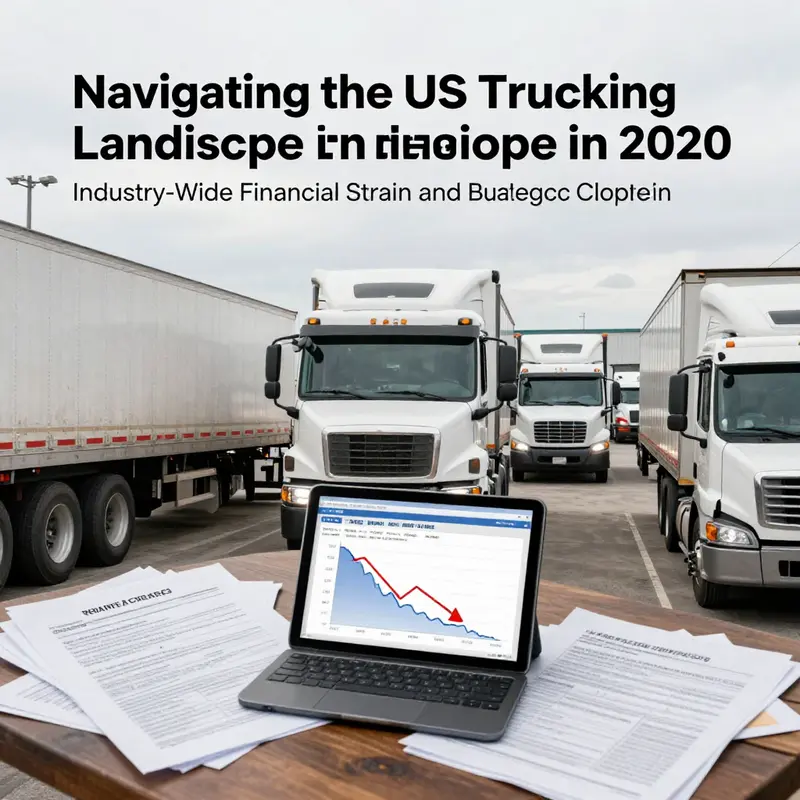
The year 2020 thrust the U.S. trucking industry into a crucible, testing fundamentals that had long defined its operation and profitability. The onset of the global pandemic jolted freight demand in a way that no forecast had prepared the sector to absorb. Across factories, distribution centers, and retail shelves, the flow of goods slowed to a trickle in many segments as lockdowns took hold and consumer behavior shifted overnight. The resulting demand shock was not simply a temporary dip; it redefined the risk profile of running a trucking business. In the second quarter, freight volumes plunged sharply, with some assessments indicating a peak to trough decline approaching forty percent in total cargo movement. That level of decline created a cascading set of consequences: revenue compression, thinning margins, and greater sensitivity to fixed costs like debt service, insurance, and driver wages. Carriers faced a stark choice between retrenchment and retooling, and the path most pursued by many was a ruthless emphasis on cash preservation, fleet optimization, and seeking any available relief that could bridge the gap between today’s cash burn and tomorrow’s demand rebound. It was a year that laid bare the fragility of a model built on continuous, steady growth and highlighted how external shocks could accelerate structural shifts that had been brewing for years. The immediate implication for policy makers, lenders, and fleet owners alike was clear: resilience would hinge on liquidity, adaptability, and the ability to reallocate capacity to match rapidly evolving needs without sacrificing safety or reliability.
Chapter 3: In a Tight Cab: Driver Shortages and Labor Turbulence Reshaping the U.S. Trucking Landscape in 2020
The year 2020 arrived with the trucking industry already carrying a heavy load of structural challenges, but the arrival of a global health crisis amplified those pressures in ways no one could have anticipated. The core tension in the American trucking economy that year was paradoxical: freight demand persisted or even grew in pockets, driven by the rise of e commerce and the persistent need for just in time deliveries, yet the supply of qualified drivers failed to keep pace. The result was a labor crisis that constrained capacity, stretched margins, and forced carriers to rethink how they recruit, train, and retain the people who keep cargo moving every day. At the heart of this chapter lies a simple truth: labor is not a single input you can adjust on a spreadsheet. It is a living system—one that dictates route planning, service reliability, and ultimately the level of risk a carrier can absorb during a shock to the market.
Long before the pandemic, the industry faced a chronic driver shortage. In 2020 this problem did not disappear; it intensified. The United States had a substantial pool of registered truck drivers, but estimates consistently pointed to a gap of tens of thousands of drivers needed to meet demand. The pandemic did not reduce the number of miles to be traveled or the number of deliveries required; if anything, it reframed what a reliable supply chain looked like under stress. The aging workforce emerged as a central factor. A sizeable segment of experienced drivers—many from the baby boomer generation—stood at or near retirement age, creating a widening gap that younger workers did not immediately fill. The industry had long known this demographic dynamic would matter, but the health crisis crystallized its impact in real time. The retirement spike did more than reduce headcount; it eroded the reservoir of tacit knowledge and dispatcher coordination that had evolved over decades.
The reluctance of younger workers to enter trucking was not new, but the timing in 2020 sharpened the alignment of incentives versus risk. For many in the younger generation, the job carried reputational costs: long hours, erratic home time, and the emotional toll of extended periods away from family. The perception of a physically demanding career, compounded by a highly regulated schedule and the variability of demand, made the profession less attractive in a climate where work-life balance acquired a new level of social value. The result was a reticence to commit to the lifestyle that trucking historically demanded. In practical terms, this translated into a thinner pipeline of new entrants stepping into the trainer roles, long-haul routes, and the complex logistical ecosystems that sustain modern supply chains. The consequence was a labor market that could not grow fast enough to offset retirements, attrition, and the fatigue that can accompany prolonged periods of intense demand.
Even when new drivers were recruited, retention proved elusive. The job did not just demand skill; it demanded consistency, resilience, and a readiness to manage strain. Turnover rates rose as carriers alternated between competitive pay offers and the lure of more flexible or less punitive work environments—especially for owner operators who faced higher financial risk yet could theoretically realize higher per mile earnings. The economics of the period underscored this tension. Carriers found themselves balancing the immediacy of meeting freight obligations against the longer horizon of building a stable, loyal driver base. The margins, already slender in many cases, eroded further as fixed costs remained stubbornly high. Insurance premiums continued to rise, and while diesel prices were not yet the brutal budgets-crippling force they would become in the subsequent years, the cost of operation was trending upward in a way that magnified the bite of any recruitment miscalculation.
In such a climate, the psychology of the driver experience mattered as much as the dollars offered per mile. Companies that could demonstrate clear home time, predictable schedules, and humane treatment began to separate themselves in a crowded field. This is not merely a tale of better pay; it is a narrative about the relationship between the worker and the operation. When dispatch and scheduling systems were opaque or inconsistent, drivers found themselves navigating detours, delays, and ambiguous expectations that fed dissatisfaction. The operational ripple effect was real: increased idle time for trucks, more complex utilization of assets, and a higher probability of late deliveries or missed windows for time sensitive loads. The need for better dispatch discipline, accurate load planning, and proactive communication became a central theme in the 2020 repair kit for the labor shortage.
Technology presented both a mirror and a lever in this context. Dispatch efficiency was not just about software; it was about rethinking the workflow that connected drivers to loads, to customers, and to back office support. The industry began deploying tools that could translate the vagaries of human scheduling into more predictable patterns. Real time telematics allowed dispatchers to monitor route progress and respond to disruptions with agility. Cloud based dispatch platforms mediated the exchange of information across a dispersed network of drivers, brokers, and shippers. Predictive maintenance systems reduced the risk of unexpected equipment failures that could strand a vehicle and its crew far from home base. All of these tools, when implemented with discipline, could partially offset the human capital deficit by squeezing more value from existing assets and reducing the variability that frustrates drivers and customers alike.
As the freight market evolved under pandemic conditions, some carriers explored a strategic shift toward more flexible work arrangements that could appeal to a different generation of workers who valued balance and consistency. The push toward owner operators and independent contractors persisted, driven by the potential for higher earnings per mile. Yet that path carried its own calculus of risk and responsibility. Independent contracts shift costs and workload decisions away from a single employer, increasing volatility for the driver who must manage everything from fuel and maintenance to compliance and insurance. For fleets, this meant a bifurcated labor model where steady company drivers and a growing cadre of independent operators coexisted, each with distinct incentives and risk profiles. The challenge was to keep the overall network coherent enough to deliver the reliability customers expected while not overextending the financial commitments required to sustain a broader, more flexible workforce.
In response to this complexity, the industry leaned harder into people centered strategies that could stabilize capacity and maintain service levels despite the seismic shifts in the labor market. Some operators began to treat recruiting as a full spectrum effort that included not only sign on bonuses and pay scales but also transparent career paths, mentorship programs, and enhanced safety and wellness initiatives. Retention programs shifted away from ad hoc incentives toward structured onboarding experiences that could reduce early turnover and accelerate ramp time for new hires. The sense that human capital is a company’s most valuable asset gained renewed emphasis, echoing a broader industry truth: the speed and quality with which a carrier can bring a novice into productive service largely determine its resilience in a year of disruption.
The literature and industry analyses from that period began to articulate a more mature understanding of what it would take to navigate the labor crisis over the longer horizon. Training costs emerged as a significant factor for fleets of all sizes. When turnover rises, so do the costs associated with recruiting, onboarding, and credentialing new drivers. Each new driver demands time from instructors, the allocation of mentorship resources, and potentially the use of more junior staff to supervise and guide. In a market where utilization and efficiency were directly tied to frictionless driver engagement, these costs could become a limiting factor that stifled growth or forced reductions in service. The tension between investing in people and maintaining short term profitability became a defining feature of strategic planning in 2020.
In navigating these turbid waters, fleets turned to a set of practical levers that could be scaled with resources already available or achievable in the near term. Efficient dispatching, as noted earlier, rose to the top of the list. By aligning loads more closely with driver availability, routes could be designed to minimize unnecessary detours, reduce idle time, and maximize the probability of on time deliveries. This, in turn, supported driver satisfaction by creating more predictable schedules and reducing the cognitive load associated with last minute changes. The discipline of route optimization, once the preserve of large carriers, began to trickle down to smaller fleets as cloud based solutions reduced the barriers to entry and the cost equations matured. Through these approaches, the industry sought to extract more productivity from a constrained workforce without compromising safety or service commitments.
The 2020 experience also highlighted a broader systemic issue: the need for a more stable pipeline of entrants who view trucking as a viable, long term career. Industry narratives increasingly stressed the importance of pediatric to adult education pipelines, community college partnerships, and employer led programs that could educate potential drivers about the realities and rewards of the occupation. The emphasis went beyond wages to consider home time, safety culture, training quality, and the pathways that lead from first exposure to sustained employment. In this sense, 2020 functioned as a catalyst, accelerating conversations about the social and organizational structures that can either attract or deter new workers. It prompted executives to ask whether their organizations were built for scalability in a labor-constrained age and whether their talent strategies could survive a sustained period of elevated engagement with the regulatory and safety expectations that govern the road.
The result of these converging pressures was not a simple victory for any one approach but a more nuanced set of outcomes. Some fleets found stability by investing deliberately in people, building robust onboarding, and implementing supportive retention strategies that reduced turnover. Others leaned into technology driven operations that could compensate for a lean staff while still preserving service reliability. Across the board, the most successful operators integrated people strategy with operational discipline, recognizing that the two are not mutually exclusive but mutually reinforcing. The 2020 experience thus reinforced a dual lesson for the industry: maintaining capacity in a volatile market requires both a steady supply of capable drivers and the enabling systems that magnify their effectiveness.
For readers exploring how leadership in trucking can address these challenges, a practical lens can be found in discussions about investing in people as a strategic lever. The idea is not to replace human labor with machines but to build a social and organizational architecture that makes the most of human talent. Routes and schedules become less brutal when dispatchers can rely on real time data and predictive models to foresee disruptions and reassign loads with minimal friction. Training programs that shorten ramp times and emphasize safety standards help new entrants feel confident and valued from day one. A workforce that perceives its organization as fair, supportive, and invested in its long term success is more likely to stay, even when the road is rocky. To those who want to explore the people side of this equation further, see an industry perspective on investing in people as a pathway for trucking fleets at the following resource: investing-in-people-a-new-path-for-trucking-fleets.
As the chain of events in 2020 unfolded, the labor crisis did more than shape hiring strategies. It influenced how fleets planned for the future of work in a sector where safety, reliability, and driver welfare are inseparable from operational success. The constraints of labor underscored the value of discipline in dispatch, the power of data to illuminate inefficiencies, and the crucial role of leadership in communicating a clear roadmap for talent development. In the chapters that follow, readers will see how these themes intersect with broader market dynamics, including demand shifts, regulatory pressures, and the evolving economics of running a truck fleet in an era of disruption. The 2020 experience did not erase the longstanding pain points in the labor market, but it did crystallize a more intentional, integrated approach to managing people as a core strategic asset. The road ahead would still be long and uncertain, but the path toward greater resilience grew clearer as fleets learned to pair human capital with disciplined operational design, turning a crisis into a catalyst for lasting change.
External insights point toward the significance of efficient dispatching amid labor constraints. For readers seeking an evidence based examination of how dispatch optimization and technology can improve fleet utilization under scarce manpower, an external study provides in depth analysis and case based findings. See the resource at the end of this chapter for a deeper dive into the mechanics of dispatch efficiency and its impact on service reliability, particularly in contexts where driver availability is constrained. This broader lens helps connect the 2020 experience with ongoing developments in the industry as it moves toward more data driven, people oriented operating models.
In sum, 2020 did not merely test the trucking industry; it reframed how operators think about labor, technology, and the organizational culture required to keep freight flowing. The driver shortage was not just a numbers problem but a signal that the industry needed to invest more intentionally in people, processes, and partnerships that could weather the storms of a volatile market. As the chapters that follow turn to other facets of the 2020 landscape, the thread remains clear: talent management, disciplined operations, and strategic use of technology are not optional add ons but essential components of a resilient trucking economy.
External resource for further reading: Enhancing Fleet Utilization Through Efficient Dispatching: Challenges and Solutions in the Trucking Industry
Chapter 4: Rewiring the Road — E-Commerce, Costs, and Consolidation Reshaped U.S. Trucking in 2020
The year 2020 did more than pause the hum of daily trucking activity; it forced a fundamental rethinking of how freight moves across the United States. The industry entered a period defined by abrupt demand swings, pressure on margins, and a reshaping of competitive dynamics that set the trajectory for years to come. On the surface, the pandemic produced a dramatic contraction in overall freight volumes as factories slowed and retailers shuttered storefronts. Yet beneath that veil of decline lay a parallel, more persistent evolution—a shift toward smaller, more frequent deliveries driven by the rapid rise of e-commerce and a transformation of the logistics spine that supports it. The result was a year of paradoxes: businesses that faced near-term revenue squeezes while simultaneously investing in capabilities that would keep them relevant in an era of relentless customer expectations and digitally enabled fulfillment networks.
Shifting freight patterns rose to the top of the conversation in 2020 as a new pendulum swung between traditional bulk freight and the micro-movements of last-mile parcel delivery. The most visible and consequential change was the surge in e-commerce activity. An unnamed leading online retailer intensified its parcel-shipment cadence to a level that few in the industry had anticipated, with parcel volumes expanding by well over a hundred percent year over year. This acceleration did more than boost the volume of small, frequent deliveries; it underscored a structural shift in demand toward urban-friendly, time-sensitive fulfillment. As the year progressed, this shift helped push the online retailer into a top tier of the parcel network, capturing a market share that placed it among the major players in U.S. parcel delivery. The implications for trucking were clear: networks designed for long-haul, less-frequent shipments pale in comparison to the requirements of dense, last-mile routes that demand reliability, precision, and rapid backhauls.
A parallel thread ran through the cross-border and international trade picture. The U.S. remained the world’s largest importer, a status that kept freight moving even as some components of global supply chains faced interruptions. Yet total North American cross-border freight declined by roughly 13 percent in 2020, with Canada–U.S. and Mexico–U.S. routes each retreating around the 10 percent mark. The disruption was not uniform, and certain corridors recovered unevenly, but the overall trend pointed to a more cautious approach to cross-border flows and a rebalancing of where capacity was deployed. Despite those declines, Asia-to-U.S. containerized cargo showed resilience, increasing by about 4.1 percent to roughly 18 million TEUs. The import strength from Asia, even as other links weakened, underscored the U.S. role as a critical destination in a still-globalized chain, even if the choreography was being rewritten.
Against this backdrop, a key consequence for trucking was an accelerated need for capacity management and network redesign. The surge in e-commerce didn’t simply alter what was moving; it demanded a different rhythm of movement. Parcels arrived in urban centers in smaller lots, requiring more precise scheduling, frequent access to last-mile delivery windows, and tighter integration with local delivery networks. Carriers that could blend highway legs with urban micro-fulfillment and efficient last-mile operations found themselves better positioned to capture the incremental freight that the new demand mix created. Those that clung to traditional, bulk-oriented models faced sharper margin compression as they faced higher costs per mile in congested urban geographies and more touches per shipment.
Rising costs formed the other side of the 2020 coin. The pandemic created a volatile demand environment in which capacity could swing rapidly from tight to abundant, but even when demand softened, certain cost pressures did not recede. Diesel prices, which had begun their ascent leading into and during 2020, remained a dominant cost factor for fleets. The broader energy and fuel market would continue to place upward pressure on operating expenses in the years that followed, helping to explain why many operators reassessed fuel efficiency, route planning, and maintenance practices as strategic imperatives. Insurance premiums, already a significant line item in carrier budgets, rose as underwriters weighed elevated claims risk and the uncertain operating environment. Maintenance costs followed the same logic: aging equipment, greater wear from longer idling periods during early pandemic restrictions, and the need for more robust telematics and diagnostic capabilities to monitor health and compliance in a disrupted landscape all contributed to higher outlays.
If rising costs framed the immediate economic pressures, consolidation defined the medium-term industrial response. As the year wore on, the economics of running a small, independent fleet proved increasingly unforgiving. Data from industry observers indicated that thousands of fleets ceased operations in 2020—the net effect being a concentration of capacity within larger, more financially resilient organizations. Even as the aggregate number of trucks on the road hovered near the 397,000 mark, the capacity distribution was skewing toward the larger end of the spectrum. Small operators, many with six or fewer trucks, faced fixed costs that could not be easily scaled down in the face of shrinking revenue. The attrition of these small fleets accelerated a broader consolidation pattern reshaping the competitive landscape. In parallel, the market saw the rise of integrated logistics players who could absorb smaller operators, extend their networks, and secure longer-term contracts. At the same time, the emergence of digital freight platforms injected a new layer of competition, attracting shippers and carriers with algorithm-driven matching processes and sometimes subsidized demand, even as profitability questions lingered for those platforms over the long run. The net effect was a market reorganizing around scale, technology, and the ability to navigate a supply chain that had to be both resilient and adaptable in real time.
Within this environment, the question for many fleet operators became not simply how to move freight, but how to move freight profitably in a world where demand could swing dramatically from month to month. Operators began to rethink their investment strategies, prioritizing fleet modernization, driver recruitment and retention, and the digital tools needed to compete in a more parcel-centric, service-oriented market. The pressures also sharpened the calculus around labor. The trucking industry’s chronic driver shortage persisted in 2020, with tens of thousands of qualified drivers still needed to meet even the reduced demand level. The pool of available labor was further strained by the health and safety concerns of the pandemic, as some drivers exited the profession or withdrew from the workforce for personal or health-related reasons. In practical terms, this meant that even when freight was available, finding, retaining, and compensating drivers remained a critical constraint on capacity and service levels.
For fleets seeking a path through the uncertainty, the lesson of 2020 was less about chasing volume and more about building resilience into the network. That resilience depended on a mix of factors: the ability to shift quickly between load types—from bulk to parcel; the flexibility to adjust routes and modes when cross-border volumes softened; and the willingness to invest in technology that could compute optimal loads, routes, and timetables in the context of a volatile macro environment. A broader strategic theme emerged: the importance of owning or tightly integrating the elements of the supply chain that enable speed and reliability in delivery, particularly for time-sensitive e-commerce orders. This included better visibility across the network, more precise forecasting of demand patterns, and a more agile approach to capacity allocation among a diverse set of partners and platforms.
The narrative of 2020 also carried a cautionary note about the long-term profitability of new delivery paradigms. Digital freight platforms, which gained traction by connecting shippers with carriers in an on-demand, app-driven framework, introduced efficiencies in matching capacity with demand. Yet the long-run profitability of some of these platforms remained uncertain, as market dynamics shifted between subsidized demand, driver incentives, and the costs of service expansion. In other words, 2020 showcased a transformative push toward digital integration and last-mile specialization, but it also highlighted the risk that rapid growth in platform-driven volumes would outpace the sustained, real-world economics needed to support durable profitability.
The year closed with a market landscape that looked notably different from the one that started it. A pivot toward e-commerce-based parcel delivery, higher operating costs, and a wave of consolidation together formed a new baseline for the industry. By rebalancing capacity, investing in people and technology, and embracing a more segmented approach to freight, carriers sought to position themselves for a future where durable service levels and cost discipline would matter as much as, if not more than, raw volume growth. The lessons from 2020 were clear: when demand narrows, resilience comes from a well-constructed network, the ability to shift between freight types, and a willingness to invest in the capabilities that enable last-mile efficiency and data-guided decision making. The road ahead would demand a balance between scale and agility, between cost discipline and capability investment, and between traditional operations and the new, more dynamic logistics ecosystem.
Among the more concrete indicators of 2020’s deeper shifts was the evolving composition of who carried what. The traditional bulk trucking model faced persistent headwinds, and those headwinds were amplified by the rise of a granular, high-frequency delivery pattern that rewarded networks optimized for speed and accuracy. Fleets that could integrate urban delivery schemes with regional and national legs, while maintaining adequate driver talent and fuel efficiency, stood a better chance of weathering the volatility than those who could not adapt. In a broader sense, the year signaled that the trucking industry’s core challenge remained: how to align capacity with demand in a market characterized by rapid change, global disruption, and a growing expectation of reliability at a moment’s notice. As a result, the 2020 experience did more than reflect a temporary downturn; it exposed the structural shifts that would continue to shape strategy, investment, and competition in the years ahead.
For readers seeking a deeper quantitative view of the parcel and cross-border trends that dominated 2020, the Pitney Bowes parcel-delivery market report provides a comprehensive, data-driven perspective on volumes, market shares, and the evolving competitive landscape in U.S. parcel delivery. External resource: https://www.pitneybowes.com/us/en/insights/reports/2021-parcel-delivery-market-report.html. Additionally, to explore how cross-border and tariff-related considerations were interpreted by industry practitioners during 2020, see the following internal discussion: navigating cross-border challenges: insights from the TCA annual meeting.
In sum, 2020 was not merely a year of loss for U.S. trucking. It was a year of recalibration, where the traits that define long-term success in freight—network design, cost discipline, and the talent and technology that enable service precision—were tested and ultimately reinforced. The disruptions exposed fault lines, yes, but they also revealed the industry’s capacity to reframe itself around the needs of an increasingly digital, time-sensitive economy. As the following chapters look to the longer arc, the interplay of e-commerce growth, rising costs, and consolidation will continue to be a central thread in understanding how the U.S. trucking landscape evolved in the subsequent years and how operators could position themselves for sustainable profitability amid ongoing change.
Final thoughts
The year 2020 tested the core tenets of trucking operations: demand stability, liquidity, labor, and cost discipline. For logistics and freight players, construction and engineering firms, fleet managers, and food & beverage distributors, the most vital takeaway is the need for disciplined scenario planning, diversified revenue interfaces, and proactive supply chain design. Market volatility underscored the value of flexible capacity strategies, including closer collaboration with shippers, diversified carrier bases, and the strategic use of digital freight platforms to match capacity with shifting demand. Financial resilience required tightening fixed costs, exploring capital-structure optimization, and seeking liquidity access before cash flow tightens. Addressing labor challenges demanded investments in driver recruitment and retention, enhanced safety and well-being programs, and partnerships with training networks to expand qualified capacity. Finally, rising costs and consolidation point to the importance of technology adoption, data-driven route and load optimization, and resilience-building through multi-modal and multi-source sourcing. Taken together, these insights form a practical playbook for 2020’s disruption and for positioning fleets and shippers to navigate ongoing volatility while pursuing sustainable growth.