
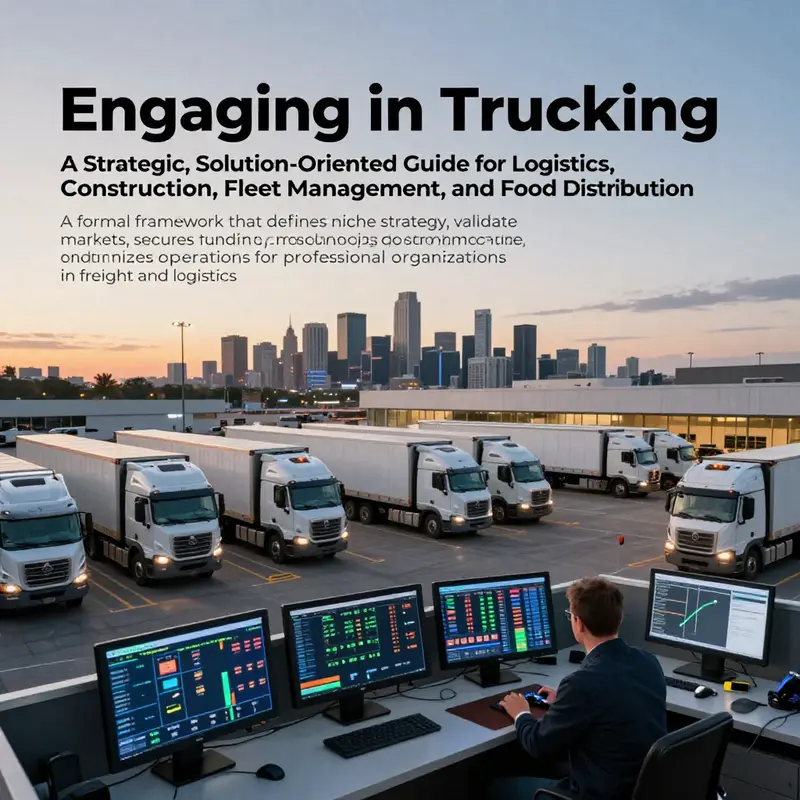
Engaging in trucking represents a strategic convergence of asset management, market insight, regulatory compliance, and operational excellence. For logistics and freight companies, construction and engineering firms, fleet management providers, and food and beverage distributors, a deliberate entry or expansion into trucking creates tangible competitive advantages: reliable capacity, improved service levels, and scalable growth. This guide presents a structured, five-chapter pathway designed to align organizational capabilities with trucking opportunities. Chapters progressively connect strategy to execution: first by defining a precise service niche and an actionable plan; next by conducting rigorous market research to map demand and competition; then by securing funding and crafting sound financial planning for fleet deployment; followed by navigating licenses and compliance to safeguard operations; and finally by integrating efficient workflows, safety culture, and brand development to sustain growth. Each section reinforces the overarching objective: to engage in trucking in a way that minimizes risk while maximizing value for stakeholders, customers, and partners. By adopting this integrated approach, organizations can optimize asset utilization, strengthen governance, and deliver measurable outcomes across the logistics ecosystem.
Niche by Design: Crafting a Strategic Path for a Sustainable Trucking Business
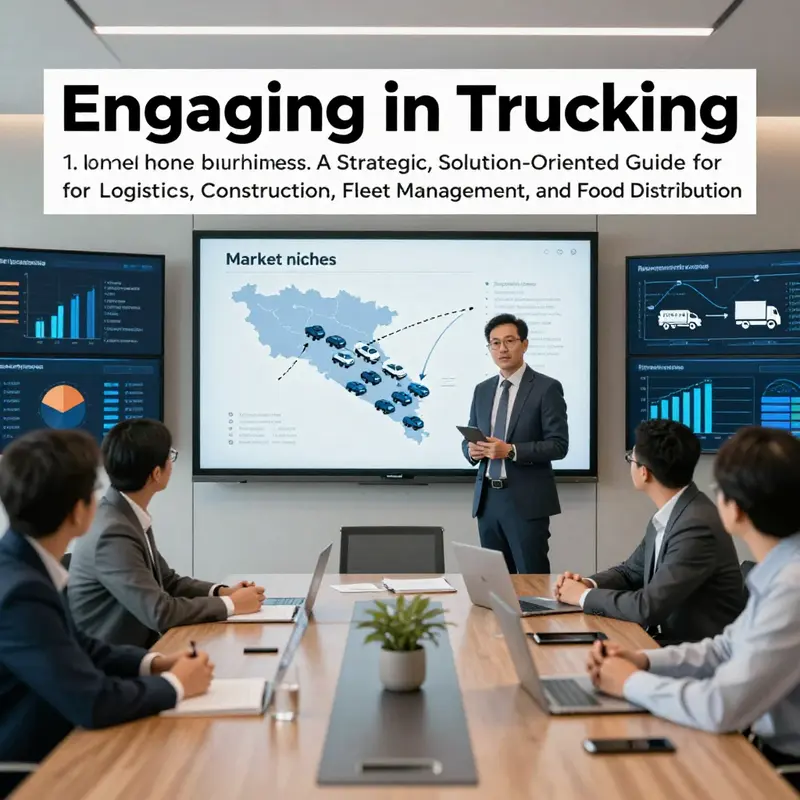
In a market where dozens of players chase a finite stream of freight, choosing a niche is not a luxury but a strategic necessity. The goal is not to be a jack of all trades but to become the dependable expert that shippers seek for a specific need. A well-defined niche aligns equipment, labor, and regulatory readiness with the problems a particular set of customers face. It reduces price-based fighting and creates a chain of repeatable processes—from dispatch and maintenance to customer service and billing—that scale with confidence. When you engage in trucking with a clear niche, you don’t just move goods; you move toward predictable revenue, steadier utilization, and stronger partnerships with fewer, more loyal customers. This chapter outlines how to identify a viable niche, validate it with data, and shape a strategy that leverages your existing assets while setting a realistic path to growth.
To begin, frame niche choice as a disciplined inquiry rather than a reactive decision. A practical approach weighs eight facets: market size and growth, customer pain points, asset fit, regulatory complexity, competitive intensity, margin potential, operational scalability, and risk. These components form a living lens through which you assess opportunities. A niche should be large enough to absorb your planned fleet and your growth ambitions, while offering clear problems you are well-positioned to solve. The most compelling opportunities target pain points that standard carriers struggle to meet—reliably, safely, and with compliance-backed documentation—so that your service becomes a trusted choice rather than a commodity option.
The exploration begins with a synthesis of market signals and asset reality. You don’t assume, you validate: lane volumes, tender acceptance rates, and rate volatility across plausible corridors; the availability of skilled drivers in your region; and the age, fuel efficiency, and maintenance needs of the trucks you can credibly deploy. This data-driven mindset matters because a niche that looks favorable on paper still requires a feasible operating model. It must work with your driving talent pool, your maintenance cadence, and the scheduling discipline you can sustain. The framework also accounts for regulatory terrain. Niches with specialized permits or endorsements can impose higher upfront barriers, but they also tend to deter low-commitment entrants and create defensible margins once you are established.
Commonly pursued niches reflect the diverse needs of shippers and the realities of equipment and routes. A dry van general freight network emphasizes reliability and broad coverage but invites intense competition. Temperature-controlled reefer services command premium pricing in food and pharmaceutical lanes, yet demand higher investment in trucks with precise refrigeration and consistent maintenance. Flatbed and oversized loads unlock opportunities for higher margins when permits and escort services are in place, but they demand specialized equipment and stronger planning. Tanker and hazmat lanes unlock defensible pricing and higher risk, requiring strong safety programs and robust insurance. Local last-mile and urban delivery respond to e-commerce growth with high frequency but demand tight routing, parking solutions, and urban-compliant operations. A dedicated fleet offers predictable revenue with scale requirements, while intermodal or cross-border strategies demand coordination across modes and border logistics while adding layers of complexity. Expedited, regional, and long-haul contexts each bring their own energy profiles, driver needs, and maintenance rhythms. Rather than picking a single path, let your asset base and risk tolerance guide a short list of two to three viable niches that you can validate with real-world data.
A practical, balanced way to narrow options is a scoring approach. Build a simple scorecard that weighs market demand, competitive density, equipment fit, regulatory complexity, margins, operational fit, risk, and time to viability. The goal is a high aggregate score with a clear asset-match story. This isn’t a perfection test; it’s a decision framework that prioritizes niches you can start validating quickly. Data-driven niching then turns from theory to action: examine lane-specific shipment volumes, contractor and carrier counts in the niche, uptake of fuel surcharges, and the cadence of detentions and delays. Analyze equipment utilization, hours-of-service compliance readiness, and the speed with which you can bring on drivers who match the niche’s service profile. The objective is to replace guesswork with a signal: a niche where your trucks spend more time moving freight and less time waiting or idling, where detentions stay manageable, and where you can reasonably absorb fluctuations in demand.
To bring this to life, consider the values you offer—your value proposition. A niche is not merely a type of freight; it is a promise you make to shippers about reliability, compliance, and transparency. Your proposition might emphasize on-time performance guarantees, temperature integrity for reefer loads, or meticulous handling for oversize shipments. It could pivot on regional proximity and a dense network that reduces miles wasted while supporting just-in-time deliveries. It might highlight white-glove service, accurate documentation, and a transparent pricing structure with clearly defined accessorials. The service design decisions flow from this proposition: your asset mix, network design, and dispatch model should be tuned to deliver the promised value, not just to chase a rate card.
Pricing strategy within a niche should reflect the balance between value and costs. You’ll often find that premium segments justify higher base rates, but only if you can demonstrate consistent reliability, excellent uptime, and minimal disruption. Accessorials such as detention, liftgate, or special handling should be clear, predictable, and aligned with your service level. Fuel surcharges should be structured to reflect volatility while preserving price clarity for customers. The go-to-market motion then centers on a precise ICP—an ideal customer profile—composed of industry, company size, geography, typical lanes, and decision-makers who weigh risk, timing, and compliance as much as price. Channels may include direct sales, brokers, 3PL partnerships, or targeted digital procurement approaches, yet every touchpoint should reinforce your niche’s core strengths.
An integrated operating model supports the chosen niche by aligning fleet composition with service needs. If the niche requires temperature control, you’ll invest in reefers with reliable power units and proactive maintenance. If it is a regional last-mile play, you’ll emphasize scheduling discipline, driver retention, and urban routing tactics that minimize dwell times. Safety and compliance are woven into the culture of the operation through continuous driver training, drug and alcohol programs, and regular audits of CSA scores. Insurance coverage should reflect the risk posture of your niche, while risk mitigation programs—dedicated to cargo protection and incident response—turn potential losses into manageable events. In parallel, your back office must scale with the niche’s demands, delivering accurate billing, transparent reporting, and a relationship-driven customer experience that makes shippers want to stay and grow with you.
Financial modeling is the bridge between vision and reality. Revenue per mile, lane-specific pricing, and accessorial revenue must be grounded in realistic utilization assumptions. Cost structures include variable costs—driver wages or owner-operator settlements, fuel, maintenance, tires—and fixed costs—insurance, licenses, depreciation, dispatch overhead. Indirect costs in governance, compliance, and back-office administration must be captured too. The key metrics you monitor regularly are CPM (cost per mile), RPM (revenue per mile), and EBITDA per mile, with a break-even utilization showing how many miles per truck you need each week to cover fixed costs. Sensitivity analysis helps you understand how fuel price shocks, wage trends, or changes in demand affect profitability, enabling you to stress-test the model before committing fleet purchases or leases.
Execution follows a disciplined roadmap. Start with discovery: select 1–2 niches with the strongest fit, gather lane data, and build simple financial models. Move to a pilot phase: confirm partnerships or equipment needs, define SOPs and SLAs, and establish measurable KPIs for a small set of lanes. Proceed to launch and scale: implement dispatch and routing processes, monitor KPIs daily, adjust pricing, and expand the customer base within the niche. Finally, review and refine: conduct a post-pilot review, refine your niche strategy based on data and market feedback, and adjust asset deployment accordingly. A practical illustration helps illuminate the path: imagine a regional temperature-controlled reefer niche in a corridor with strong food industry activity. Start with a modest reefers and a couple of tractors, target mid-sized food manufacturers, and aim for an on-time rate above 98% and detention under two hours on average. Track utilization above 90%, and adjust routes and maintenance practices to protect margins in a seasonally volatile market.
To support these efforts, several practical tools can accelerate progress. A lightweight niche fit scorecard helps you compare market size, competitive density, capital fit, regulatory complexity, and time to viability. An ICP worksheet clarifies the buyer’s pain points and decision drivers, while a service design checklist ensures you address equipment, routes, accessorials, and service-level expectations. A 90-day plan template keeps owners and teams aligned, and a simplified P&L for the niche anchors the financial logic in reality. On the technology front, route optimization, telematics, and dashboarding for KPIs like utilization, on-time performance, and fuel efficiency turn insights into action. Importantly, the narrative you craft for customers should be clear and credible: your niche is where you deliver consistent, predictable outcomes, not where you hope to squeeze marginal gains from a broad set of services.
As you pursue this path, remember that the niche you choose should be anchored in data, asset capability, and a clear value-for-shippers proposition. It should enable repeatable operations, stable revenue, and disciplined risk management. Revisit the niche strategy periodically, especially as market conditions or your asset base evolves. Along the way, invest in people—the human capital that will execute your strategy. A growing body of fleets shows that investments in training, culture, and leadership translate into safer operations and higher customer satisfaction. For those who want a grounded push toward people-centric execution, consider exploring resources on investing in people as a strategic pillar for trucking success. Investing in People Key to Trucking’s Success.
In the broader context of regulation and safety, keep one eye on the formal rules that shape how you operate. The regulatory framework provides both a ceiling and a safety valve for growth; understanding hours-of-service rules, electronic logging, and HazMat endorsements is essential to avoid costly disruptions. A strong relationship with insurers, a proactive maintenance program, and a clear incident response plan further reduce risk and help you protect margins when demand shifts or fuel costs rise. For those who want to explore these considerations in more depth, credible regulatory resources offer a solid foundation and practical guidance for fleet readiness and compliance. For broader regulatory context outside the chapter’s focus, you can refer to the official guidance and materials at the FMCSA site: https://www.fmcsa.dot.gov.
Charting Your Route: Thorough Market Research as the Pulse of a Profitable Trucking Venture
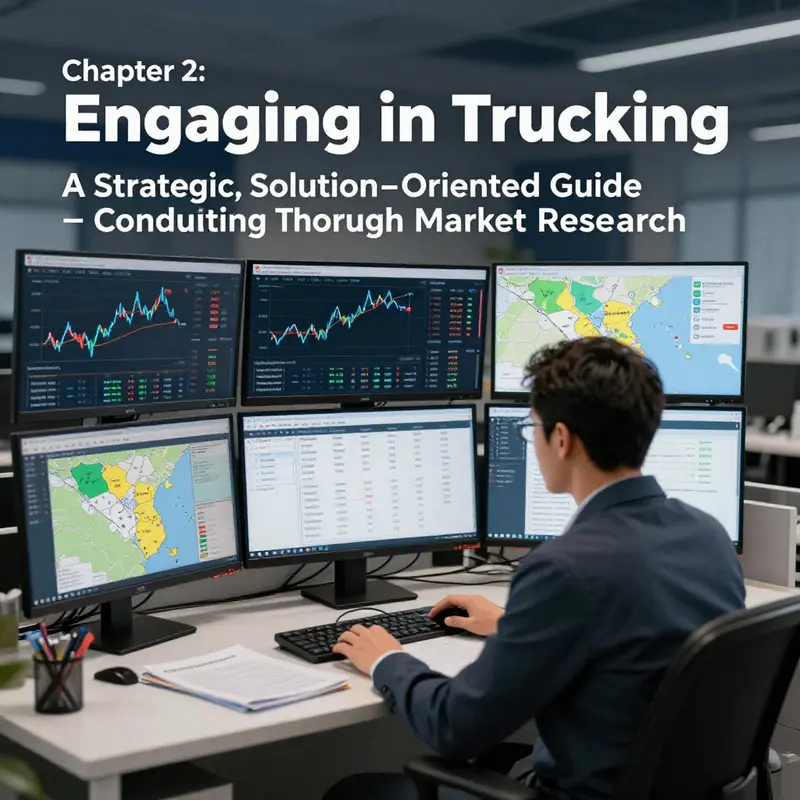
Market research is not a theoretical exercise but the lived rhythm of a trucking operation that aims to endure, grow, and deliver reliably. For a single-truck operator, it serves as both compass and shield: it points toward viable niches and routes while defending against missteps that can quickly erode margins. When you start with a disciplined market view, you can align every practical decision with real-world demand, competitive dynamics, and the friction points that define day-to-day operations. This is not about chasing the latest trend; it is about mapping a sustainable path that fits your capabilities, your region, and your risk tolerance, while keeping the door open to scale in a thoughtful, controlled way. The goal is to build a business where service quality and operational efficiency reinforce each other, creating a reputation that translates into repeat customers and steadier utilization of your assets.
In the first moments of strategy, the idea of niche clarity matters more than sheer volume. A trucking operation does not have to be a jack of all trades to succeed. It can become a master of one or two tightly defined capabilities that you can execute with precision. You might choose regional freight, where the cadence of deliveries and returns becomes a predictable cadence you can optimize around. Or you might lean toward long-haul routes that demand consistent fuel planning, driver management, and cross-state compliance. A local delivery focus can reward speed, flexible scheduling, and close-knit relationships with customers who value reliability over a broad geographic footprint. If you pursue specialized cargo—refrigerated goods or hazardous materials, for example—your market research must zoom in on the unique regulatory requirements, the specialized customer base, and the premium you can command for reduced risk and enhanced handling. The essence of defining your niche is not simply to know what you can haul, but to know where you can become a dependable partner through predictable schedules, transparent pricing, and a track record of on-time performance.
As you refine your niche, you begin to translate that focus into a practical demand picture. You want to understand who uses your service, what they need, and how often they need it. Manufacturing firms may require dependable inbound freight that arrives like clockwork, while retailers and e-commerce players may prize last-mile scheduling and the ability to adapt to demand fluctuations. Agriculture, construction, and energy sectors each present distinct freight patterns—seasonality, peak periods, and regional concentrations—that shape utilization and cash flow. The sources for this demand puzzle are diverse. Government statistics provide baseline indicators of economic activity and employment patterns that influence freight volumes. Market reports offer longer-term forecasts, while provider data can reveal micro-trends in specific corridors or cargo classes. The most powerful approach blends these elements: government data to establish a trend baseline, industry reports to illuminate growth areas or risk factors, and real-time analytics to capture current demand shifts as they occur. When you combine these sources, you gain confidence in service offerings and pricing strategies that reflect actual customer needs rather than speculative assumptions.
Understanding the competitive landscape is the other half of the market-research equation. You want to know who already operates in your space, what services they advertise, what their pricing looks like, and how customers perceive them online. For a one-truck operation, the competition often comes from a mix of other owner-operators, small fleets, and regional carriers. Benchmarking yourself against this mix means looking at a few tangible dimensions: service scope, reliability, and responsiveness in customer communication. Do rivals advertise flexible pickup windows and transparent transit times? How do they manage peak periods and delays? Do they offer value-added services such as real-time tracking, digital invoicing, or guaranteed transit windows? A practical way to uncover gaps is to listen to customer feedback you encounter directly, but you can also scan online maps and directories, review platforms, and industry networks for patterns. Look for underserved routes, times when service is inflexible, or misalignments between customer expectations and actual performance. These gaps become your opportunities, the places where you can win by delivering consistent, predictable, and easy-to-work-with service.
The infrastructure and regulatory context shaping a market is more than background noise; it determines the feasibility of your plan and the level of investment it requires. Road quality, congestion levels on your primary corridors, and the availability of maintenance facilities along your routes affect reliability and maintenance costs. Equally critical is the regulatory environment: hours-of-service rules, emissions standards, and licensing requirements create the framework within which you operate. For a new operator, this means budgeting for compliance costs and building procedures that ensure you stay within the rules while preserving efficiency. The Federal Motor Carrier Safety Administration (FMCSA) is a primary reference point for these considerations. Staying informed about regulatory changes helps you anticipate shifts in operating costs, capacity, and risk exposure. Even if you do not anticipate crossing many borders in your first year, thinking through cross-border dynamics can be prudent if your niche includes regional markets that touch multiple jurisdictions. For a sense of how cross-border dynamics shape regional demand, see this resource: navigated cross-border challenges—key insights from the TCA annual meeting. This kind of intelligence is not a substitute for formal regulatory guidance, but it helps you recognize opportunities and constraints you may face as you scale.
When you assemble data sources, you should treat them as pieces of a larger mosaic rather than stand-alone signals. Professional market research reports—whether you are consulting Statista-like datasets, IBISWorld-style analyses, or Grand View Research projections—offer depth and context that can sharpen your strategy. For a single-truck operator, the value lies in translating big-picture insights into concrete actions: service offerings that align with demand, pricing that reflects value and risk, and capital plans that match expected cash flows. Real-time analytics platforms and dashboards—designed to track vehicle registrations, ownership patterns, or regional demand signals—can give you a live pulse on market movements. The practical payoff is a forward-looking plan with defined milestones, such as target markets, service packages, and a preferred equipment profile aligned with the forecasted demand mix. The overarching point is simple: diversify data sources to reduce uncertainty, but maintain a clear through-line that connects demand signals to your service design, pricing, and growth strategy.
Putting market research into action means turning insight into a precise plan you can implement within weeks, not months. Begin by drafting a niche-focused business plan anchored in your region and market signals. Your plan should specify your chosen service area, the customer segments you will target, and the core performance metrics you will monitor—on-time delivery, load acceptance rate, dwell time at customers, and revenue per mile, to name a few. Translate demand signals into a three-part portfolio: core services you can reliably deliver, niche offerings with a competitive edge, and a scalable framework for adding capacity as your numbers justify it. Your pricing strategy should reflect both cost structure and willingness-to-pay from target customers, with transparent terms and predictable invoicing. Build relationships with prospective customers by communicating a consistent value proposition—reliability, transparency, and responsiveness—paired with digital tools that enhance visibility for clients. Your operations should mirror the plan through a simple, repeatable process: dispatch those loads with a clear routing logic, track shipments for customers in real time, and maintain strong communication channels that keep clients informed of exceptions or delays.
As you gather momentum, remember to keep refining your research and your plan. Market conditions shift, and the most resilient operators adapt. You should routinely revisit demand forecasts, monitor competitive moves, and reassess your regulatory exposure as new rules emerge. If cross-border or multi-state work enters your scope, deepen your understanding by engaging with relevant networks and staying current on policy debates that affect transportation costs and capacity. The goal is not a one-off exercise but an ongoing discipline: listen to the market, test your assumptions, and adjust your offerings accordingly. In practice, this means setting a cadence for reviewing data sources, updating your forecast, and revising your go-to-market approach in light of new information. The more you align your daily decisions with a robust market view, the more resilient your trucking venture will be in the face of cycles, regulatory shifts, and evolving customer expectations. For broader data context, consult the U.S. Bureau of Labor Statistics: https://www.bls.gov.
Funding the Road Ahead: Practical Financial Planning for a Trucking Venture
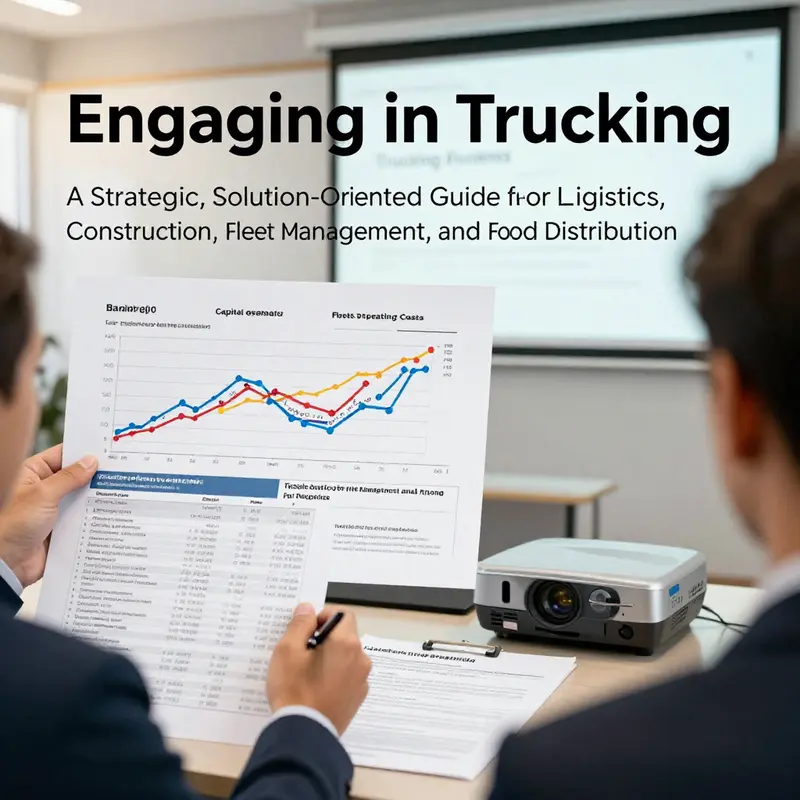
Funding the road ahead is more than lining up capital. It is about building a resilient financial backbone that matches how a trucking business actually grows: in measured steps, with clear anchors, and with cash flow that keeps every wheel turning. This chapter frames funding as a strategic element of the operational plan, not a one-time hurdle. It blends bootstrapping practicality with scalable options, from lease and loan structures to equity partnerships and public programs. The result is a capital stack that adapts as the business shifts—from a lean startup to a regulated, expanding fleet serving a broader geography and a wider range of customers. The goal is steady, predictable cash flow that aligns with the rhythm of contracts, maintenance cycles, and driver availability, so money never trails behind the operations it supports.
Bootstrapping remains a viable starting point for many operators who bring in their own capital and a proven operating mindset. In this path, the business focuses on tight control of costs and a narrow service footprint that yields dependable throughput. A realistic entry-level target is roughly fifty thousand to eighty thousand dollars to acquire three to five dependable trucks. This scale supports a portfolio of regional or local routes rather than a single, high-risk long-haul lane. Early cash flow flows from repeat clients and steady schedules, with profit realization typically occurring within twelve to eighteen months. The emphasis is on reinvesting profits back into the business—adding a truck here, upgrading a route there, tuning dispatch optimization, and expanding load matching capabilities. This approach rewards operators who arrive with industry knowledge, customer relationships, and a disciplined stance toward maintenance and compliance. It also reduces the friction of debt and the risk of overextension, allowing the firm to grow on a foundation of earned profits rather than borrowed capital.
For entrepreneurs who seek faster scale or who lack substantial initial capital, a franchise or partnership arrangement can accelerate revenue generation while transferring much of the startup risk to an established network. The typical model has the entrepreneur covering sixty to seventy percent of the vehicle cost, while the parent organization supplies the remainder and offers centralized dispatch, compliance support, and shared back-office services. Asset utilization in such networks often exceeds eighty-five percent because routing and load matching are optimized at scale. Earnings per truck in the early years frequently fall in the eighteen- to twenty-five-thousand-dollar range, with net margins after platform fees in the low to mid-teens. The trade-off is ownership and strategic influence: you gain rapid access to customers, training, and a proven operating playbook, but you share decisions with the larger network and accept some control dilution. For many newcomers—especially those who lack a robust equipment fleet or a deep local customer base—the speed to revenue and the credibility of a formal network can be decisive advantages in a competitive market.
Beyond equity and franchising, funding can also be linked to the actual physics of the business: cash flow timing and asset utilization. Supply-chain financing and leasing arrangements can unlock capital tied up in receivables and equipment cost. Contracts with large customers can often be used as collateral for invoice discounting, enabling upfront liquidity of roughly up to seventy percent of contract value. This liquidity is particularly valuable when fuel costs, driver pay, and maintenance expenses converge at the end of a billing cycle. Leasing options allow equipment to be acquired with modest down payments—often around twenty percent—and with terms spanning three to five years. The practical effect is a leaner balance sheet and a smoother debt service curve that can better align with revenue streams. This path is especially attractive for specialized operations—such as temperature-controlled transport or multi-modal services—where upfront capital needs are higher and longer terms can improve cash management.
For operations aiming to scale rapidly or pursue broader market reach, equity investment or strategic partnerships provide a different propulsion. Founders may choose to sell a portion of ownership—roughly twenty to thirty percent—preserving day-to-day control while gaining access to capital, governance insights, and strategic guidance. Investors typically seek growth catalysts such as advanced dispatch tools, telematics, and a scalable platform that can operate across multiple markets. A regional freight network that expanded from three to fifteen cities within two years after securing external capital demonstrates the potential of this route, with valuation growth moving well beyond initial milestones. The upside is compelling, yet the obligations are clear: you must align investor incentives, maintain transparent governance, and accept some dilution of control. This path suits operators who view capital as a force multiplier—enabling entry into new markets, enabling technology adoption, and accelerating service diversification.
Public and policy-based supports expand the set of financing options, particularly for micro and small fleets seeking modernization. Government-backed loan subsidies and related programs have grown more accessible, with extensions and broadened eligibility noted in recent policy updates. The practical value is reducing borrowing costs and enabling longer-tenor financing that matches projected cash flow. Public programs work best when embedded in a broader funding strategy rather than treated as a standalone boost. The key is to monitor eligibility criteria, required documentation, and application timelines, then incorporate these programs into the overall funding plan as a deliberate component rather than a period-specific perk. In practice, a diversified funding approach often looks like a layered stack: bootstrap capital to validate the model, complemented by targeted debt or leasing to seize growth opportunities, and enhanced by selective equity or franchise arrangements to scale when the market supports it.
Intelligent financial planning and disciplined risk management complete the picture. Clear, measurable financial goals tied to operational milestones provide a guiding framework for when and how much to borrow, and when to pursue partnerships. Tax planning and estimated filings build liquidity and prevent penalties, while cash reserves create a buffer against downturns in freight demand, fuel price volatility, or regulatory delays. Insurance coverage—cargo, liability, and motor vehicle—should be reviewed and updated regularly to reflect evolving exposure and regulations. Advanced firms deploy Financial Planning and Analysis (FP&A) tools to forecast performance under different scenarios, stress test fuel price swings, driver availability, and maintenance costs. In practice, finance teams that act as strategic partners help the business articulate capital needs, test growth hypotheses, and guide resource allocation in a way that aligns with both short-term occupancy of capacity and long-term fleet strategy.
A practical takeaway is to design a funding plan as a living document. The optimal mix depends on risk tolerance, prior experience, and the ambition for scale. The prudent operator blends capital sources to cover both immediate needs and future bets—bootstrapped cash for early validation, debt or leasing to fund capacity, and occasional equity or franchise engagement to accelerate entry into new markets. Importantly, success hinges on aligning the capital stack with operational discipline: disciplined cost control, reliable maintenance, and consistent service quality multiply the value of every dollar invested in equipment, people, and technology. The most resilient plans anticipate not just the next contract, but the next regulatory change, the next fuel-cycle shift, and the next talent gap. When capital, process, and people move in concert, growth becomes sustainable rather than spectacular but fragile.
To connect these threads to a broader perspective on growth, consider the role of people in scaling trucking operations. Efficient, compliant operations amplify every dollar of funding and create a multiplier effect for contractor teams, drivers, and support staff. A referenced concept highlights investing in people as a foundational element of long-run success in trucking ventures. See the discussion in Investing in People: Key to Trucking’s Success for a connected view of how workforce development reinforces fleet capability and capital decisions: Investing in People: Key to Trucking’s Success.
External resource: Federal Reserve’s rigorous analysis of supply chain financing provides a broader context for how finance mechanisms interact with supplier networks and liquidity. It can help frame practical steps for builders of cash flow and for those integrating new contracts into a resilient capital plan. https://www.federalreserve.gov/publications/2022-supply-chain-financing-report.htm
As the road unfolds, the financial blueprint you choose becomes inseparable from every operational decision. The most effective plans are iterative, revising assumptions as contracts evolve, equipment ages, and markets shift. The next chapter will turn to the operational engine behind funding—how to build a dispatch, maintenance, and customer-service system that yields reliability, predictable revenue, and maximum value from each dollar invested in your fleet.
Licenses, Permits, and Compliance: Building the Legal Foundation for a Sustainable Trucking Venture
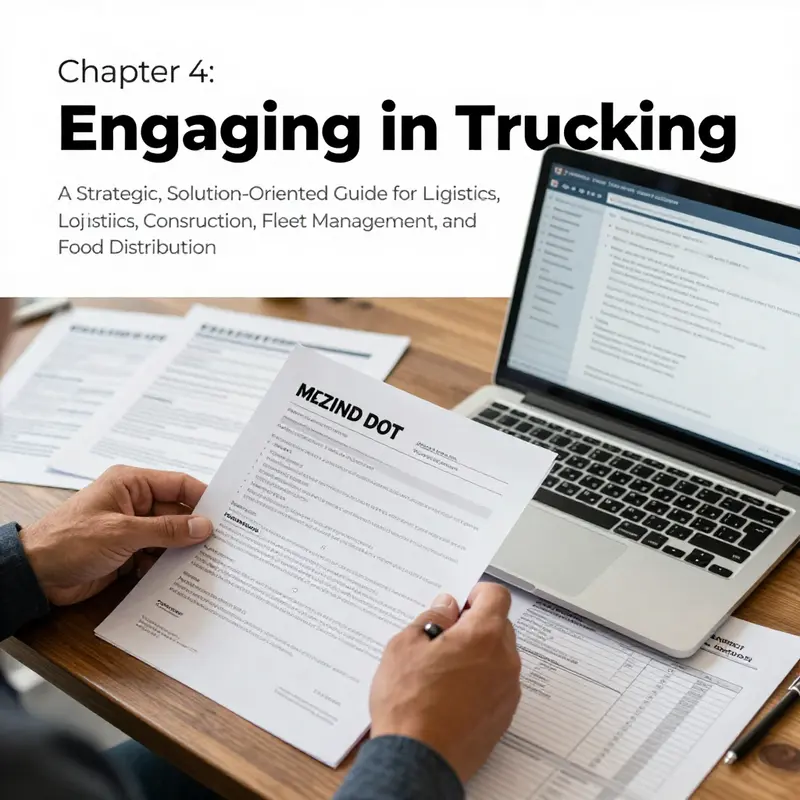
Licenses, permits, and compliance are not just background noise in a trucking business; they are the foundation on which every reliable operation rests. The journey begins with the FMCSA Unified Registration System (URS), the central portal through which new entrants apply for operating authority, secure a USDOT number, and lay the groundwork for ongoing regulatory oversight. The process centers on Form MCSA-100, a comprehensive registration that captures essential details about the company’s operations, safety management practices, and financial responsibility. A USDOT number is issued automatically upon successful submission, but the MC number—your formal permission to operate as a motor carrier—is issued only after FMCSA reviews the application and confirms that you meet insurance and service-of-process requirements. The BOC-3 designation of an agent for service of process is a critical corollary; it designates a legal representative in each state where you intend to operate who can receive legal documents on your behalf. This isn’t a bureaucratic formality but a practical mechanism to ensure that the carrier can be notified and held accountable if regulatory or legal proceedings arise. The URS streamlines registration, but it also sets a high bar: insurers must be prepared to cover your vehicles and cargo, and your safety programs must be demonstrable and auditable from day one. The URS experience is a signal that your business is entering a world where safety, accountability, and documentation are inseparable from profitability.
Insurance and safety review go hand in hand in the new entrant phase. FMCSA requires proof of liability insurance that meets or exceeds minimum limits and is issued by FMCSA-approved insurers. For property-carrying carriers, this minimum is substantial, reflecting the risk and exposure involved in moving goods across multiple jurisdictions. The insurance must cover all vehicles and operations under the carrier’s authority, and it must be maintained for the life of the operating authority. The registration process is not complete without a safety review. FMCSA conducts an initial safety audit and may require roadside inspections or investigations into a carrier’s past safety performance. The safety rating—Satisfactory, Conditional, or Unsatisfactory—will influence not only your ability to operate but also the ease with which you can attract customers and secure financing. A poor rating can trigger corrective action plans, and a strong rating can become a competitive credential that opens doors with shippers who demand proof of reliability.
Beyond the URS, compliance expands into multi-jurisdictional mandates that are essential for any fleet with cross-border or multi-state ambitions. IFTA and IRP are two core pillars designed to simplify who pays what and where. IFTA—the International Fuel Tax Agreement—standardizes fuel tax reporting for carriers operating across more than one jurisdiction. You register with a single base jurisdiction, keep thorough trip and fuel records, and file quarterly reports. The base jurisdiction then allocates the fuel taxes owed to each participating jurisdiction, a process that reduces administrative complexity and helps prevent tax evasion. IRP—the International Registration Plan—complements IFTA by enabling a single license plate and annual registration certificate valid across participating jurisdictions. Fees are calculated based on the proportion of vehicle miles traveled in each jurisdiction, and the process brings uniformity to documentation and enforcement. For fleets that routinely traverse multiple U.S. states or Canadian provinces, IFTA and IRP are not optional add-ons; they are the operating fabric that keeps the wheels turning smoothly and legally every mile of the way.
Honing in on daily discipline, Hours of Service (HOS) regulations and theElectronic Logging Device (ELD) mandate shape how you plan routes, manage driver schedules, and maintain audit-ready records. The HOS framework, anchored in federal regulations, governs when drivers may drive, when they must rest, and how many hours they can be on duty within a given period. Since the transition to mandatory ELDs, drivers’ duty status, location, and rest periods are captured and transmitted for inspection, enhancing safety and accountability. The procedural complexity is real, but so is the payoff: predictable delivery windows, better fatigue management, and a clearer record trail in the event of a roadside check. There are exemptions and special provisions—short-haul operations and other sector-specific scenarios—that require careful assessment so you don’t inadvertently miss a compliance trigger. A disciplined approach to HOS and ELDs also feeds into broader operational planning and customer trust, because clients increasingly demand visibility into how drivers manage time on the road and rest periods between legs of a shipment.
Another essential pillar is the DOT/FMCSA drug and alcohol testing regime. Under 49 CFR Part 40, random testing for commercial drivers in safety-sensitive positions is mandatory. The program requires statistically valid random selections, with minimum annual percentages allocated to drug tests and to alcohol tests. Compliance is not a one-off task; it demands a robust program, clear record-keeping, and a culture that treats safety as a core value rather than a compliance box to check. Integrating testing regulations with hiring, onboarding, and ongoing safety training ensures that drivers understand their responsibilities and that the carrier builds a reputation for reliability and safety. The interplay between testing, safety outcomes, and enforcement actions means that a well-architected program can become a meaningful competitive differentiator—the difference between a carrier that merely meets the baseline and one that earns the confidence of shippers and insurers alike.
Underpinning all these requirements are the FMCSA’s Safety Metrics framework and the BASICs—Unsafe Driving, Fatigued Driving, Driver Fitness, Controlled Substances/Alcohol, Vehicle Maintenance, Hazardous Materials Compliance, and Inspection & Repair. These categories feed into the Safety Fitness Determination, a monthly assessment of how your operation stacks up against peers. Keeping your MCS-150 information current through annual updates ensures the FMCSA’s safety profile mirrors real operations, a critical step for sustaining access to lanes, customers, and financing. The regulatory landscape is not a static backdrop; it evolves with enforcement priorities, technological developments, and industry risk factors. Staying informed and adaptable is not optional—it’s central to scaling a trucking business without compromising safety or financial stability.
With these mechanisms in place, practical navigation becomes a matter of disciplined execution. Start by outlining your geographic footprint and cargo profile to determine which licenses and permits are non-negotiable from day one. If cross-border or multi-state activity is anticipated, plan for IFTA and IRP at the outset rather than chasing them later. Build a governance framework that assigns clear responsibility for URS filings, insurance management, and BOC-3 updates, and embed a safety-first culture through standardized pre-trip and post-trip checks, incident reporting, and driver training. Digital tools can help collect, organize, and securely store required documents, but the real value comes from having a versioned, auditable trail that can be retrieved on short notice during an audit or a shipper inquiry. When communicating with insurers and regulators, concise and accurate records—about financial responsibility, maintenance, and driver fitness—are essential. The objective is to create a reliable platform for service quality, predictable delivery timelines, and sustainable growth, not merely to satisfy regulatory requirements. The URS portal is the gateway to your operating authority; explore it early, understand the documents you will need, heed timelines for renewals, and recognize triggers that may require updates to your agent-of-process designation or base jurisdiction details. You should also verify the credentials of any partner carriers or brokers you intend to work with, since credentialing is a recurring discipline across the industry. The key step here is to establish a single, trusted source of truth for regulatory status across the fleet, and to keep it current so that customers and lenders can rely on your compliance posture. For deeper guidance on the URS, the FMCSA provides a centralized entry point: FMCSA URS portal.
In sum, licenses, permits, and compliance are not bureaucratic hurdles to be endured; they are the structural pillars that support scalable growth, customer confidence, and long-term profitability. The practical path is clear: secure authority, demonstrate financial and safety responsibility, align operations with multi-jurisdictional requirements like IFTA and IRP, manage driving time with compliant logs, participate in the drug and alcohol program, and maintain up-to-date safety metrics. Build the people, processes, and technology that sustain compliance as a routine part of daily operations, not a periodic audit. When you treat regulatory readiness as a strategic capability—integrated with fleet management, dispatch, and maintenance—you create a durable platform for reliable service, resilient operations, and competitive advantage in a crowded market. The very act of establishing these systems from the outset signals to customers, lenders, and regulators that your trucking business is built to endure and to perform, mile after mile.
For ongoing practical alignment with regulatory expectations, the latest hours-of-service guidance remains essential reading: see the FMCSA Hours of Service page for current requirements and updates.
Engaging the Fleet: Orchestrating Operations, Safety, and Brand Growth in a Modern Trucking Business
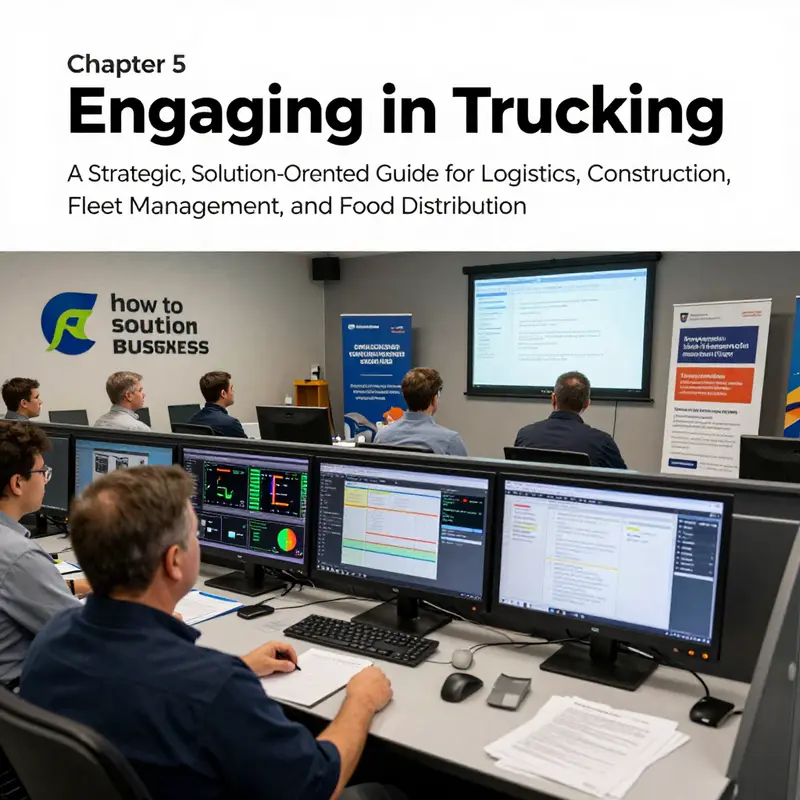
Engaging in a trucking business requires more than owning a fleet; it demands building a cohesive system that blends operational rigor, unwavering safety, and a brand that customers trust. The path begins with a clear sense of purpose and a practical plan that translatesMarket opportunities into everyday dispatches. From the outset, the focus should be on defining a niche and aligning every choice—vehicles, routes, drivers, and technology—around that focus. The market is diverse: some operators lean into long-haul corridors, others concentrate on regional or local deliveries, and a growing number specialize in refrigerated freight or hazardous materials. Each niche carries its own requirements, risk profile, and profit potential. Understanding where demand sits and which customers repeatedly need reliable service helps shape a robust business model that can withstand cycles in freight volumes. It also sets up a framework for differentiating a generalist fleet from a trusted partner that aligns with a shipper’s calendar, constraints, and service expectations. A clear niche acts as the north star that keeps decisions aligned as the company scales.
Operational excellence forms the backbone of that alignment. It starts with strategic market positioning and service differentiation. Thorough market research reveals where cargo flows, what competitors charge, and where capacity gaps exist. This intelligence helps identify underserved routes or times when customer needs outpace the current supply of reliable carriers. Focusing on a defined service profile—whether high-frequency regional delivery, time-sensitive door-to-door service, or a specialized capability like temperature-controlled transport—enables cost discipline and service predictability. Differentiation can be achieved through reliability, speed, or added-value offerings such as real-time tracking, proactive communication, or flexible pickup windows. The price for such differentiation is intelligent operations: a well-tuned network, precise routing, and a disciplined balance of asset utilization and driver availability.
The next layer is efficient logistics and route planning. The heart of profitability lies in how shipments move from pickup to delivery. Route optimization software reduces unnecessary miles, minimizes fuel burn, and shortens dwell time at hubs and warehouses. Analyzing traffic patterns, road conditions, weather, and delivery windows allows for plans that keep drivers productive while preserving service levels. The goal is to create transport plans that reliably meet customer promises while preserving margins in the face of volatility in fuel costs and driver wages. To stay competitive, fleets must monitor performance in real time and adapt quickly when disruptions occur. A well-designed plan also reduces idling and empty backhauls, which are budget busters in a market where every mile matters.
Technology is the connective tissue that binds operations to visibility and accountability. An integrated management system—one that combines GPS tracking, fleet monitoring, electronic logging devices, and real-time driver communication—provides a single source of truth. This clarity lowers the cognitive load on dispatchers and managers, enabling proactive decision-making rather than reactive firefighting. Real-time location data, shipment progress, and driver status create a culture of accountability and traceability. With such visibility, managers can spot delays early, re-route loads, and communicate with customers with confidence. The objective is not merely tracking for its own sake but using data to improve reliability, reduce costs, and shrink cycle times. That data-driven discipline also helps in coaching drivers, identifying patterns that lead to dangerous behaviors, and targeting training where it will yield the greatest safety and efficiency gains.
Building a reliable network requires more than a fleet and software; it requires people and partnerships. Establishing dependable relationships with shippers, suppliers, consignees, and logistics partners creates a steady rhythm of cargo that fits the fleet’s capacity. A stable network minimizes deadhead miles and underutilization while offering predictable lanes and consistent workloads. This is not achieved by chasing volume alone; it comes from consistent service, transparent communication, and a track record of meeting or exceeding expectations. In time, a reliable network becomes a strategic asset that attracts better contract terms and more favorable access to freight opportunities.
Safety sits at the core of every operation and informs every instruction given to drivers and every decision made in dispatch. Compliance with hours-of-service rules, vehicle inspections, licensing requirements, and insurance coverage is non-negotiable. A culture that prioritizes safety reduces risk to drivers, the company, and customers alike. Proactive maintenance and rigorous pre-trip and post-trip inspections catch issues before they become failures, keeping trucks on the road and cargo moving. Training is ongoing and practical: defensive driving, safe loading practices, emergency procedures, and company policies are reinforced through coaching, simulations, and real-world feedback. Telematics data provides objective insights into driver performance, enabling targeted coaching that improves both safety metrics and delivery reliability. Insurance considerations reflect a balance between comprehensive protection and prudent cost management, ensuring the operation can weather losses that may arise from accidents, cargo damage, or unforeseen events.
A thriving trucking business also rests on a resilient brand built through consistent quality and dependable service. The customer experience must be seamless from first contact to final delivery. Clear communication, transparent pricing, and reliable delivery windows matter as much as the physical movement of goods. Real-time tracking portals and user-friendly interfaces empower customers to monitor shipments without repeated calls and emails, reducing friction and building trust. Brand strength grows from reliability—on-time deliveries in good condition generate word-of-mouth referrals that carry more weight than aggressive advertising. Service quality becomes a driver of growth, particularly when paired with thoughtful marketing and networking. Trade shows, industry associations, and strategic partnerships can extend reach, but they must be supported by actual performance. A brand that consistently delivers value earns a seat at the table with shippers who seek long-term partnerships and prefer working with carriers who demonstrate integrity, capability, and strategic thinking.
Innovation and expansion play a critical role in keeping the business resilient and relevant. A trucking operation that rests on its laurels soon finds margins eroded by new competition and shifting regulatory pressures. Exploration of adjacent services—warehousing, packaging, or supply chain consulting—can transform a carrier into a broader logistics partner. This diversification should be deliberate, grounded in the company’s strengths, and aligned with customer needs. Technology again becomes a facilitator of growth, enabling seamless integration of new services with existing workflows. For example, adding small-value warehousing or cross-docking capabilities can unlock new revenue streams while maintaining tight control over cost and service quality. The most successful operators treat growth as a coalescing of optimized operations, trusted safety practices, and a brand promise that customers want to renew.
The human element threads through every facet of this chapter as the most important differentiator. Investing in people—drivers, maintenance technicians, dispatch and support staff—creates a culture where safety and service are lived daily. It is here that a practical, repeatable advantage emerges: skilled people who understand regional markets, customer expectations, and the subtleties of regulatory compliance. A practical lever is investing in people, a principle discussed in depth at the industry’s frontiers of talent development. By building capabilities through mentorship, structured training, and clear career paths, a fleet becomes not just a collection of assets but a living organization capable of learning and adapting as conditions change. This investment also pays dividends in retention, morale, and the quality of customer interactions. For those who want a concrete starting point, consider engaging with resources focused on people-first strategies and leadership development, which can accelerate the maturation of a trucking operation into a true logistics partner.
To close the loop, engaging in trucking business at this level requires disciplined financial planning and risk awareness. Startup costs, ongoing operating expenses, insurance, licensing, and maintenance are not abstract line items but real commitments that shape every strategic choice. Financing options—from personal savings to credit facilities and partnerships—must be weighed against expected cash flows, risk tolerance, and long-term goals. While the ascent can be gradual, the payoffs are meaningful: a scalable, safe, and trusted operation that can adapt to market fluctuations and customer needs while maintaining profitability. The aim is to build a venture that endures, not just one that grows quickly. And that endurance rests on the same core pillars: precise operations, unwavering safety, and a brand that customers come to rely on for predictable, high-quality service.
External resource note: for ongoing safety and regulatory updates that influence day-to-day decisions, operators can consult authoritative guidance from federal transportation authorities and industry resources as part of a continuous improvement loop. External resource: https://www.fmcsa.dot.gov/regulations
Final thoughts
A disciplined approach to engaging in trucking positions organizations to translate assets into value across the logistics ecosystem. By clearly defining a market-relevant niche, validating demand through rigorous research, securing disciplined funding, obtaining and maintaining compliance, and building robust operations supported by safety governance and brand discipline, firms can reduce uncertainty and accelerate contract opportunities. The chapters together form a blueprint for sustainable growth: align capabilities with market needs, govern financial and regulatory risk, deploy fleets efficiently, and continuously improve through performance data and stakeholder feedback. The ultimate takeaway is clear—success in trucking comes from integrating strategy, finance, compliance, and operations into a cohesive, scalable execution plan that serves customers reliably and profitably.