Mobile ice cream services offer a compelling extension to corporate catering, community outreach programs, and public-facing fleets. For logistics and fleet teams, a well-planned ice cream truck operation can diversify offerings without disrupting core transportation objectives. The challenge is to align product strategy with vehicle design, regulatory compliance, and route optimization so that service hours, cold-chain integrity, and maintenance do not erode fleet performance. This article presents a practical, three-chapter framework that translates market opportunities into a repeatable, scalable mobile dessert operation for enterprise contexts. Chapter 1 focuses on market research and business planning, translating demand signals into a fleet-ready value proposition. Chapter 2 outlines the legal requirements and permits essential to operating a mobile food vehicle in commercial environments, including risk controls and insurance considerations. Chapter 3 addresses vehicle selection, customization, and equipment, detailing how to choose a chassis that supports reliable refrigeration, safe production, and brand consistency. Across all sections, the emphasis is on integration with existing fleets, risk management, and measurable outcomes such as uptime, service coverage, and total cost of ownership. By tying market intelligence to fleet policy and a disciplined equipment plan, organizations can launch a mobile dessert program that complements rather than competes with core operations.
null
null
From Paperwork to Pints: Navigating Legal Permits to Launch Your Ice Cream Truck with Confidence
Launching an ice cream truck business begins long before the first scoop lands in a cone. It starts with understanding the maze of legal requirements that keep customers safe, markets compliant, and your operation standing up to inspections. In many ways, permits and registrations are not obstacles so much as the sturdy framework that supports every successful route you will carve through parks, beaches, school campuses, and festival grounds. When you approach this foundation with clarity and a practical plan, you reduce delays, avoid costly rework, and set a tone of professionalism that customers, partners, and suppliers come to trust. The core idea is simple: your business must be legally recognized, properly insured, and supported by permits that authorize you to prepare, store, and sell ice cream to the public. The more thoughtfully you collect these credentials, the smoother your day-to-day operations will run, and the more time you’ll have to focus on flavor development, branding, and customer delight rather than chasing paperwork.
The journey begins with the basics of business registration. In practical terms, you need a legal business entity and a state and local footprint that recognizes you as a legitimate vendor. The exact steps vary by state and municipality, but a common thread runs through most jurisdictions: you register your business name, establish your business entity, and secure a tax identifier. In the United States, this tax identifier is often an Employer Identification Number or EIN. Even if you operate as a sole proprietor, obtaining an EIN can simplify licensing, banking, and vendor contracts by providing a single, consistent identifier that is not tied to your personal Social Security number. While it is tempting to rush into the fun parts of the business—designing a logo, choosing flavors, plotting routes—skipping or postponing this foundational step can create friction later. The EIN is not just a tax form; it is a key credential that signals to regulators, suppliers, and payment processors that you are a prepared, legitimate business entity.
As you plan your path, keep in mind that the EIN is more than an accounting aid. It often becomes a prerequisite for obtaining the various licenses and permits that enable you to operate legally. Some states require licences that tie closely to your business structure, while others focus on the vehicle, the food handling practices, or the specific activities you perform in public spaces. This is where a resource like the U.S. Small Business Administration becomes especially valuable. The SBA site consolidates guidance on registering your business, securing an EIN, and understanding the general timelines you should anticipate when applying for licenses and permits. While the mechanics of obtaining approvals differ by city, county, and state, the overarching rhythm—register, identify required permits, apply, renew—tends to be consistent across communities. For those new to entrepreneurship, the SBA’s official guidance is a reliable compass that can save you from missteps during the early months of your venture.
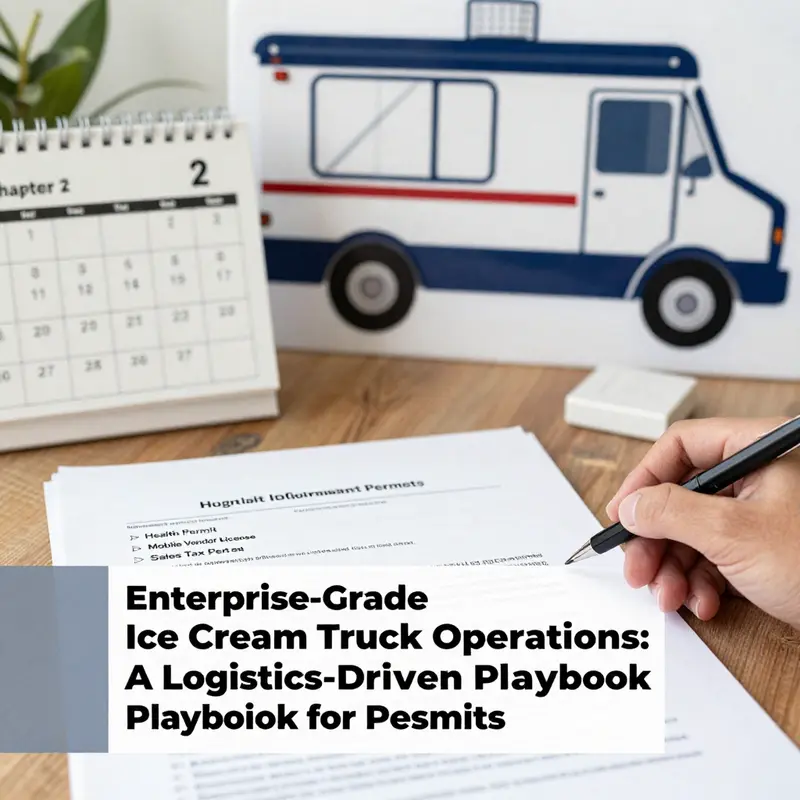
The next layer involves securing the essential licenses and permits that authorize you to operate as a mobile food vendor. The most ubiquitous requirement is a Food Service Permit, typically issued by the local health department. This permit is not merely a stamp of approval; it represents a formal recognition that your operation adheres to food safety standards designed to protect public health. To earn this permit, you will usually need to demonstrate that your truck’s interior, refrigeration, cold storage, prep surfaces, and sanitation practices meet established sanitation guidelines. You will likely face on-site inspections, and preparation for these visits is itself a valuable investment. Think in terms of a readiness checklist: clean and fully functional equipment, visible thermometer readings in refrigeration units, proper handwashing facilities, and a layout that minimizes cross-contamination risks. Your production area should flow like a kitchen in a restaurant, with clear zones for raw materials, storage, preparation, assembly, and service. The inspector’s job is not to trip you up, but to verify that you can consistently produce safe, high-quality products at scale.
Beyond the Food Service Permit, most jurisdictions require a Mobile Vendor License or a similar permit specific to operating a vehicle that dispenses food within public spaces. This license is often tied to the vehicle’s location, the routes you intend to cover, and the hours during which you may operate in particular districts. In some places, cities impose additional restrictions on where a mobile unit can set up, how long it may stay in one location, and what signage and branding are permissible. The licensing process can be straightforward in areas with a robust street-food culture, but more intricate in communities with strict zoning or crowded event calendars. It is wise to study the local ordinances early in your planning phase, even before you finalize your branding or menu. When you align your truck’s design, signage, and operating practices with the expectations spelled out in the permit, you reduce the risk of unexpected fines or required changes after inspections.
Another critical permit is the Sales Tax Permit, a seemingly administrative form that, in practice, ensures your sales are properly reported and taxed in accordance with local laws. For many operators, this permit is a prerequisite for opening a business bank account, processing card transactions, and filing regular tax returns. An accurate, timely approach to sales tax helps you avoid penalties and ensures you can focus your energy on growth rather than compliance firefighting. The exact process and timing to obtain a Sales Tax Permit vary by jurisdiction, but the underlying principle remains consistent: you must clearly separate business and personal finances, track revenue correctly, and maintain records that auditors can follow with ease.
A more specialized consideration is whether your menu will include items that fall under additional regulatory categories—such as alcoholic toppings or adult beverages. If you plan to serve boozy milkshakes or other alcohol-infused treats, you should anticipate an Alcohol Permit or a related license in addition to the standard food permits. Alcohol-related permits are typically the most scrutinized and require stricter controls, including age verification, secure storage, and specialized training for staff on responsible service. If you are not pursuing alcohol, you can safely deprioritize this track, but the possibility should inform your broader risk assessment during the planning phase.
Insurance, while not a permit in the narrow sense, is a non-negotiable pillar of legal readiness. General liability insurance protects you from a broad spectrum of claims related to bodily injury or property damage that might occur while customers interact with your truck. Vehicle insurance, of course, covers the truck itself—crucial given the mobile nature of the business. A food contamination or spoilage policy can be a prudent addition that helps mitigate the costs associated with product safety incidents. Institutions and venues that book your truck may require proof of insurance before confirming a date, and many events will not permit participation without it. When you request quotes, be explicit about the scope of coverage you need: general liability, commercial auto, products-completed operations, and perhaps workers’ compensation if you have employees. The moment you have insurance in place, you gain credibility with venues, customers, and partners who see you as a responsible, prepared operator rather than a fly-by-night vendor.
The practicalities of obtaining permits are rarely glamorous, but they reward patience and organization with predictable operations. Start by mapping the permits you expect to need from the moment you intend to begin scouting locations. Create a folder—digital or physical—that contains a copy of each application, a checklist of required documents, and a calendar with renewal dates. Health departments often require periodic renewal of the Food Service Permit, with potential on-site re-inspections or updated records after adjustments to equipment or menu. A renewed permit signals that you continue to meet safety standards and that you are actively managing your operation. Local authorities may also require your truck to pass annual or biennial safety inspections. These checks typically review a vehicle’s mechanical condition, electrical systems, and fire-safety provisions, in addition to the sanitary features of your interior. Your readiness for these checks will become a competitive advantage; you can hit the ground running each season when permits are in hand and your vehicles are compliant.
A critical, often overlooked aspect is how you organize and maintain records related to compliance. Regulators appreciate, and in many cases require, documentation of your supplier agreements, maintenance logs for refrigeration equipment, food safety training certificates for staff, and incident logs for any spoilage or waste events. A disciplined approach to recordkeeping reduces the friction of audits and demonstrates your commitment to quality. When suppliers sense your reliability, they are more likely to offer favorable terms, reliable delivery windows, and consistent product quality. In a business built on repeat visits and neighborhood loyalty, the ability to keep customers fed with reliable service and high standards is a strategic edge.
Throughout this process, it is valuable to adopt a mindset of proactive compliance rather than reactive problem-solving. This means budgeting time and resources for permit applications, scheduling pre-inspection visits, and building relationships with the people who administer the licenses. It also means recognizing that permits are not a one-time hurdle but an ongoing practice. Renewal cycles, changes in menu or service area, updates to equipment, or expansion to new territories all call for careful reapplication or modification of licenses. If you anticipate these changes as part of your growth plan, you reduce downtime and keep your truck rolling with the least possible disruption.
To make this practical, consider the following approach as you begin: first, identify your primary operating footprint by outlining where you want to be most of the time—parks, school campuses, festivals, and high-foot-traffic residential zones. Second, compile a list of likely permits for that footprint. Third, obtain the EIN and register your business name with your state. Fourth, apply for the Food Service Permit and the Mobile Vendor License in parallel, while also pursuing a Sales Tax Permit. Fifth, explore insurance options in parallel, ensuring you have quotes that align with your anticipated activity and revenue. Finally, organize a renewal calendar and a compliance folder that keeps everything at your fingertips. If you tackle each step with a clear schedule and a practical, detail-driven mindset, you will not only meet regulatory requirements but also establish a platform of trust that customers and partners can rely on.
In addition to the core permits, keep a soft eye on the broader regulatory environment. Laws related to food safety evolve, and municipalities may add or adjust requirements for mobile vendors in response to public health concerns, traffic patterns, or events calendars. Staying engaged with the local business community, participating in vendor associations, and consulting resources like the SBA can help you anticipate changes and adapt quickly. While the legal landscape can feel complex, the payoff for your ice cream truck is straightforward: a compliant, insured operation that can focus on flavor, service, and community presence rather than chasing paperwork.
As you integrate these elements into your startup plan, you will notice how closely aligned legal readiness is with your brand’s promise. A truck that operates within a clear set of safety standards and regulations communicates reliability to customers who may be trying ice cream from a mobile vendor for the first time. It also helps you establish predictable relationships with venues and organizers who want to minimize risk when they book a truck for events. The legal foundation thus becomes not a barrier but a bridge—connecting your ambition to the tangible, daily realities of serving smiles in scoops.
External resource for further guidance on the regulatory and steps for obtaining permits is provided by the U.S. Small Business Administration. For comprehensive, country-wide guidance on starting a business and navigating federal requirements, visit https://www.sba.gov.
External resource: https://www.sba.gov
Vehicle as Brand: Choosing, Customizing, and Equipping Your Ice Cream Truck for a Standout Mobile Kitchen
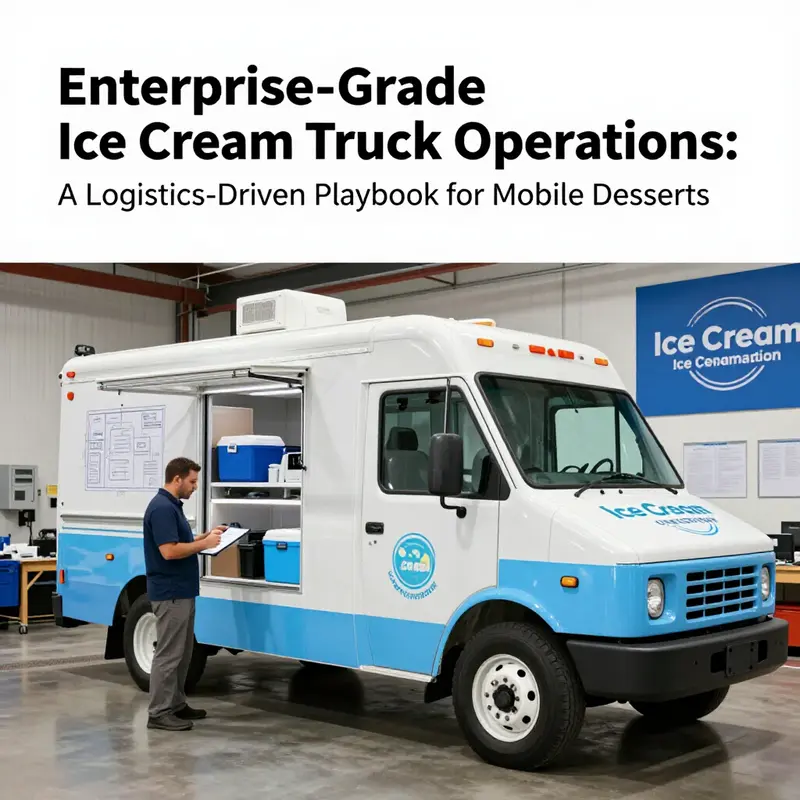
The ice cream truck is more than a vehicle. It is the first stage of your brand, a moving storefront that communicates your story the moment it rolls into a park, a school campus, or a festival. The decisions you make about vehicle type, interior layout, and equipment ripple through every part of the business—from food safety and efficiency to marketing and customer experience. In this chapter, we weave together practical guidance drawn from industry trends and real-world considerations. The aim is to help you select a chassis that harmonizes with your concept, customize it for smooth operations, and equip it with tools that keep your menu fresh, your customers happy, and your costs under control. You will see that the process is less about chasing the newest gadget and more about aligning the vehicle with your brand promise, your route strategy, and your financial plan. The choices you make here set expectations for your team, your partners, and your future growth. As you read, think about how your prospective truck will travel through the market and how it will speak for your business when you are not there to greet the line of customers in person.
First, the spectrum of vehicle types offers distinct advantages and limits, and the best choice depends on your market, your concept, and your budget. The most iconic option is the classic vintage-style ice cream truck. Its exterior design—rounded panels, bright trim, and a bell or chime—creates an immediate emotional connection with families and fans of retro aesthetics. The nostalgia can be a powerful differentiator for brand storytelling. Yet this allure comes with costs: maintenance for aging mechanical components, potentially higher repair timelines, and a more constrained interior footprint that can limit storage and production space. These trucks shine in brand storytelling and specialty events such as weddings, corporate gatherings, or themed parties where the narrative earns as much attention as the product itself. Importantly, if you pursue this path, you should be prepared for a longer lead time on modifications and a careful budgeting plan for ongoing upkeep. The lesson here is not to chase a mood alone, but to ensure the underlying operations can keep pace with demand when a high-profile booking comes in.
A newer variant within the vintage-inspired lane is the modern retro design. It preserves the charm of the 1950s visual language while employing modern engineering, safer and more efficient propulsion, and compliant refrigeration systems. This hybrid approach offers a smoother onboarding process with regulators and insurers, and it tends to register and insure more readily in many jurisdictions. The interior can be laid out with thoughtful flexibility, enabling better organization of ingredients, display cases, and service counters. The caveat remains that the initial investment will be higher than a standard, off-the-shelf vehicle, and design missteps can give a feel of being “too curated” if the vehicle looks intentional but underperforms under real-world conditions. The balance is to select a chassis that supports your brand concept while delivering reliability and predictable operating costs.
A third option emphasizes practicality and capacity: the box-style or utility truck. This rectangular workhorse prioritizes storage and cold-chain integrity. It typically excels at housing multiple cooling zones, which helps keep soft-serve, hard-packed, and pre-portioned items neatly separated to reduce contamination risk and extend shelf life. For operators with a dense menu or a focus on high-volume events, the box design makes sense because it minimizes compromises on product variety and quality. The downsides are straightforward: larger size can hinder maneuverability in tight urban streets, and energy demand tends to be higher due to the expansive refrigerated space. For high-traffic urban routes, festivals, and large catering gigs, a box-style configuration can be the backbone of a scalable operation, especially when paired with a clear route plan and a robust backup power strategy.
Lastly, the mobile trailer or van format offers a leaner starting point with flexible deployment. Trailers or tow-behind units can be moved between venues with a reliable vehicle and can be a cheaper entry into the market. They often present the lowest initial barrier, allowing you to test concepts in multiple neighborhoods or events before committing to a full-time, self-contained truck. However, stability and exposure to weather are real considerations. Weather resistance, refrigeration reliability, and a sturdy hitch system become essential, because you are trading site-by-site consistency for flexibility. For many new operators, this option provides a stepping stone—a way to validate demand and refine the operating model before investing in a permanent truck.
Across these formats, the core question becomes: what do you want the customer to experience when they encounter your truck for the first time, and how will that experience translate into profitable operations? Design is not just about beauty; it is about flow. The most effective trucks integrate branding with functionality. They present an inviting display that makes it easy for customers to see and choose items, while maintaining cold storage, efficient prep space, and safe, sanitary workflows. This means planning for multiple goals at once: a compelling visual identity, a sound refrigeration strategy, a reliable power supply, and an interface that makes transactions fast and friendly.
Inside the vehicle, the layout matters as much as the exterior. A well-conceived interior balances three priorities: product quality, staff efficiency, and safety. First, the refrigeration and freezing systems must be able to maintain distinct temperature zones for different types of frozen and semi-frozen products. This helps prevent cross-contamination and reduces waste by keeping perishables at their ideal temperatures regardless of external conditions. Multi-zone, independently controlled cooling is especially valuable when you offer a diversified menu that includes softer ice creams, hard-packed flavors, and premium dairy-free options. The second priority is a service or display area that makes it effortless for staff to assemble orders and for customers to observe the product lineup. A transparent display, with bright, evenly distributed LED lighting, not only protects product integrity but also enhances the desirability of the offerings. Third, safety and sanitation should be embedded in every detail: food-grade stainless steel interiors, non-slip floors, proper drainage, accessible hand-washing stations, and clearly marked emergency equipment. These features do more than keep you compliant; they reinforce customer trust and welfare, which are invaluable for a mobile business that must earn loyalty in a few quick minutes at a time.
Power and reliability sit at the heart of everyday operations. Electrical design should favor a combination of efficient propulsion (where feasible) and a robust on-board electrical system to support refrigeration, lighting, payment processing, and audio or branding elements. In many markets, electric drivetrains or plug-in options paired with a diesel or hybrid backup offer both environmental and cost advantages. The practical benefit is not merely lower emissions; it is more predictable maintenance costs, longer service intervals, and less exposure to fuel price volatility. For venues with strict noise or emissions limits, electric or low-noise configurations can unlock locations that would otherwise be inaccessible. Solar augmentation can add another layer of resilience, particularly for longer events or in hot climates where peak demand for cooling can strain a generator or battery. If power planning is done carefully, you can sustain a high-service level with fewer disruptions due to fuel logistics or generator failures.
Beyond the vehicle itself, you must address procurement and cost in a way that aligns with your business strategy. The market presents a spectrum of options. Some operators purchase brand-new, purpose-built vehicles from established conversion houses, while others starting out opt for more economical, pre-owned platforms and retrofit them to their needs. For buyers moving quickly, overseas suppliers offer compelling price points and customization routes. They may provide base chassis, refrigeration modules, display cases, and branding packages that let you tailor the vehicle to your concept. When engaging with any supplier, verify the credentials of the manufacturer, the scope of warranty, and the availability of local service support. A good partner will aid with electrical standards, refrigeration maintenance, and compliance with local health and safety codes, which can otherwise become a source of costly delays.
Cost is, of course, a critical driver. Market data show a wide range in entry costs depending on vehicle type, size, and customization level. Classic vintage trucks can command premium pricing due to their distinctive look and the demand for high-end or specialty events, but they typically involve higher maintenance and repair costs over time. Modern retro designs strike a balance between charm and reliability, often with easier registration and insurance processes. Box-style configurations offer the most cargo capacity and cooling power, which can translate into higher upfront investment but better economies of scale at scale. Trailer or van formats present a lower barrier to entry and a faster path to market, though they may require more frequent relocation logistics and weather considerations.
A practical way to approach the budgeting process is to map your expected revenue against your fixed and variable costs. Start with a baseline of startup costs that includes the vehicle, equipment, branding, initial inventory, and a conservative reserve for maintenance and regulatory fees. Then project operating costs: fuel or electricity, insurance, licensing, routine maintenance, and ongoing equipment replacements. Use a conservative service plan for your early months, pairing a few core flavors with a couple of signature items that define your brand. As demand grows, you can layer in additional equipment or a second vehicle, but growth should be deliberate and data-driven. When you plan for expansion, consider how different vehicle types could support different market channels—weekday downtown routes versus weekend festival itineraries—and how routing software and data analytics can optimize your schedule and inventory.
Technology plays a critical role in turning a well-designed truck into a sustainable business. A mobile POS that handles contactless payments and tip options, a compact inventory system for real-time stock visibility, and a simple digital display for daily specials help you deliver a smooth guest experience. A dedicated cleaning and sanitation workflow should be built into the daily routine, along with easy-to-clean interiors that minimize downtime between events. Sound systems and branding elements, while entertaining, should be in service of the core objective: delivering a delicious product in a clean, efficient, and welcoming manner. The most successful operators treat the truck as an extension of their kitchen, not as a separate, isolated asset. This mindset ensures that every touchpoint—service speed, product quality, brand messaging, and safety—converges toward a coherent customer experience.
If you are unsure which path to take, think about your first season as a form of market testing. A modest trailer or a compact box-style unit can offer flexibility and speed to market, letting you learn which neighborhoods respond best to which flavors and service formats. Alternatively, if your concept leans heavily into storytelling and event-driven experiences, a modern retro or vintage-inspired truck may be worth the investment, provided you secure a reliable maintenance plan and a capable team to support peak bookings. Whatever route you choose, insist on a layout and equipment plan that can be adapted over time. A well-designed backbone, even if it starts simple, leaves room for enhancements as demand evolves.
In the end, the vehicle you choose is a reflection of your brand’s promise and a lever for your profitability. It should be visually compelling, practically resilient, and financially sensible. It should enable a quick, friendly customer interaction, maintain product integrity under varying outdoor conditions, and integrate with the broader goals of your business—whether that means rapid scale, distinctive experiences, or a tight focus on quality and consistency. The path you select should feel like a natural extension of your concept, not a compromise to appease appearances. When you stand back and look at the truck, you should see the roadmap of your business: where you came from, how you will win customers, and how you intend to grow.
For more context on broader fleet considerations and strategic alignment as you scale your operations, you may explore related insights here: navigating cross-border challenges—key insights from the TCA annual meeting. This link offers a wider lens on fleet planning, regulatory navigation, and the integration of people, processes, and technology as you expand beyond a single truck.
When it comes to the technical specifics of equipment, a succinct guideline is to prioritize modularity and reliability. For cold storage, aim for multi-zone capability with independent temperature control so you can protect delicate items and maintain optimal quality. For production and display, consider a layout that keeps the customer in sight of fresh product while allowing staff to move swiftly and safely behind a service line. In terms of power, look for configurations that reduce the burden of fuel and emissions while ensuring you have backup options to cover peak demand. And always wire in a scalable plan for payment processing, customer data capture, and branding exposure so your truck can grow with your business rather than outgrow you.
As you finalize your decision, the most prudent course is to align vehicle choice with both your current ambitions and your long-term plan. If your goal is rapid local footprint and frequent community events, a cost-efficient, flexible setup like a trailer or compact box truck may offer the strongest early returns. If you envision a high-profile brand with storytelling at its core, investing in a modern retro or classic look could yield significant marketing impact and differentiation. If your market requires sheer volume and consistent cold-chain management, the box-style vehicle can be the foundation of a scalable operation. And if your strategy leans toward experimentation and mobility, the trailer or van approach can provide the least friction in joining multiple event ecosystems. Regardless of the path, you will benefit from a clearly defined scope, a sound supplier partnership, and a plan that treats the truck as a living part of your business strategy, not a one-off asset.
External resource for further reading on types, features, and business tips for ice cream trucks can be found here: https://www.foodtrucks.com/ice-cream-truck-selection-guide. This resource complements the chapter by offering a broad, industry-wide perspective on design choices, equipment checklists, and practical guidance for entrepreneurs planning to enter the mobile dessert space.
Final thoughts
The convergence of market intelligence, regulatory discipline, and disciplined vehicle design creates a reliable template for launching ice cream truck programs within enterprise fleets. Chapter 1 translates demand signals and partnerships into scalable coverage, pricing, and service windows that align with fleet utilization. Chapter 2 codifies the critical permits, insurance, and safety controls that protect both brand and operations, ensuring consistent quality across sites. Chapter 3 closes the loop by detailing vehicle selection, interior layouts, and equipment configurations that safeguard product integrity, comply with health standards, and deliver a compelling customer experience. The integrated approach yields tangible outcomes: predictable uptime, repeatable service regions, optimized inventory, and a defensible total cost of ownership for a mobile dessert program that supports but does not disrupt core logistics and fleet performance.