
Entering the trucking industry requires more than capital; it demands rigorous market insight, disciplined compliance, and a scalable operating model. This guide targets four high-potential segments—Logistics and Freight Companies, Construction and Engineering Firms, Fleet Management Providers, and Food & Beverage Distributors—and translates industry fundamentals into a concrete, phase-by-phase plan. You will learn how to identify a sustainable niche, select an appropriate legal structure, secure the necessary licenses, acquire and insure assets, manage drivers, and deploy technology and financial discipline to drive growth. Research confirms that firms leveraging digital tools and strategic partnerships—through platforms or franchising—outperform independent operations, with first-year survival rates markedly higher. Specifically, platform-affiliated trucking ventures often report survival above 70%, compared with around 50% for independent operators. Across chapters, the emphasis remains on practical actions you can implement, from market research to routine compliance, to ensure resilience, safety, and profitability. The narrative progresses from market definition and legal foundations to asset strategy and operating excellence, culminating in a growth-minded operating plan that aligns with the needs of the four target sectors. Chapters below build a coherent roadmap, each reinforcing the central objective: launch a compliant, customer-driven trucking business capable of sustained profitability in a competitive landscape.
Chapter 2 – From Insight to Roadmap: Market Research, Niche Definition, and Strategic Positioning for a New Trucking Venture
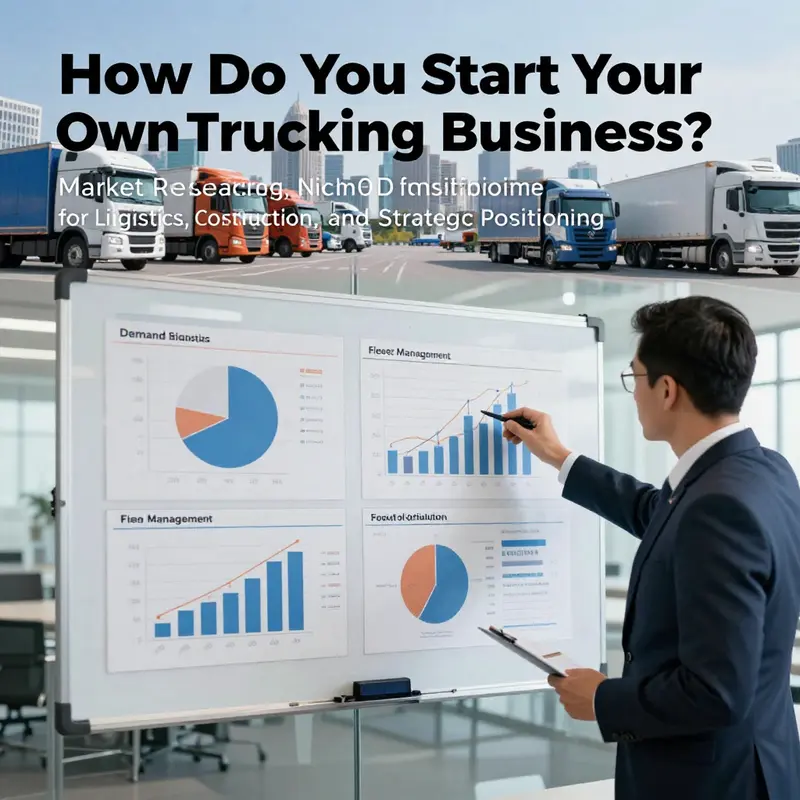
Market intelligence is not a luxury in trucking; it is the quiet engine that determines whether a new venture can sustain growth once the initial enthusiasm wears off. A bustling industry often feels full of opportunity, yet the gaps between supply and demand are real and frequently location-specific. In the United States, the transportation and logistics sector is a major employer, and that scale translates into both opportunity and competition. The way you interpret local and regional freight patterns—where demand clusters, how capacity shifts with seasons, and which customers prize speed, care, or specialized handling—will shape every practical decision you make. The first task, therefore, is to immerse yourself in the data that underpins the market. You want to identify where demand outstrips current capacity and where your entry could close a service gap without inviting an unsustainable price war. This means moving beyond a gut feeling about potential clients and asking targeted questions: Which types of freight are growing locally? Are there underserved industries that rely on dependable delivery windows? Where do shippers repeatedly encounter bottlenecks that a well-timed regional carrier could alleviate? These questions anchor your start-up plan in reality rather than aspiration.
From the outset, market research should also illuminate the practical boundaries of your chosen niche. The transportation landscape rewards specialization because it creates operational clarity and a defensible position with customers. A broad, generalist fleet may seem flexible, but it often battles on price and reliability against incumbents who have tailored their equipment, routines, and service standards to specific lanes or cargo types. Instead, envision a service profile that matches real customer needs and your existing strengths—whether that means local or regional delivery, temperature-controlled freight for perishables, or time-critical distribution for e-commerce partners. When you define a niche, you are not saying no to everything else; you are clarifying where you can consistently excel, which ultimately allows you to deploy your capital more efficiently and communicate your value with greater precision. In practice, the decision to focus on, say, last-mile e-commerce delivery or regional distribution becomes a strategic thread that runs through vehicle choice, driver training, route planning, and customer communications.
Niche clarity also sharpens the financial lens. Service specialization tends to enable tighter margins and more predictable utilization of equipment and labor. It helps you estimate cycle times, lane densities, detention risks, and fuel burn with greater confidence. It also informs the kind of equipment you invest in and how you maintain it. For example, last-mile or regional distribution often benefits from a mix of lighter, highly maneuverable vehicles with strong on-time performance records, paired with a dispatch model that prioritizes rapid loading, flexible scheduling, and error-free documentation. Refrigerated or temperature-sensitive freight, by contrast, calls for specialized trailers, maintenance regimes, and a robust chain of custody that reassures customers about product quality. The central message is not just about what you haul but how you haul it: the cadence of pickups and deliveries, the care used in handling, and the predictability of your service. These are the attributes that shape customer perception and, ultimately, retention.
Positioning emerges when you translate this niche into a clear brand promise. Reliability, safety, and efficiency are not mere values to cite; they are the concrete standards that inform your operating procedures, your driver training, and your partnerships. A strong position communicates to potential clients that you understand their business outside of the truck cab—from the constraints of perishable cargo to the deadlines of regional distribution networks. It also informs the tone and content of your outreach, whether you are speaking to shippers, brokers, or freight forwarders. In a competitive market, your positioning can be reinforced by tangible practices: transparent communication channels, real-time shipment visibility, precise ETA updates, and a documented safety record that demonstrates compliance and accountability. The result is trust—a critical currency in freight, where delays, damaged goods, or mismanaged loads translate quickly into lost opportunities and damaged reputations.
The process of market insight and niche definition is not an isolated exercise. It should be a continuous feedback loop connected to how you build and grow your business. Your market intelligence informs which customers you pursue and which partners you rely on for freight volume, but it should also shape your approach to compliance, risk management, and investment. For instance, choosing to operate in specific lanes with specialized cargo will influence your FMCSA status, the type of insurance you require, and the kind of driver qualifications and maintenance practices you must maintain. The theme is cohesion: every strategic choice should reinforce the same story about who you are as a carrier and what you can reliably deliver. When your service design aligns with regulatory expectations and customer needs, you set a foundation for durable growth rather than episodic success.
As you translate market insight into a practical roadmap, consider the value of building a network that extends beyond your own fleet. A scalable trucking business does not operate in isolation; it thrives on relationships with shippers, brokers, and other carriers. The aim is to create a reliable capability, one that others come to when their typical routes require a dependable partner. This is where the reality of the market intersects with your long-term strategy. You might find that joining a recognized platform or network offers the volume certainty needed to stabilize early-stage utilization, while still allowing you to experiment with your niche and refine your service model. The key is to balance flexibility with consistency; you want enough variety to grow, but enough predictability to manage risk. A practical way to pursue this balance is to design your service around a core competency while leaving room to expand into adjacent lanes or complementary services as your capabilities and capital mature.
In the end, this chapter is about turning market signals into a workable plan. Your niche and positioning should be a living construct, tested against real customers and adjusted as the market evolves. This is not a one-off analysis but a disciplined approach to thinking about your business from the ground up. It is about recognizing where your strengths intersect with customer needs and regulatory realities, and about communicating that intersection with clarity and credibility. If you can articulate a well-founded niche, backed by data about demand, margins, and capacity, you create a compelling case for investors, lenders, and partners who will become essential allies as you move from startup to ongoing operation. And as you begin to translate insight into action, you will find that your future chapters—covering legal registration, licensing, and day-to-day operations—should reflect and reinforce the market reality you have identified. When that alignment is in place, the road ahead—the long arc of building a trucking business that can withstand cycles and competition—becomes less about chance and more about deliberate, informed progress.
For readers who want a deeper dive into aligning people with strategy and sustaining growth, consider the perspectives shared in investing in people a new path for trucking fleets. This resource offers a grounded look at how workforce strategy can support a niche-focused trucking business by reducing turnover, improving safety, and elevating service quality. It complements the market-focused lens of this chapter by reminding you that the people behind the operation are the ultimate enablers of reliability and efficiency. Investing in people: a new path for trucking fleets.
As you proceed, keep the regulatory frame in view. The landscape for licenses, permits, and safety compliance is not optional padding; it is the backbone of legitimate operation. The FMCSA and its Unified Registration System govern the fundamental credentials you must secure to move freight across state lines, while state authorities can add local requirements that influence your route structure and timing. The next chapters will guide you through those essential steps, but the current focus—market intelligence, niche clarity, and strategic positioning—provides the compass that will keep you headed toward sustainable growth rather than wandering in search of demand. For an official start, you can explore the FMCSA resources which outline registration, compliance, and safety standards to ensure you are building on a solid legal foundation. External resource: https://www.fmcsa.dot.gov
Foundations in Motion: Choosing Your Legal Structure, Securing Registration, and Embedding Compliance in Your Trucking Startup

Starting a trucking business is a legal and logistical journey, not just a ride behind the wheel. The decisions you make at the outset cascade into every operation, from how you structure ownership to how you track compliance. A solid foundation means more than a shiny truck; it means a process that keeps you on the right side of the law while you scale. The core is selecting a business structure that aligns liability protection with tax efficiency and administrative ease. For many entrepreneurs, an LLC offers a practical compromise: limited personal liability with pass-through taxation, while still allowing you to grow with more complex ownership structures if needed. But the best choice depends on your ambitions, your capital plan, and your willingness to handle filings and annual reports. It is worth engaging with a legal or tax professional to map out options so you can plan for the long haul rather than scrambling when something unexpected happens on the road.
Once you settle on a legal structure, you must register your entity with the appropriate state authorities. This step creates your official business name and separates your personal assets from the company’s liability. You’ll typically file formation papers or articles of organization, obtain a state tax ID, and register for any required local licenses. In parallel, you should apply for an Employer Identification Number (EIN) from the IRS. An EIN is not a tax, but it is a universal identifier that enables you to open a business bank account, hire employees, and file payroll and other tax reports. Even if you start as a single-owner operation, establishing an EIN helps you maintain clean records and signals a professional, scalable posture to customers and lenders.
With the entity and tax IDs in place, the real entry into the federal regulatory arena begins. In the trucking world, the baseline is registration with the Federal Motor Carrier Safety Administration (FMCSA). The Unified Registration System (URS) lets you obtain a USDOT number and register for other core programs that keep you compliant, trackable, and within the law. The USDOT number serves as a unique identifier in federal safety and licensing databases; it is essential for any commercial motor vehicle operating in interstate commerce. As you prepare to haul freight across state lines, you may also pursue an MC number to operate as a for-hire carrier across jurisdictions. Some operations stay intrastate, and those require state-specific operating authority. The URS portal is where you manage these registrations in one place, a relief compared with juggling multiple forms and portals. Embrace the URS not just as a box to check, but as a centralized workflow that prompts you to align IFTA and IRP registrations with your fleet, simplifying fuel tax reporting and registration payments across states.
Interstate activity introduces a pair of ongoing obligations that you should plan for from day one. The International Fuel Tax Agreement (IFTA) and the International Registration Plan (IRP) are designed to simplify fuel tax reporting and vehicle registration across multiple jurisdictions. IFTA collects fuel usage data in each state or province you operate in, while IRP handles weight-distance registration and apportionment of fees when your vehicles move across borders. The URS portal is the central hub for enrolling in IFTA and IRP so you can generate fuel tax reports and maintain compliant mileage records without duplicating effort. You should also prepare for state-specific permits, such as intrastate authority, highway use taxes, or local transportation permits, depending on where your trucks operate. Failing to maintain these registrations can trigger fines, delays at the border, or suspension of operating authority, which makes it impossible to deliver freight on time.
Insurance is another non-negotiable pillar. As you set up, you’ll need a package that protects the business, your drivers, and the cargo you carry. General liability insurance provides a broad shield; cargo insurance covers the goods being transported; physical damage policies address your equipment against accidents and weather. Worker’s compensation may be required if you hire employees, while non-trucking or motor carrier liability insurance adds a layer of protection specific to trucking operations. Coverage limits are often influenced by your service type, the hazmat status, and the levels you plan to insure. Talk with an experienced insurer who understands trucking risks and can tailor a policy that meets minimum state requirements and supports you as you grow. The right coverage is not just a cost but a safety net that preserves cash flow when incidents occur.
Alongside insurance, the vehicles themselves must be properly prepared and documented. Each truck you place on the road should pass periodic inspections and maintain valid registrations and permits. A Commercial Vehicle Safety Alliance (CVSA) inspection is a typical requirement, ensuring the vehicle meets safety standards for roadworthiness. You’ll also need a Vehicle Operating Permit (VOP) or equivalent, depending on the jurisdiction. The bottom line is preventive maintenance, clear records of repairs, and an ongoing program that keeps your fleet ready for DOT inspections. A well-managed vehicle program reduces downtime, extends vehicle life, and supports your reputation for reliability with shippers who expect safe and on-time deliveries.
No trucking business can operate without qualified drivers. Recruiting, hiring, and managing talent requires adherence to FMCSA rules around driver qualifications, hours-of-service (HOS), and drug and alcohol testing. You’ll need a Driver Qualification File (DQF) for each driver, containing their license, medical eligibility, experience, and driving record. Regular background checks help you screen for red flags, while ongoing monitoring—such as drug and alcohol testing in accordance with regulations—protects you and your customers. For smaller fleets, third-party compliance providers can help manage the paperwork and audits, allowing you to focus on dispatch, maintenance, and customer service. The human element is your most valuable asset, and building a culture of safety and reliability begins with the people you hire and how you manage them on the road.
Logistics lives in systems. A strong operating backbone combines technology with disciplined process. Implement a Transportation Management System (TMS) to plan loads, optimize routes, dispatch drivers, and track shipments in real time. Pair the TMS with GPS tracking and telematics to monitor vehicle location, fuel efficiency, and safety alerts. The data becomes a decision tool, not just a display. Real-time visibility helps you minimize empty miles, reduce detention times, and improve customer communication. Digital invoicing and cloud-based accounting bring transparency to cash flow, so you can predict revenue, manage receivables, and scale for growth. In the long run, automation reduces manual errors and frees your team to focus on strategic growth, customer relationships, and compliance monitoring.
Building a reliable customer base starts with making yourself visible where shippers and brokers look for capacity, but it also means delivering predictable cycles of service. Start by pursuing relationships with shippers who align with your service niche and by keeping a small network of trusted brokers who understand your capabilities. As a new entrant, you may find value in joining networks or platforms that provide steady freight and a pathway to repeat business while you prove your reliability. You can differentiate your operation by offering value-added services such as warehousing coordination, precise delivery scheduling, or flexible pickup windows. The emphasis should be on reliability, safety, and clear communication. Shippers reward consistency with repeat business, and a small, well-run operation can compete effectively against larger fleets when it communicates a commitment to service levels and safety.
Compliance is the ongoing discipline that keeps your business in motion. Keep meticulous records of all licenses, registrations, and financial transactions. File taxes accurately and on time, and stay aware of changes in federal and state requirements that affect your operations. Building a financial cushion—three to six months of operating capital—is prudent for weathering downturns, maintenance needs, or unexpected compliance costs. The smarter operators automate reminders for license renewals, insurance certificates, and driver credentials rather than relying on memory. The combination of robust processes, digital tools, and a willingness to audit your own operations before an external inspection strengthens you against the unexpected. Studies show that ventures affiliated with larger platforms or franchising structures tend to experience higher first-year survival and profitability, underscoring how branding and network effects can matter as you navigate regulatory complexity and market volatility.
To navigate the complexity with confidence, you will want to leverage focused resources as you build your own roadmap. A practical approach is to view regulatory requirements not as a barrier but as a framework that enables predictable operations. For example, consider the value of staying current with emergency regulatory relief practices during severe weather—these provisions can temporarily ease some costs and administrative burdens while disruptions are addressed. Regulatory relief for winter storms trucking is a resource worth reviewing as you plan contingencies and keep your fleet moving through adversity. The URS portal is your ongoing compass for registrations, while your insurance portfolio and driver qualification program are your shield against risk. This mindset—planning for compliance at inception and iterating as you grow—will help you stay resilient as you scale your fleet into the future. Regulatory relief for winter storms trucking.
Finally, remember that your future success depends on balancing ambition with discipline. Start-ups in trucking benefit from a conservative yet scalable approach: establish the right legal structure, secure essential registrations, and embed compliance into daily practice, not as an afterthought. This approach minimizes delays, protects assets, and builds credibility with lenders and customers. Investing time up front compounds into smoother operations, better risk management, and a clearer path to growth. In the next chapter, you’ll explore how to assemble a practical fleet plan, select vehicles and equipment that fit your niche, and outline a financing strategy that aligns with your regulatory obligations and business goals. The journey is long, but with a solid foundation, you can keep moving forward with confidence. External resource: https://www.fmcsa.dot.gov/.
Chapter 3: Opening the Road — Licensing, Permits, and the Regulatory Compass for Interstate and Intrastate Trucking
Launching a trucking business begins with a map you can’t see until you learn the rules that govern the road. The licenses, permits, and registrations are not mere formalities; they are the backbone of lawful, dependable operation. Without them, your trucks sit idle, insurance costs climb, and lenders question your plan. In the lanes ahead, the difference between a flourishing fleet and a frustrated startup often comes down to how well you navigate this regulatory terrain. The journey from a bright business idea to a compliant, operational carrier demands clarity, patience, and a steady eye on both federal and state requirements.
The regulatory landscape splits into two broad paths: interstate operations, traveling across state lines, and intrastate work, confined within a single state. The distinction matters because it determines which numbers you must secure, which registrations you file, and how you stay in good standing as you move freight. For anyone aiming to operate across borders, the first gate is the federal level. You must obtain a USDOT number from the Federal Motor Carrier Safety Administration, or FMCSA. This digit stake in the ground is mandatory for any commercial motor vehicle moving goods across state lines. If your model relies on for-hire transportation, you also pursue a Motor Carrier, or MC, number. The MC number authorizes you to operate as a for-hire carrier and signals to shippers and brokers that you meet the basic safety and financial responsibilities required for interstate service. Both steps are executed through the FMCSA’s Unified Registration System, or URS, an online portal designed to streamline these essential registrations. Alongside this federal registration, interstate carriers must register with SAFER, the Safety and Fitness Electronic Records system, to maintain visibility into your safety data and compliance status. The combination of USDOT, MC, and SAFER registration creates the platform from which you can lawfully compete for cross-border freight.
Intrastate operations present a different, albeit equally important, set of demands. In many cases, a USDOT number is not federally required if you stay within one state, but states rarely make this a blanket rule. Most jurisdictions still require a state-issued operating license or intrastate authority for vehicle fleets that transport goods inside state lines. The requirements vary widely by state, so a careful review of the state department of transportation or department of motor vehicles is essential before you place a single truck on the road. Take California as an example: the state often requires a specific license for certain freight broker activities, while Texas maintains its own intrastate carrier rules. The upshot is this: even when you do not operate across borders, you are still bound by a patchwork of state rules that can affect permits, insurance, and compliance. A deliberate, early check of your state’s regulatory website helps avoid fines, operational shutdowns, or legal liabilities later on.
Beyond the USDOT and MC numbers, the broader regulatory framework includes insurance, qualifications, and maintenance standards that ensure the safety of every mile you drive. Insurance is not a one-off cost but a dynamic component of your safety strategy. You’ll need liability insurance, cargo coverage, physical damage coverage, and workers’ compensation if you hire drivers. The minimum limits and coverage requirements vary by state and operation type, so it pays to talk with a qualified broker who understands interstate and intrastate nuances. If you plan to transport hazardous materials, a Hazmat Endorsement adds another layer of training, background checks, and clearance that can widen your business opportunities—and the complexities of compliance.
Driver compliance is another cornerstone of the regulatory equation. The FMCSA governs hours-of-service, drug and alcohol testing, and driver qualification files. These rules are not optional; they are designed to reduce fatigue and improve safety across the fleet. Maintaining Driver Qualification Files, conducting pre-employment, random, and post-accident testing, and ensuring each driver is credentialed and trained are practices that protect your operation and your reputation. You may choose to work with a third-party provider for background checks and ongoing compliance monitoring, especially during the rapid growth phase when you add new personnel.
Vehicle compliance is equally critical. Each truck must pass regular inspections under the CVSA framework, and operators must keep records for a minimum of two years. The maintenance schedule, inspection records, and corrective actions should be transparent and accessible. Fleet safety isn’t merely about one check at onboarding; it’s a living discipline that follows you every mile. This is the moment to invest in a disciplined maintenance program, not after a breakdown erodes your margins.
The regulatory pathway also nudges businesses toward the practical realities of launching a fleet. The decision about your business structure—whether a sole proprietorship, LLC, or corporation—intersects with regulatory readiness. An LLC, for example, provides liability protection that helps shield personal assets as you scale. Registration of your business name with the state, plus obtaining an Employer Identification Number from the IRS, forms the administrative backbone of financial operations, payroll, and tax compliance. With those legal protections in place, you can begin to align your fleet planning with a more concrete financial model. It’s not glamorous, but it anchors every subsequent decision—from leasing or buying trucks to hiring drivers and investing in dispatch software.
As digital tools become integral to everyday trucking, the regulatory framework intertwines with technology. Transport Management Software (TMS) helps track shipments, optimize routes, dispatch drivers, and keep customers informed. Real-time GPS tracking and telematics contribute to safety and efficiency, while digital invoicing and robust accounting systems maintain financial transparency. A modern, compliant operation relies on accurate data, disciplined record-keeping, and the ability to demonstrate safety and reliability at a moment’s notice. The integration of technology with regulation is not optional; it is a competitive differentiator. Studies consistently show that carriers who embrace digital tools and align with platform partnerships tend to enjoy stronger survival rates and better profitability in their first year and beyond. In practical terms, this means investing in software that scales with you—from a handful of trucks to a growing network of independent contractors or partner fleets.
If you are building the business with an eye toward resilience, consider the advantages of joining established networks or platforms. These affiliations can provide access to steady freight, training resources, and brand recognition that help reduce the unpredictability that plagues many new operations. The data is telling: first-year survival rates for franchise or platform-affiliated trucking ventures exceed seventy percent, compared with around fifty percent for independent operators. This is not a mandate, but a compelling case for evaluating how you want to enter the market. The regulatory journey cannot be separated from the business model you pursue. A thoughtfully chosen structure, paired with a compliant, well-documented safety program, forms a platform for sustainable growth rather than a short-term dash for loads.
The practical path to licensing and regulatory readiness also requires a pragmatic view of finances. Startups often underestimate the capital reserves needed for operating costs, maintenance, insurance premiums, and the inevitable contingencies that arise on the road. A prudent rule of thumb is to set aside three to six months of operating capital. That cushion, combined with a precise budgeting process and a plan for debt service, helps weather the early phases when cash flow can be lumpy. A clear understanding of the regulatory landscape supports this financial planning by reducing the risk of unexpected compliance costs or penalties that can derail a fledgling operation. In short, licensing and permits are not a one-time hurdle; they are the infrastructure on which your entire venture rests.
For those who want to see the regulatory road mapped with an eye toward real-world operations, there are official resources that lay out the steps in a precise, authoritative way. The U.S. Department of Transportation’s official gateway provides guidance on USDOT registration, URS, and state-specific requirements. Consulting these sources helps you avoid common missteps and keeps your timelines aligned with the agencies that oversee the industry. And when you encounter difficult regulatory questions or evolving rules—such as shifts in electronic logging device requirements or emissions standards—these official channels are the most reliable compass. If you want to explore a practical example of how rules adapt in tough circumstances, you can explore insights on regulatory relief during winter-related disruptions through industry-focused coverage like regulatory-relief-winter-storms-trucking. This association between regulation and resilience is what ultimately determines not just compliance, but your capacity to serve customers consistently in changing conditions. regulatory-relief-winter-storms-trucking
As you plan, keep in mind that the regulatory route is not a solitary journey. It intersects with your business plan, your market niche, and your fleet design. The decision to operate interstate or intrastate affects how you structure debt, how you price services, and how you recruit and manage drivers. It also shapes your risk profile and the strategies you use to mitigate it. You may choose to start with local or regional freight to gain regulatory confidence and build reputation, then expand into longer hauls as your licenses and compliance processes mature. In either case, a disciplined approach—documenting driver qualifications, maintaining up-to-date records, ensuring continuous insurance coverage, and staying current with inspections and safety programs—creates a solid foundation that can withstand the inevitable shifts in demand and regulation.
In closing, licensing, permits, and the regulatory framework are not checkpoints to be crossed and forgotten. They are the scaffolding that supports every operational decision, from the levers you pull in dispatch to the terms you negotiate with shippers. A thorough, early, and ongoing engagement with federal and state requirements minimizes risk and positions your trucking venture for dependable growth. Stay curious about how rules evolve, invest in compliance as a core capability, and leverage digital tools to turn regulatory discipline into competitive advantage. Official guidance is your best friend on this road, and the right regulatory posture pays dividends in reliability, safety, and long-term profitability.
External resource: https://www.fmcsa.dot.gov/
Chapter 4: Groundwork at Scale — Asset Acquisition, Insurance, and Driver Management for a New Trucking Venture
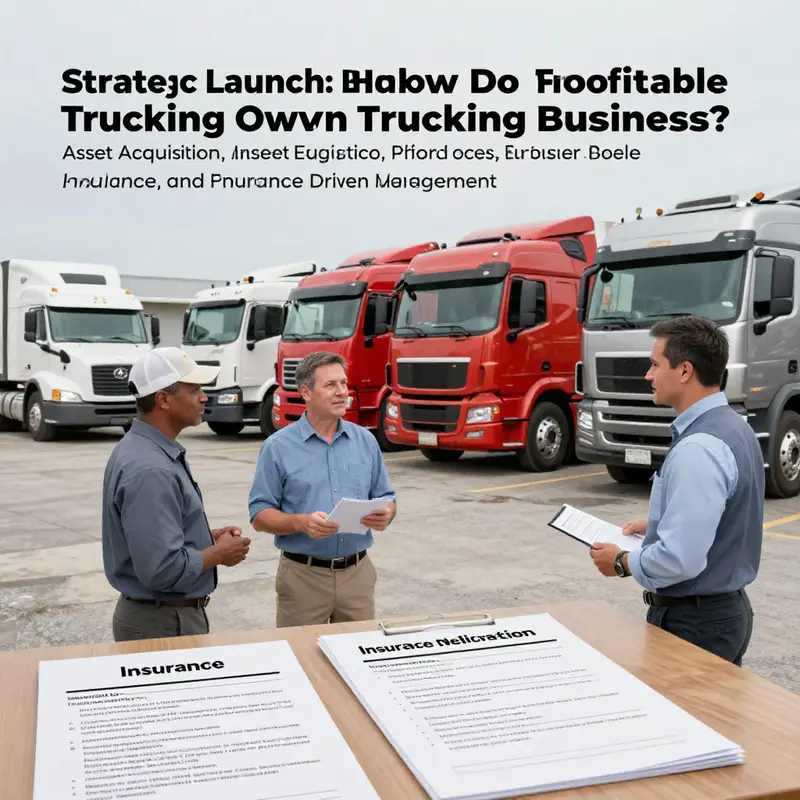
Building a trucking business starts long before the first load is dispatched. The decisions you make about asset acquisition, the insurance you carry, and how you recruit and manage drivers shape every mile of operation, every contract won, and every dollar you keep or lose to risk. This chapter follows a single thread through those essentials, weaving them into a coherent approach that supports sustainable growth rather than a fragile start. At the core is a simple truth: reliable equipment, solid protection, and a respected people framework create the credibility that shippers and brokers notice—and that keeps your trucks moving when demand shifts.
Asset acquisition is more than choosing a truck or trailer; it is a strategic alignment of service type, budget, and operating philosophy. Local, regional, and long-haul operations each demand different equipment, maintenance cycles, and efficiency expectations. If you chase the lowest upfront price without accounting for uptime and maintenance, you will pay with lost days on the road and higher insurance costs later. Conversely, a well-chosen fleet, even if it costs more upfront, can deliver steadier utilization, better resale value, and lower total cost of ownership over the life of the asset. The decision often begins with a clear picture of your niche: are you delivering last-mile goods within a metro area, performing regional freight between a few hubs, or moving full-truckload cargo across multiple states? That clarity guides the mix of light-, medium-, and heavy-duty equipment, the level of maintenance you keep in-house, and your financing approach.
Financing equipment is a major early decision. Some operators buy outright, others lease, and many combine a mix of both to preserve cash flow while maintaining flexibility. A cautious approach considers depreciation, tax advantages, and the operational risk of owning versus leasing. Whichever path you choose, you should insist on a disciplined maintenance program from day one. This means scheduled inspections, a preventive maintenance calendar, and a reliable service network that can handle tires, brakes, transmission, and electrical systems. Compliance with FMCSA expectations begins with the vehicle itself. Vehicles engaging in interstate commerce must meet federal standards, be properly registered, and carry the appropriate operating authority. In practice, that means aligning your asset choices with the regulatory framework so that no asset becomes a compliance liability or a costly surprise.
Of equal importance is ensuring every asset is equipped with the safety and efficiency tools that modern fleets rely on. Electronic logging devices (ELDs) are not optional in markets that enforce Hours of Service rules; they are the backbone of transparent driver scheduling and fatigue management. Real-time telematics give you visibility into fuel consumption, idling, maintenance needs, and driving behavior. When you pair robust equipment with telematics, you create a data-driven feedback loop that helps you improve safety, reliability, and fuel efficiency over time. This is not merely about cost control; it is about building a reputation for dependable performance that attracts shippers who prize predictability and minimal risk.
Once you have the machinery in place, the conversation naturally shifts to protecting that investment through comprehensive insurance. The risks in trucking—accidents, cargo loss or damage, theft, and uninsured liabilities—are too large to accept without robust coverage. Liability insurance remains a cornerstone, with minimum levels that vary by state and by whether you operate intrastate or interstate. Interstate carriers commonly face higher baseline expectations due to the broader exposure, and many brokers and shippers will not engage with operators who cannot show solid protection. Cargo insurance is essential to guard against the financial impact of freight loss or damage, while physical damage coverage protects the asset itself from the unforeseen. In some cases, non-trucking liability insurance is prudent if you engage in independent contractor relationships or owner-operator arrangements that might carry non-operating exposure.
The insurance landscape is not one-size-fits-all. Coverage limits are influenced by the type of freight you haul, the routes you serve, and your company’s safety record. Minimum liability coverage can start at levels that reflect the level of risk you are shouldering, but many operators find that higher limits improve credibility with larger shippers and reduce the cost of high-risk contracts. A complete program also includes workers’ compensation if you employ drivers, as well as cargo liability and potentially on-hook coverage for leased equipment. The process of sourcing coverage benefits from talking to experienced brokers who understand the nuances of trucking operations and who can illustrate how different risk profiles influence premium costs. For a grounded starting point on industry-wide considerations, consult resources from the National Association of Insurance Commissioners and their guidance on insurer selection and coverage recommendations for trucking operations. The practical takeaway is simple: insurance is not a cost to minimize but a risk management tool that unlocks opportunities and stabilizes cash flow when the inevitable incidents occur.
Driver management is where the practical realities of a growing fleet meet the human side of trucking. You can have the finest equipment and the strongest policies, but without qualified drivers who stay compliant and focused, the business collapses under fatigue, turnover, and avoidable incidents. The recruitment process begins with defining the precise requirements for the roles you need—CDL licensing, clean driving records, and relevant experience for your service niche. This sets the stage for a rigorous screening routine that may include background checks, motor vehicle records reviews, and drug and alcohol testing in accordance with FMCSA regulations. Keeping hours-of-service (HOS) within legal limits is not simply a compliance checkbox; it is a safeguard for driver health and a lever for consistent performance. Driver qualification files (DQFs) must be maintained in an organized, auditable manner, reflecting ongoing training, medical certifications, and regulatory compliance.
The path to reliable driving talent also involves a culture that rewards safety, reliability, and communication. Training is not a one-and-done event; it is an ongoing program that covers defensive driving, cargo securement, weather-related operations, and detour planning. You should implement a structured onboarding that accelerates new hires into productive, safety-conscious contributors while leveling expectations across the team. Equally important is creating an environment where drivers feel valued and heard. Transparent compensation structures, predictable routes, fair scheduling, and clear feedback channels reduce turnover and improve service quality. A fleet’s reputation for treating drivers well becomes a competitive differentiator that even seasoned brokers notice when they are selecting partners for high-stakes freight.
Technology lies at the core of effective driver management. In addition to ELDs, having a robust system for dispatch, route planning, and performance analytics helps you align driver incentives with safe and efficient operations. A modern Transportation Management System (TMS) coordinates shipments, facilitates accurate invoicing, and channels data back to you in real time. GPS tracking and telematics extend that visibility to every asset, allowing you to respond quickly to traffic conditions, breakdowns, or deliveries that drift off schedule. These tools are not flashy add-ons; they are operational necessities that enable you to meet customer expectations while protecting your margins. The smoother the interface between asset and people—between the equipment on the road and the drivers who operate it—the more resilient your business becomes in the face of market fluctuations.
As you invest in people, you may find it beneficial to study the strategies that have helped others blend strong talent with strong operations. One resource that has shaped many people strategies in trucking emphasizes that investing in your workforce yields durable competitive advantage. Investing in People: Key to Trucking Success
Interwoven with asset decisions, insurance, and driver management is the broader ecosystem of relationships that sustains a start-up. Your goal is to cultivate a reliable network of shippers, brokers, and freight forwarders who value consistency and clear communication. A practical approach is to begin with smaller, predictable accounts that help you calibrate your service levels, pricing, and on-time performance. These early partnerships serve as a proving ground for your equipment, your crew, and your processes. As you expand, you can pursue more complex contracts or join established freight networks that provide steady freight volume, reducing the volatility that many new operators experience. The combination of dependable assets, robust protection, and a solid people program creates a virtuous circle: better equipment reduces breakdowns, better insurance reduces risk, and better drivers deliver more reliable service, which attracts more business and feeds back into the ability to invest further in equipment and people.
In practice, the path from asset acquisition to driver management is iterative. You begin with a clear ride height for your operation—how your fleet will be used, what contracts you intend to win, and how you want to balance debt, equity, and liquidity. Then you choose equipment and set up maintenance and safety protocols that align with that plan. You secure insurance that provides a safety net and confidence in contracts, and you build a driver program that blends rigorous compliance with a culture that attracts and retains talent. Each phase informs the next; as your fleet grows, your policies become more refined, your technology more integrated, and your people more capable of delivering on time, every time. The result is not merely a trucking operation but a credible, scalable business that can weather regulatory changes, fuel price volatility, and shifts in demand with greater agility.
For readers who want to explore the regulatory framework and safety standards that underpin these practical steps, the U.S. Department of Transportation’s FMCSA website remains the definitive resource. It provides comprehensive guidance on registration, compliance, and safety standards that govern every aspect of the startup and ongoing operation of a trucking business. External resources can help you map the specifics of licensing, permitted operations, and required inspections to your particular state and service profile. As you proceed, remember that the strongest chapters of a trucking business are written not just in the speed at which you move freight but in the care with which you prepare, protect, and prepare your people for every mile ahead.
External resource: https://www.fmcsa.dot.gov
Chapter 5: Laying the Tracks for a Trucking Startup — A Cohesive Path Through Operations, Technology, Finance, and Growth
Starting your own trucking business is more than buying a truck and chasing freight. It is a careful craft that begins with a clear vision and a practical plan, then grows through disciplined execution across four interdependent pillars: operations, technology, finance, and growth. When you lay this foundation from day one, you create a resilient machine capable of adapting to shifting demand, tightening margins, and evolving regulations. The journey is less about a single breakthrough and more about a steady, thoughtful orchestration of people, processes, and tools that keep your wheels turning in the right direction.
From the outset, the operational core must be defined with precision. It starts with the question: what markets will you serve, and what role will you play within them? Some operators carve out a local or regional niche, delivering time-sensitive goods within a tight radius. Others aim for regional or long-haul freight, where capacity planning and equipment utilization become the daily currency. A third path may specialize in protected freight like temperature-controlled goods or hazardous materials, which demands specialized equipment, enhanced safety protocols, and deeper compliance knowledge. Whatever niche you choose, it should be compatible with the capital you have and the maintenance regime you can sustain. The fleet you select hinges on that alignment. A single heavy-duty tractor might suit a long-haul model well, but you could also start with a modest mix of light- to medium-duty equipment for urban distribution or regional deliveries. The key is to design a fleet plan that scales; maintenance is not a backstop but a predictive discipline. Every vehicle should have a maintenance schedule, a documented inspection routine, and a clear path for timely repairs. Safety follows as a nonnegotiable principle. A culture of safety begins with driver training, but it expands to preventive maintenance, equipment readiness, and proactive risk management. In practice, this means establishing standard operating procedures for pre-trip checks, post-trip reviews, and incident reporting that feed directly into your continuous improvement loop. A well-defined operational framework also requires a dependable network beyond your own yard. Shippers, receivers, and third-party logistics partners become part of your core ecosystem when you consistently meet service levels, entry windows, and on-time delivery promises. Building that network is not a one-time effort but an ongoing relationship process that rewards reliability with repeat business and better freight rates over time.
Technology acts as the accelerant that converts solid operations into competitive advantage. An integrated Transportation Management System becomes the backbone of daily execution, automating dispatch, enabling real-time visibility, and providing a single source of truth for customers and regulators alike. Real-time tracking via GPS and telematics delivers actionable insights into route optimization, driver behavior, and vehicle health. Route optimization is not merely about shortest distance; it is about the smart use of available capacity, considering factors such as traffic patterns, dock doors, loading times, and driver hours. Telematics translate into cost controls and risk reduction by highlighting unsafe driving patterns, idling, and maintenance needs before they become failures. Data analytics then turns raw numbers into strategic decisions. By analyzing profitability by client, lane, or season, you can identify underperforming routes, renegotiate contracts, or reallocate assets to higher-margin work. Forward-looking operators are exploring AI-enabled load matching and dynamic scheduling to minimize empty miles and improve asset utilization, sometimes partnering with platforms or networks that match capacity with demand more efficiently than traditional brokerages. The technology stack does not stop at dispatch and routing. Digital invoicing, automated payments, and integrated accounting provide transparency for you and your customers, reducing disputes and accelerating cash flow. But technology is not a luxury; it is a requirement. It should be designed to scale as your operations grow, with security, data privacy, and regulatory compliance baked in from the start. As you integrate these tools, you also begin to shape the customer experience. Transparent tracking, predictable ETAs, proactive notifications about delays, and clean invoicing build confidence with shippers and brokers alike. You will learn that technology amplifies your people, not replaces them. When drivers and office staff use the same system, communication becomes faster, errors decline, and your service levels rise in lockstep with your revenue opportunities.
The finance pillar anchors the business in reality while enabling strategic bets that move the company forward. It starts with a robust business plan that clearly itemizes startup costs, ongoing expenses, and expected revenue sources. Startup costs include vehicle acquisition or financing, insurance, licensing fees, and the onboarding of regulatory compliance measures. Ongoing expenses cover fuel, maintenance, payroll, permits, and the inevitable fluctuations in freight demand. The financial backbone also requires understanding the regulatory filings that support safe, legal operation. At minimum, most startups will pursue a USDOT number and MC number for interstate operations, and some markets may require additional state permits or intrastate authority. The BOC-3 designation for liability insurance and the possibility of an OP-1 permit for brokers are details that deserve attention early on. Financing options vary but commonly include personal savings, bank loans, or equipment financing programs designed for trucking businesses. Your accounting should record cash flow down to the driver level, categorize fixed versus variable costs, and track profitability by lane and customer. As you project cash needs, you begin to set aside reserves for fuel volatility, maintenance surprises, and insurance renewals. This financial discipline is not about cutting corners but about building resilience so you can weather downturns and invest in growth when opportunities arise. A clear capital plan also supports growth initiatives such as warehousing, packaging, or last-mile services, enabling you to diversify revenue while maintaining core competencies.
Growth, properly understood, is not simply adding more trucks. It is about sustainable expansion that strengthens your value proposition and your operations over time. Growth should be anchored in reliability: consistent service quality earns repeat business and helps you command better terms with shippers and brokers. As you reach a steady operating rhythm, growth opportunities may include expanding your geographic footprint, adding specialized services, or partnering with larger carriers to win bigger contracts. Strategic partnerships can open doors to freight opportunities that would be inaccessible as an independent operator, while franchising or platform affiliation can offer a structured path to scaling with reduced risk. Growth also hinges on people. The top performers in trucking recognize that human capital is a moat. Hiring skilled drivers, offering competitive wages and benefits, and cultivating a positive work culture are essential to attracting and retaining talent. In this regard, the people strategy is not a side note but a core driver of growth. You may find guidance and perspective on building human capital in resources that emphasize investing in people as a foundational practice for trucking success; the idea is to create a workplace where drivers feel valued, supported, and part of a mission bigger than themselves. When you link a strong people strategy with robust operations and a forward-looking technology plan, growth becomes a matter of timing and execution rather than luck. You are prepared to capture opportunities as they arise—whether a new regional contract becomes available, a network expands its lanes, or a customer seeks value-added services that you have already designed into your workflow.
To keep this four-pillar strategy coherent, you must weave governance, compliance, and risk management into every decision. The regulatory landscape in trucking is dynamic, and staying in front of changes protects profits and protects your license to operate. The cadence of reviews should be quarterly, with annual planning that revisits your niche, fleet mix, and technology investments. You will need to maintain robust driver qualification files, ensure adherence to hours-of-service rules, and implement rigorous drug and alcohol testing programs as required. Documentation matters as much as the trucks themselves. A disciplined approach to record-keeping—covering maintenance, inspections, fuel receipts, load shipments, and customer communications—forms the backbone of your margin protection and exposes inefficiencies early so they can be corrected before they escalate.
As you move through these four pillars, remember that the path is not static. What works in year one will evolve in year three, and what you learn from one customer can reshape your strategy for the next. The organizations that endure are those that treat each milestone as a learning opportunity and each decision as a bet hedged by data, people, and process. When you consider your growth plan, do not chase volume at the expense of service quality. Growth should amplify your strengths, not expose your weaknesses. You will likely encounter periods of tight capacity, price volatility, and regulatory friction; your response should be deliberate, not reactive. In practice, this means maintaining contingency plans, building reserve capacity, and cultivating a culture of continuous improvement. It also means recognizing the value of partnerships that can accelerate your trajectory without compromising your standards. A practical approach is to participate in networks or platforms that align with your niche and philosophy, extending your reach while preserving control over service levels and safety culture. If you choose to pursue a partnership path, anchor your decision in clarity about what you bring to the table and what you expect in return. For many operators, the strongest advantage comes from a well-balanced combination of reliable operations, a modern technology stack, sound financial fundamentals, and a growth mindset grounded in people and partnerships.
In the broader landscape of trucking lore and practice, the emphasis on people, process, and technology is not just a business theory but a practical imperative. The most successful startups blend a clear operational blueprint with the tools to execute it, and they pair that with a prudent financial plan that can sustain the business through market cycles. They also cultivate a growth approach that respects the fragility of early-stage operations while seeking opportunities to extend the service footprint in ways that consumers and shippers value. As you reflect on your own startup plan, keep in mind the central idea that your company is more than a fleet of trucks: it is a system of interlocking parts that must move in concert to deliver on promises, protect your reputation, and build lasting value. The journey from a single truck to a scalable operation is a marathon, not a sprint, and the best runners pace themselves with discipline, curiosity, and a readiness to learn from every mile.
For readers seeking practical guidance on the people aspect of trucking success, consider exploring the concept of investing in people as a strategic driver of growth and resilience. This perspective emphasizes leadership development, workforce planning, and culture as foundational elements that enable operations and technology to scale effectively. Investing in People: Key to Trucking’s Success
The road ahead will still present regulatory checkpoints, market shifts, and unexpected demand changes, but with a cohesive plan across operations, technology, finance, and growth, you gain a durable framework for starting and growing a trucking business. To stay aligned with the latest regulatory guidance, refer to official resources as you build your foundation and navigate compliance in a practical, proactive way. For authoritative regulatory guidance, visit https://www.fmcsa.dot.gov.
Final thoughts
Launching a trucking business that serves Logistics and Freight Companies, Construction and Engineering Firms, Fleet Management Companies, and Food & Beverage Distributors requires disciplined market insight, robust regulatory footing, and a scalable operating model. By methodically defining a niche, establishing a compliant legal structure, obtaining the right licenses, equipping a capable fleet with strong insurance, and deploying modern technology to optimize operations, you create a foundation that can withstand market fluctuations and regulatory changes. The strongest programs combine disciplined financial planning with value-added services and strategic partnerships, including platform affiliations or franchising where appropriate. With clear governance, continuous process improvement, and a customer-centric approach, your trucking venture will mature from an ambitious start into a reliable, revenue-generating enterprise.