
Mobile food service represents a strategic adjacency for logistics, construction, fleet management, and food & beverage distribution operations. By bringing meals, beverages, and light catering directly to job sites, distribution hubs, and fleet yards, organizations can improve worker welfare, expand on-site services for clients, and capture incremental revenue with a repeatable operating model. However, launching a food truck business requires careful budgeting across country-specific regulatory environments, capital expenditure, and ongoing working capital. This article presents a structured view of how much it costs to open a food truck, anchored in UK startup costs, franchise options, and US market realities. Chapter 1 translates the UK investment landscape into actionable cost components and essential equipment, licensing, and site considerations for industrial buyers and fleet operations. Chapter 2 examines franchise pathways, highlighting typical price bands, what is included in a franchise package, and how brand support translates to scale for corporate fleets. Chapter 3 shifts to the US context—permits, insurance, and ongoing capital—so cross-border teams and distributors can benchmark comparative economics. Together, these sections form a coherent framework for decision-makers evaluating the total cost of ownership, financing options, and risk management when adding a mobile food service vehicle to their logistics or site operations.
From Dream to Docket: A Realistic UK Budget for Opening a Food Truck
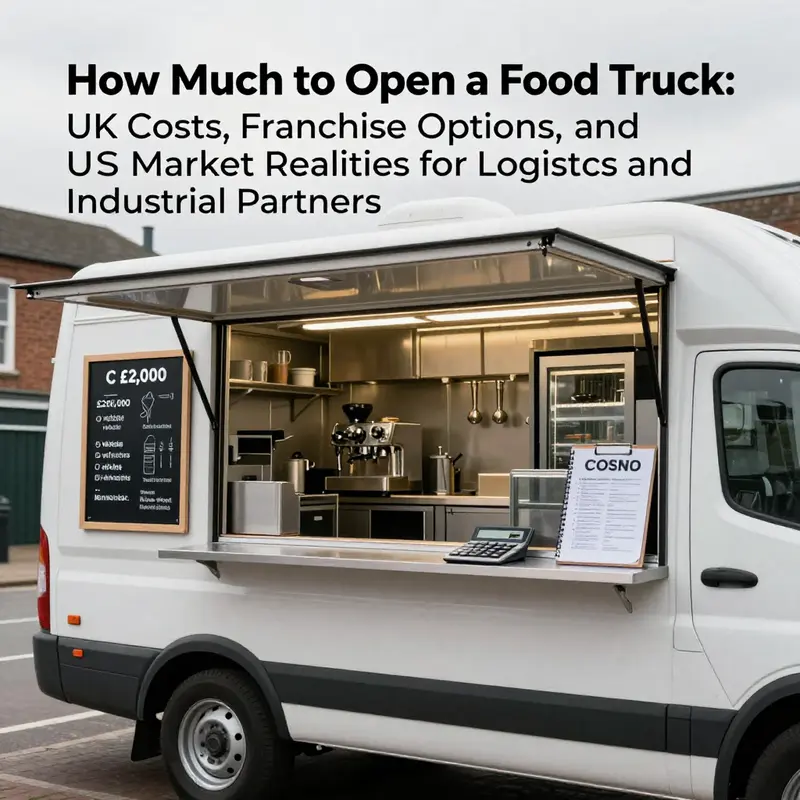
Opening a UK food truck requires translating ambition into a practical budget. In the UK, you should plan for a vehicle cost between roughly £15,000 and £40,000, outfitting from £10,000 to £25,000, and annual insurance and licensing costs from about £1,000 to £3,000. Build a contingency buffer of 10%–20% of total costs, and run two or three scenario plans to reflect different demand levels. Include branding, a basic online presence, and a reliable supply chain, while recognizing that licensing varies by council and may affect cash flow. Use a living budget that updates as you gather real data, and consult GOV.UK guidance for starting a food truck in England to align your plan with regulatory steps.
Chapter 2 — Franchise Options and Cost Ranges: Navigating the Real Price of Launching a Food Truck

Launching a food truck in 2025 sits at the intersection of appetite and accounting. The romance of rolling into a crowded street with sizzling aromas is real, but so is the cold, practical math of getting there. The total outlay you’ll face depends on a blend of location, vehicle type, equipment, and whether you’re building a concept from scratch or hitching your wagon to a franchise. Across regions, the numbers vary, but the underlying pattern is consistent: the truck is the core cost, and every accessory around it compounds the investment, sometimes quickly, sometimes gradually. Understanding this pattern helps entrepreneurs not just dream, but budget, finance, and plan with a clear eye on how to turn that bustling street corner into a sustainable business.
In the United Kingdom and similar markets, the starting point is often framed by the vehicle and the basic conversion into a kitchen on wheels. A used or base model truck can sit around £20,000, providing a platform for a compact kitchen. Essentials like a coffee machine and a refrigerator appear as the small but essential upgrades that make the difference between a novelty and a real menu. A coffee machine might run around £2,000 and a fridge around £500, modest line items that can dramatically improve capabilities and throughput. Yet those figures mask the broader picture: the truck itself is the largest single investment, and the true costs of turning it into a fully functional kitchen extend well beyond the purchase price. Branding, compliance, initial stock, and the first wave of marketing are all part of what becomes a lean, viable business, or a costly misstep if left to chance. For those who want a more defined path, franchising presents a different set of economics, with brand leverage and operational playbooks that can shorten the learning curve but expand the upfront commitment.
Across the Atlantic, the calculus widens further on the cost spectrum. In the United States, industry estimates commonly place the entry point for a food truck well into the six figures, especially when the vehicle is purpose-built or includes sophisticated kitchen systems. The basic chassis and basic equipment can still be substantial; however, once you factor in permits, insurance, initial inventory, and the capital to operate through the early weeks, the total can easily surpass $100,000. For many buyers, that baseline is just the start of a cash-intensive first season. In practice, the true first-year investment often lands somewhere in the $60,000 to $200,000 range, with variations dictated by the scale of the operation, the sophistication of the kitchen, and how aggressively the owner funds launch activities like marketing and staff onboarding. Franchises add another layer of structure to the picture. The franchise fee acts as an upfront investment that grants access to a recognized brand, standard recipes, training, and ongoing support. In the U.S., upfront franchise costs commonly span roughly $25,000 to $75,000, with ongoing royalties typically running between 5% and 10% of gross sales. In the United Kingdom, the franchise spectrum can be even more diverse: some smaller packages start as low as £5,000 to £10,000, while broader opportunities with robust equipment and brand reach can climb up to £100,000 or more. In all cases, the franchise path trades some creative latitude for the security of a proven model and a built-in customer expectation.
To some, the distinction between starting from scratch and joining a franchise can seem like a simple binary choice. In reality, it’s a spectrum. A new, independent concept gives you complete control—your menu, your image, your pricing—and demands a robust, self-directed startup plan. The upside is the potential for higher margins and a unique market position. The downside is greater risk, because you’re building brand recognition from the ground up, often without the cushion of an established supply chain or customer base. Franchising, by contrast, offers an almost turnkey blueprint. You begin with a recognized name, tested recipes, and a routing playbook that reduces certain hazards of a launch. You also shoulder ongoing royalties and adapts to brand guidelines that can constrain experimentation. The cost story follows the same logic across geographies, but the specifics shift with local licensing regimes, consumer expectations, and the real estate cost of a street corner. You may find that a UK franchise price bracket is shaped not only by the brand’s local popularity but by the scope of the equipment bundle and the level of ongoing support, from supply chain predictable inventory to digital marketing playbooks. Likewise, in the U.S., a larger franchise platform might demand a higher upfront fee but offer a more comprehensive support system, including site selection guidance, equipment standards, and franchisor-backed financing options that can ease the path to launch.
A practical way to approach this decision is to map out a full cost sheet that separates capital expenditures from operating expenses, and then add a realistic cushion for working capital in the first 90 to 180 days. The capital expenditures capture the truck, the kitchen buildout, signage, and branding assets—elements you can depreciate for tax or accounting purposes. Operating expenses include permits and licenses renewed annually, insurance premiums, fuel, maintenance, payroll if you’re hiring, and ongoing ingredients and supplies. In the UK, a starting-from-scratch plan might look like a total investment in the £20,000 to £50,000 range for a modest but capable kitchen-on-wheels, plus another layer of £2,000 to £3,000 for branding materials and a seasonal stock build. The franchise route could demand a wider spread, with initial investments that echo the brand’s scope—for example, a lower-entry package around a few thousand pounds for a compact system, up to £100,000 or more for a fully equipped, branded operation that includes comprehensive training and supplier agreements. The U.S. picture follows a similar philosophy: the base vehicle and conversion are a major upfront decision, with many operators spending $60,000 to $160,000 on a solid setup, then layering on the licenses, insurance, initial inventory, and an emergency fund that can keep the truck rolling through the first few lean weeks. When a franchise is involved, the upfront cost jumps further with franchise fees and the commitment to ongoing royalties, but you gain the comfort of a proven system, brand recognition, and a network of supplier relationships that can reduce some of the friction of buying and stocking.
The central driver remains clear: the vehicle and its ability to function as a kitchen. A basic, used truck can be a thrifty starting point around $30,000, offering a platform to expand as sales justify investment. A purpose-built, high-end unit with advanced kitchen systems and elaborate branding can push beyond $150,000. The UK numbers show a parallel scale, where a mid-range, road-ready vehicle sits around £20,000 and the kitchen gear might add a few thousand more, depending on the level of automation and special equipment you choose. In both markets, the subsequent costs—grills, fryers, refrigerators, double sinks, and compliance-ready spaces—are not incidental extras but essential. They determine not just your menu capabilities but your throughput, compliance with health and safety codes, and your ability to maintain consistent quality on busy weekends.
Another essential thread in this tapestry is the legal and regulatory cost of doing business. Permits and licenses are a recurring line item, not a one-time hurdle. Local health department approvals, business licenses, and sometimes alcohol licenses if your concept includes any beverage service all demand careful budgeting. Insurance is not optional; it is a necessary shield against liability and a requirement for many sites and lenders. General liability insurance protects against accidents, while vehicle insurance covers the truck as a mobile asset. Workers’ compensation may be required if you hire staff, and you’ll also need coverage for property and inventory. The more you forecast upfront, the smoother the launch becomes. This is a place where a carefully staged plan can prevent the panic that often accompanies a cash crunch caused by unexpected permit delays or a miscalculated insurance premium.
Initial inventory and branding are not merely the flavor of the month; they’re the backbone of a market entrance. A modest opening stock of ingredients, packaging, utensils, napkins, and cleaning supplies can require several thousand pounds or dollars, depending on your concept and supplier relationships. Branding—logos, vehicle wrap, menu design, signage—curtails ambiguity and builds trust with customers from day one. In a bustling street economy, first impressions translate quickly into footfall and early sales. A minimal yet coherent branding package can be the difference between a truck that looks like a garage project and a consistent, professional business that people remember and repeat.
For operators who prefer a structured growth path, franchise options present a clearer financial arc. Franchisees often benefit from a turnkey menu, standardized recipes, and a supply network that reduces cost volatility and food waste. The trade-off is a commitment to brand guidelines and the additional financial obligations that accompany ongoing royalties. In practice, this means you should expect a two-stage financial narrative: a substantial upfront investment to obtain the franchise rights and the initial equipment, followed by regular royalty fees that typically range from 5% to 10% of gross sales. The discipline of a royalty model can help ensure ongoing marketing and support, but it also requires a steady top line to stay cash-flow positive. If you lean toward the franchise path, you should still prepare a robust financial plan: forecast sales under typical weather and event conditions, anticipate seasonal fluctuations, and build a contingency for slow periods. The plan should be conservative enough to withstand unexpected costs or lower-than-expected demand and optimistic enough to keep you motivated when early results look promising.
When making a choice between independent startup and franchising, consider your appetite for control versus certainty. A standalone concept gives you the freedom to experiment with menus, pricing, and partner networks. It also makes you responsible for every failure and success, including marketing strategy, supplier terms, and site relationships. A franchise, on the other hand, tends to smooth the path with an operating playbook, supplier discounts, and a support network, but at the cost of some creative latitude. A practical step is to create scenario-based budgets that compare three models: a lean independent startup, a mid-range independent startup with stronger branding and equipment, and a franchised scenario with a well-known brand. Each scenario should map capital requirements, monthly operating costs, expected gross margins, and a break-even horizon. In all cases, the numbers should be anchored by realistic assumptions about weather, events, and the inevitable randomness of customer flow.
The budgeting process should also incorporate external guidance. The U.S. Small Business Administration (SBA) provides valuable resources and tools for small business owners, including budgeting templates and financing guidance. Local development agencies in the UK offer similar support, especially for aspiring food entrepreneurs navigating permits and regional supply chains. A widely cited external source for current cost data and industry trends is a well-regarded guide that focuses on 2025 startup expenses and ongoing costs for food trucks. This resource emphasizes the elasticity of costs with respect to vehicle choices, location strategies, and branding ambitions, and it provides practical benchmarks for those building a credible financial plan. For a concise overview of 2025 startup costs and a sense of the current landscape, many readers find Shopify’s detailed guide particularly helpful. It consolidates industry data into accessible figures and highlights considerations such as equipment needs, permits, insurance, and working capital. (External resource: Shopify’s How Much Does a Food Truck Cost To Operate in 2025? – Shopify.)
Approaching the chapter’s core question—how much to open a food truck—requires reconciling several layers of cost, risk, and opportunity. The numbers don’t lie, but they do require interpretation. People who begin with a disciplined, all-in budgeting framework tend to secure better financing terms and build a business that can weather the inevitable ups and downs of a mobile food economy. The best starting point is a transparent capital plan that distinguishes what is essential to begin serving customers from what can wait until after the first few months of revenue. Tie the plan to a thoughtful menu strategy, one that aligns with the vehicle’s capabilities and a manageable operating footprint. A compact, well-executed menu in a modestly equipped truck can deliver solid returns if supported by efficient processes, reliable supplier relationships, and a marketing approach that grows steadily through word of mouth and local partnerships.
In this spirit, it helps to anchor the discussion in experience from related industries while keeping your own context front and center. For example, one can glean insights about staffing, scheduling, and customer service from broader logistics and fleet operations conversations that emphasize people as a critical asset. A widely cited perspective in the trucking domain, summarized under the umbrella of people-first strategies, underscores how investment in training and team culture translates into reliability and customer satisfaction. You can explore those ideas at one of the industry discussions available online, which offers a cross-industry lens on workforce development and operational discipline. People-first strategies in trucking.
The bottom line is that the price tag of a food truck business is not a single number. It’s a constellation of investments that reflects how ambitious you want your concept to be, how you plan to deploy the vehicle, and how much support you want from a brand. A lean UK-from-scratch approach may land in the £20,000 to £50,000 range for the truck and a modest equipment set, with additional thousands for branding and initial stock. In the U.S., the same lean-to-mid-range path can be the $60,000 to $160,000 territory, again depending on the vehicle and the breadth of the kitchen. Franchising adjusts the financial scale in both directions: it can lift the upfront cost but reduce the risk of missteps through a tested model and system-wide support, or it can impose ongoing royalty obligations that affect cash flow but bring stability to sales and supplier pricing.
To bring these threads together, it’s essential to ground every cost assumption in local realities and a careful market assessment. Even in a single country, costs can swing with zoning rules, traffic patterns, competition density, seasonality, and the cost of real estate for street corners, events, or pop-up locations. The most durable approach is to prepare a solid business plan that explicitly links the menu and service model to the truck’s capacity, the cost of ingredients, and the expected customer volume. The plan should also forecast the sources of financing, whether bank loans, SBA-backed programs, or franchisor-supported financing arrangements, and should include a contingency fund to absorb early cash shortfalls. As you craft this plan, remember that the numbers are not just about keeping the wheels turning; they are about creating a sustainable platform for growth—whether that growth comes from expanding to multiple trucks, extending operating hours, or launching a distinctive concept that commands premium pricing in a crowded market.
Ultimately, the process is iterative. Start with the core figure—the capital required to equip the truck and get the doors open—and then layer in the ongoing costs, marketing, and working capital. Reassess the model after the first month of operation, updating assumptions as real-world data come in. This disciplined approach helps you avoid undercapitalization and unlocks the freedom to experiment with recipes, service models, and site strategies. It also makes it easier to communicate with lenders and investors, who will scrutinize not just the sticker price of the truck but the entire financial ecosystem that sustains the business over time. For those who want a practical, industry-informed benchmark, a widely cited external resource offers a focused view of 2025 startup expenses and ongoing costs for food trucks, making it a helpful reference as you assemble your own project plan. (External resource: Shopify’s How Much Does a Food Truck Cost To Operate in 2025? – Shopify.)
From Griddle to Grassroots: The Real Cost of Launching a U.S. Food Truck
Opening a food truck in the United States blends culinary ambition with a disciplined, numbers-driven planning process. The appeal is clear: lower entry barriers than a brick-and-mortar restaurant, the freedom to move with the seasons, and the chance to build a brand at street level. Yet behind the sizzle lies a substantial financial framework that determines whether a concept can survive the early months and scale into a sustainable business. This chapter walks through the core cost components that shape the launch, the ongoing financial heartbeat of daily operations, and the pragmatic choices an entrepreneur must weigh when turning a dream into a rolling kitchen. Rather than offering a one-size-fits-all price tag, it maps the spectrum of real-world figures, why they exist, and how savvy budgeting can create a cushion against the unpredictable rhythms of markets, events, and weather.
First comes the foundational question of what kind of investment makes sense for your vision. In the United States, the total initial outlay to launch a food truck typically lands somewhere in a broad band, often described as fifty thousand to one hundred fifty thousand dollars, with a minority of setups stretching toward two hundred thousand in highly competitive markets or when choosing a brand-new, custom-built unit. This spread reflects a cluster of variables that begin with the vehicle itself. A used food truck usually sits in the thirty to seventy thousand dollar range, a price point that lowers the barrier but can require more upfront refits or equipment upgrades. A brand-new, purpose-built unit can push well beyond one hundred thousand, especially if the design emphasizes high-grade equipment, enhanced energy efficiency, and striking branding from the ground up. Between the vehicle and the kitchen inside, the cost ladder climbs quickly, with equipment prices for essentials—grills, fryers, refrigerators, sinks, and point-of-sale systems—often ranging from twenty thousand up to sixty thousand dollars, depending on the menu complexity and the quality of appliances. The kitchen becomes the stage on which the business plan plays out, and the better you equip it, the more resilient you tend to be when demand spikes or when a critical component fails during a busy service.
Even when the truck and the kitchen are in place, the daily life of a food truck is a constant cycle of compliance, protection, and provisioning. Permits and licenses, while sometimes overlooked in the initial enthusiasm, are a significant and sometimes stubbornly variable cost. They vary not only by city and state but also by the kind of service you plan to offer and the hours you intend to operate. In some jurisdictions, the path to legality includes a business license, a mobile food vendor permit, and a health department permit as the minimum trio. The annual price tag for these can range from modest hundreds to more than a thousand dollars, depending on location and the density of competition in your chosen zone. A concrete example helps illustrate the spread: in a major metro, the basic mobile vendor authorization can sit in the mid two hundred dollars range or higher, while health department inspections add another couple of hundred dollars. In larger coastal cities, the licensing landscape can be more complex and more expensive; a city might charge around two thousand five hundred dollars for an annual mobile vendor permit, while another city could require roughly eight hundred dollars for a similar license. These numbers are not only administrative hurdles; they can influence the locations where your truck can legally operate, the windows of time when you can park, and the size and scope of events you can attend.
Insurance, the shield that protects a cash-flow dependent venture from catastrophic risk, is another vital cost layer. The typical coverage stack includes general liability, commercial auto, and sometimes workers compensation if you hire staff. General liability insurance tends to run from around five hundred to fifteen hundred dollars per year, depending on coverage limits and prior claims history. Commercial auto insurance, which covers the truck itself and its operations on the road, commonly falls in a similar or higher band—roughly one thousand to three thousand dollars annually. If you plan to bring on employees, workers compensation insurance may be required and can add another thousand to four thousand dollars per year. The price of insurance is influenced by the vehicle value, the depth of coverage, the number of crew members, the routes you plan to serve, and your past experience in food service. Injectable premiums can be higher for operators who frequently participate in large public events, or who operate in jurisdictions with flamboyant regulatory environments. While these coverage costs may appear like overhead, they are essential for stability and lender confidence, often a prerequisite for securing financing or favorable rental terms for commissary space or parking.
Ongoing capital needs form the financial heartbeat that keeps a mobile kitchen functional beyond the opening week. Fuel, regular maintenance, routine inventory replenishment, cleaning, and occasional repairs accumulate into a monthly operational burden that can range from roughly two thousand to five thousand dollars. The fluctuation is real: seasonal menus, price volatility in ingredients, shifts in staff rosters, and the changing costs of fuel or parking can all nudge monthly expenses. Most experts advise building a reserve that covers three to six months of operating expenses. This cushion is not only prudent for wheel-down periods or poor weather but also a strategic advantage when negotiating with landlords, vendors, or event organizers who want predictable partners. The reserve helps bridge slow periods so that a truck can ride through a few weeks of lean demand without resorting to drastic price cuts or last-minute menu pivots that dilute brand value.
To translate these components into a coherent budget, many operators start with a total initial investment that reflects the sum of the vehicle, equipment, permits, and initial inventory, plus a careful forecast for the first few months of operating costs. A practical way to frame it is to think of the opening as a staged burn: the vehicle and kitchen establish the capability to produce, permits and insurance establish legitimacy and risk containment, and working capital sustains the launch while revenue starts to turn. The math is not merely about breaking even in month one; it is about ensuring that months two through six do not become a cliff where revenue collapses just as fixed costs remain. This is where the discipline of a detailed cash-flow projection matters. You estimate sales volume, price points, and gross margins for a few typical menu items, then layer in recurring costs—gas, replacement parts, and routine maintenance—along with the more deterministic costs like insurance premiums and permit renewals. If your projection shows a steady burn within the reserve window, you gain the confidence to test markets, refine your menu, and invest in smarter branding without courting risk that could derail the enterprise.
For anyone evaluating the franchising route, the numbers can diverge even more. Franchise opportunities in the mobile food space can offer turnkey branding, recipes, and a trained operations playbook, which lowers some of the risk of choosing a unique concept. Startup costs for franchised mobile snack or beverage trucks can span from modest five figures to six figures, depending on the brand and what is included in the package. Some turnkey packages begin in the lower five figures for smaller setups, while others, especially those with premium equipment, larger menus, or national-name branding, can push toward the higher end of the spectrum. The advantage of a franchise is the near-term support in supply chain, training, and ongoing marketing, but the financial commitment can be significant. Even so, for a first-time owner who wants structure and a softer learning curve, a franchise can be a rational route to market when the business owner couples the initial investment with a grounded plan for local market fit, pricing discipline, and event-based revenue streams.
A broader market perspective adds context to the US scenario. When compared with other regions, the United States often presents larger wake-up calls for costs that accompany regulated operations, where permits, insurance, and vehicle standards are tightly codified and widely enforced. In some other markets, the same concept might cost less upfront but require different ongoing licensing or more frequent renewals. The differences reflect not just currency swings but the regulatory maturity and the demand environment for mobile food services. For an entrepreneur who is weighing options, it is instructive to factor in these regional realities alongside the raw numbers. If a concept is portable and adaptable—able to operate at a mix of food halls, farmers markets, office districts, and public events—the investment can be justified not merely by price, but by the breadth of revenue opportunities and the speed at which a well-executed kitchen can achieve scale.
The budgeting exercise benefits from a disciplined, informed approach to financing. The U.S. Small Business Administration emphasizes a practical planning framework for startup costs and funding options. Their guidance highlights that most first-year cash needs go beyond the vehicle and equipment to include inventory, working capital, insurance, and contingency reserves. Financing, when needed, can come from a mix of personal savings, small business loans, lines of credit, and, for some operators, contributions from friends and family. The SBA also underscores the importance of researching local regulations early in the planning process, as permit timelines, inspection schedules, and the cost structure of licenses can shape the project schedule and the required working capital. For readers seeking an authoritative roadmap, the SBA site provides the most up-to-date guidance on how to structure financing, plan for startup costs, and navigate regulatory requirements in different jurisdictions. The practical takeaway is simple: the path from concept to launch is a staged, money-aware journey in which each cost category is planned, and the plan remains flexible enough to adjust as the market reveals itself.
Beyond the numbers, the decision to pursue a food truck venture also hinges on how the concept will land in real neighborhoods. In practice, the investment carries with it a belief that you can reach your audience in places where people are seeking quick, flavorful meals and want to engage with a brand that feels personal and nearby. The street-level nature of a food truck means that the daily experience of customers—the scent of fresh ingredients, the speed of service, and the personality of the operator—becomes part of the business model itself. That can translate into stronger customer loyalty and recurring revenue if the cost control, menu execution, and service quality align with market expectations. But it also means costs are not merely numbers on a sheet; they become the tools that enable or constrain growth, the levers you pull when you decide to deploy more trucks, attend bigger events, or expand the menu. The balancing act is subtle and real: maintain enough margin to reinvest in the brand while ensuring price points reflect the value customers perceive in quick, neighborhood-driven experiences.
In closing, the true cost of opening a food truck in the United States is not a single line item but a constellation of interdependent expenses that shape strategy, logistics, and ongoing viability. Prospective operators should approach the venture with a robust budgeting framework, cautious optimism about revenue streams, and a plan for risk management that includes a healthy reserve. They should also recognize that the scope of permits, insurance, and licensing will be influenced by the city and state they choose, and that local rules can evolve. By anchoring decisions in transparent cost estimates and realistic cash-flow projections, an aspiring food truck owner can enter the street economy with a clear path to profitability rather than an uncertain sprint that leaves the business exposed to weather, event changes, or supply shocks. For readers seeking more formal guidance, government agencies and small business resources provide current, jurisdiction-specific information to help tailor plans to local conditions and financing scenarios.
External resource for further guidance on startup costs and regulatory considerations: https://www.sba.gov
Final thoughts
Opening a food truck is a capital and operations decision with significant cross-border nuance. UK startup costs cluster around vehicle acquisition, essential equipment, branding, and working capital, typically ranging from £20,000 to £50,000 for entry-level operations. Franchise routes offer scalable branding and support, with packages beginning in the low thousands and extending well into six figures depending on equipment and geographic reach. In the US, the total entry cost commonly exceeds $100,000, driven by vehicle price, equipment, and comprehensive regulatory compliance. For logistics and industrial players, the strategic value lies not only in the price tag but also in the operational model: how the truck supports on-site meals for crews, serves as a mobile logistics touchpoint, and integrates with existing procurement and vendor programs. A disciplined cost-design approach—covering vehicle, equipment, permits, insurance, training, and working capital—helps ensure a predictable total cost of ownership and a realistic path to return on investment. Stakeholders should align the cost framework with fleet utilization, site footprint, and supplier relationships to maximize utilization and minimize downtime.