
Box truck operations offer a practical and scalable entry point for delivering essential freight, moving services, and regional distribution. For Logistics & Freight Companies, Construction & Engineering Firms, Fleet Management Providers, and Food & Beverage Distributors, a disciplined launch hinges on three interconnected pillars: licensing and regulatory compliance, a deliberate vehicle acquisition and upfitting strategy, and a robust funding and growth plan. This article presents a holistic blueprint that aligns legal readiness with operational needs and financial discipline, ensuring that your starting steps translate into reliable service, contract-winning capabilities, and sustainable expansion. Chapter 1 clarifies the licensing and compliance essentials needed to operate legally and safely. Chapter 2 translates service goals into a vehicle strategy—selecting the right box truck, configuring it for temperature-controlled or general freight, and implementing essential maintenance practices. Chapter 3 connects funding options with cost-management disciplines and a scalable growth path, including lease vs. purchase considerations, pricing strategies, and route optimization. Together, these sections form a coherent roadmap for launching a compliant, efficient, and scalable box truck business that can serve diverse client segments and contract opportunities.
Licensing & Compliance Essentials: The Legal Roadmap for Launching a Box Truck Business
Licensing and compliance aren’t optional add-ons to a box truck venture. They are the structural beams that support every operational decision, from the first day on the lot to the daily dispatch that keeps customers moving. In a space where a single misstep can ripple across insurance premiums, customer contracts, and road safety, understanding the regulatory architecture is not merely prudent; it is foundational. This chapter treats licensing and compliance not as a dryora of paperwork but as a coherent, strategic framework. It clarifies what must exist in your business before you roll a single mile, why each element matters, and how to assemble a sustainable system that can scale with growth while staying within the law and safely serving customers who depend on timely, secure deliveries.
First, any box truck business begins with the basics of business formation and state registration. Forming an entity—typically a limited liability company or a corporation—helps shield personal assets from business liabilities and establishes a clear legal structure for contracts, employment, and lending. Even if you plan to operate as a sole proprietor initially, registering with your state’s Secretary of State and securing an Employer Identification Number (EIN) from the IRS is a prudent move. An EIN simplifies tax reporting, enables opening a business bank account, and supports payroll if you hire drivers or staff. While those steps feel peripheral to driving and loading, they are the passport to professional operations, credit access, and formal compliance culture.
Once the business is in place, federal and state regulators layer in requirements that determine how you may move goods and people across the landscape. A box truck, especially one intended for commercial use, sits under the umbrella of the Federal Motor Carrier Safety Administration (FMCSA) as a regulator of safety, insurance, and operating authorities. A critical inflection point is the vehicle’s gross vehicle weight rating (GVWR). If your box truck carries more than 10,001 pounds GVWR, you are in a domain where FMCSA oversight becomes active, and certain registrations and authorities become mandatory even if you operate within a single state. The USDOT number, which serves as a unique identifier for a carrier in federal safety and compliance systems, is typically the first inter-jurisdictional credential you’ll encounter. It is not merely a tag; it is the gateway to the FMCSA’s Safety Measurement System and the safety data environment used by shippers, brokers, and regulators.
The USDOT number stands alongside the MC authority, or MC number, when your operations cross state lines. The MC number is separate from the USDOT number and authorizes interstate motor carrier activity. If your plan is to haul cargo across state lines, even on a seasonal basis, you’ll likely need both. If you stay entirely intrastate but your GVWR places you in the FMCSA sphere, you may still be subject to federal safety standards and reporting requirements, albeit without the full interstates-ceremony of MC authority. The distinction is more than bureaucratic nuance; it informs how you price contracts, how you structure insurance, and which safety programs you adopt as non-negotiable components of your operating model.
A focal point of compliance in the daily operation of a box truck is recordkeeping and the use of electronic logging devices (ELDs). The ELD mandate aligns with Hours of Service (HOS) regulations designed to prevent driver fatigue and reduce accidents. If your fleet includes vehicles subject to HOS rules—commonly those with GVWR over 10,001 pounds engaged in interstate commerce—an ELD is required to automatically record driving time, rest breaks, and other duty statuses. This isn’t a mere checkbox; it shapes dispatch patterns, shift scheduling, and the rhythms of customer commitments. It also ties into the broader Compliance, Safety, Accountability (CSA) framework FMCSA uses to assess carrier safety performance. A carrier’s CSA scores influence underwriting outcomes, access to certain contracts, and even the viability of working with specific brokers or shippers.
To operate across multiple states, you will also enter the IFTA (International Fuel Tax Agreement) and IRP (International Registration Plan) ecosystem. IRP simplifies vehicle registration across jurisdictions by allowing you to register in one base state and obtain a single, multi-jurisdiction license plate allocation. IFTA streamlines fuel tax reporting through a single reporting mechanism that covers all jurisdictions in which you operate. These programs are designed to ensure highway users contribute fairly to road infrastructure based on actual use. They are not optional add-ons; they are the steady rails on which interstate operation travels. A failure to stay current with IFTA/IRP obligations can trigger audits, penalties, and restrictions on operation that quickly translate into knowable, cash-flow-sapping friction.
No licensing framework is complete without the BOC-3 designation. The BOC-3, or Business of Process Agent designation, is a federally required filing that designates a process agent in each state where you operate. This agent is the legal recipient for any service of process—such as lawsuits or regulatory notices—on behalf of your company. Filing a BOC-3 through FMCSA’s Unified Registration System is not optional; it is a fundamental element of legal operations and helps prevent process delays that can disrupt business continuity during disputes or regulatory actions. The presence of a process agent in each state is a practical safeguard for both your business and stakeholders in the event of a claim or enforcement action.
In parallel with registration and process authenticity, you must confront the unique licensing landscape of your state of operation. CDL requirements, endorsements, and vehicle classifications are determined both by GVWR and by the type of cargo you intend to carry. Most standard box trucks used for commercial purposes surpass the 26,001-pound GVWR threshold that triggers a Class B CDL. If your planned operations involve larger chassis, air-brake systems, or hazardous materials, a CDL with appropriate endorsements becomes mandatory. The air brakes endorsement, often labeled with an N, requires a separate knowledge test and a skills test. Hazmat and Tank Vehicle endorsements may be required if you handle hazardous materials or deliver liquids in bulk. These endorsements aren’t mere certifications; they determine the paths you can legally take, the training you must complete, and the insurance considerations you will confront.
Insurance is the connective tissue holding licensing and compliance together, especially given FMCSA’s minimums for commercial auto coverage. The baseline liability threshold for interstate property-carrying carriers has long hovered around three-quarters of a million dollars, but the exact numbers can be state-influenced and cargo-specific. Cargo coverage, physical damage (collision and comprehensive), non-trucking liability for owner-operators, workers’ compensation, and general liability all weave into an integrated risk management approach. Insurance is not only a safeguard against losses; it is a regulatory and financial signal to brokers and shippers that you are a serious, solvent partner with credible reserves to fulfill obligations if something goes wrong.
Beyond insurance, a disciplined approach to safety and compliance under FMCSA’s Safety Management System (SMS) helps a growing business build a durable competitive edge. The SMS draws on data from inspections, crashes, violations, and other interactions to assign BASICs—Behavioral Analysis and Safety Improvement Categories—such as Unsafe Driving, Hours-of-Service Compliance, and Vehicle Maintenance. A higher risk profile invites closer scrutiny and intervention from regulators, which in turn affects the ability to bid on new work, secure favorable terms with brokers, and attract customers who require demonstrable safety practices. Building a pipeline of customer contracts without addressing safety culture is a mismatch that compounds risk as you scale.
OSHA’s role in trucking safety, while often operating in a parallel lane to FMCSA, adds another layer of obligations for trucking employers. Hazard communication, PPE, emergency planning, and training programs protect workers during maintenance, loading, unloading, and routine operations. OSHA’s expectations for keeping vehicles safe and workers informed are a reminder that compliance extends beyond the cab and into the shop floor and yard. A robust safety program, clear hazard communication, and regular training sessions reduce the likelihood of injuries and the severity of incidents, which in turn supports lower insurance costs and better relationships with customers who prize reliability.
The confluence of all these elements—business formation, USDOT/MC authorities, BOC-3, IRP/IFTA, ELD and HOS, CDL and endorsements, insurance, safety programs, and OSHA considerations—creates a living ecosystem rather than a static checklist. The cost of non-compliance extends beyond fines. It can include suspended operations, increased underwriting scrutiny, loss of contract eligibility, and reputational damage that undermines growth plans. The practical challenge is to design a licensing and compliance system that is proportional to risk, scalable with growth, and actionable in the day-to-day rhythm of dispatch and maintenance.
What does a pragmatic, ready-to-operate compliance program look like? It starts with a governance frame: designate a compliance owner or a small team responsible for maintaining registrations, monitoring regulatory changes, and ensuring that documents, licenses, and permits stay current. It then moves to process design: create simple, repeatable workflows for onboarding new drivers, renewing registrations, filing IFTA/IRP reports, and refreshing insurance certificates. Digital tools can help. A centralized document repository should store corporate documents, insurance certificates, BOC-3 filings, and license renewals with reminder alerts. The value of such a system is concrete: fewer last-minute surprises, smoother audits, and faster onboarding of new customers who demand up-to-date credentials.
Engage with credible industry guidance but tailor it to your operational footprint. For instance, if you primarily serve intrastate routes with a box truck under the 10,001-pound threshold, your compliance footprint may be lighter, but the discipline of accurate recordkeeping and maintaining safety practices remains essential. If you intend to grow toward regional or national coverage, anticipate the need for IFTA/IRP, interstate HOS compliance, and a broader insurance envelope. In both cases, the core discipline is the same: treat licensing and compliance as product features of your service—reliability, safety, and legality that customers can trust as part of the value proposition.
As you map your path, consult layered sources that anchor your decisions in current practice. A well-regarded, comprehensive guide to starting a trucking business can provide a practical, policy-aware blueprint that complements regulatory texts. This resource emphasizes step-by-step registration, funding considerations, and operational best practices, helping you translate regulatory requirements into actionable steps on your calendar. You can use this guide as a companion to your regulatory diligence, but always verify specifics against the official FMCSA, state, and local authorities because rules evolve and exceptions exist.
In the end, licensing and compliance are not obstacles to be overcome but scaffolding that enables confidence, consistency, and credibility as you grow. They shape not only what you can do, but how well you can do it—how quickly you can secure contracts, how reliably you can dispatch, and how safely you can operate in a complex, multi-jurisdictional environment. The road to a successful box truck business runs through a dense, interconnected regulatory landscape. Your ability to navigate it with clarity, foresight, and discipline will determine how far you can go, how fast you can grow, and how resilient you will be when conditions change.
To ground these considerations in navigable steps, remember to pair practical actions with ongoing learning. Form your business, obtain your EIN, and complete your state registrations. If your plans include interstate work, secure your USDOT and MC numbers, file a BOC-3, and arrange base-state IRP/IFTA registrations. Prepare for ELD/HOS compliance if applicable, and ensure your CDL and endorsements match your vehicle and cargo profile. Secure insurance that reflects risk correctly, and implement a Safety Management System that tracks inspections, maintenance, driver behavior, and incident history. Align OSHA safety practices with the operational realities of loading, unloading, and maintenance so that your workplace safety standards match the level of risk your business carries. And finally, keep a living document strategy: maintain digital copies of licenses, registrations, and certificates, and set up automatic renewals and alerts to avoid lapses that could interrupt service.
As a practical next step, explore a reputable, widely cited guide that unpacks the regulatory journey in approachable terms. It can serve as a bridge between regulatory text and the day-to-day tasks of launching a box truck operation. And when you’re ready to verify the most current rules, refer to the primary regulatory authorities—FMCSA for federal requirements, your state department of transportation for state-specific rules, and OSHA for workplace safety standards. By aligning your business design with these realities, licensing and compliance become not burdens but the dependable backbone of a scalable, trustworthy operation.
For authoritative regulatory guidance, consult the FMCSA site at https://www.fmcsa.dot.gov. This resource offers up-to-date information on USDOT and MC numbers, ELDs, HOS, IRP/IFTA, UCR, and the safety programs that influence day-to-day operations and long-term planning.
Internal reference: For a practical, step-by-step companion guide to starting a trucking business, see the article titled How to Start a Trucking Business. This resource provides a grounded, user-friendly companion to regulatory specifics while you prepare your launch plan. How to Start a Trucking Business.
In short, licensing and compliance are not merely impediments to entry; they are the framework that enables responsible growth. Treat them as a strategic asset—an organized, proactive system that supports reliable service, reduces risk, and unlocks the capacity to enter new markets with confidence. When you build your operations around a compliant foundation, the complex rules that govern box truck activity become predictable constraints you can manage, rather than unpredictable shocks that derail your plans.
Charting the Vehicle Frontier: A Practical Guide to Vehicle Acquisition and Equipment Strategy for Launching a Box Truck Business
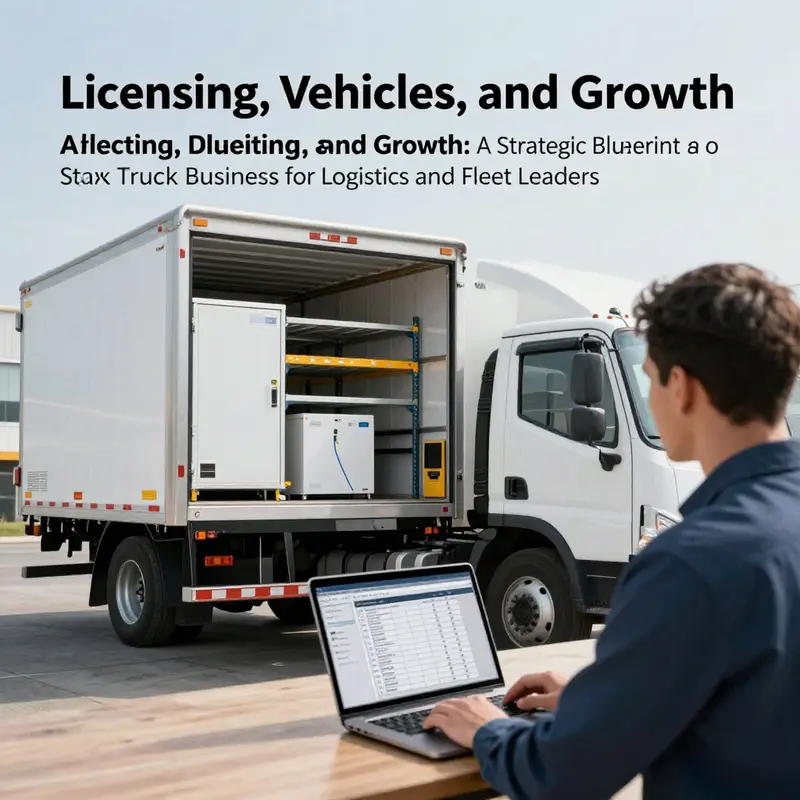
When you set out to build a box truck business, the most tangible starting point is the vehicle itself—the chassis that carries your brand, your schedule, and your promise to customers. Vehicle acquisition and the associated equipment strategy are not mere purchase decisions; they shape your service capabilities, your costs, and how you can scale with confidence. The road to profitability begins with choosing the right box truck as a foundation, then layering in the gear that turns a raw vehicle into a reliable tool for any niche you choose to serve. This chapter weaves together the practical economics of trucks, the realities of urban and rural operations, and the essential equipment that protects cargo and supports service excellence, all while keeping an eye on how emerging technologies might reshape your fleet in the years ahead.
The first signal you should heed is the intended scope of your services. Box trucks vary widely in size, payload, and maneuverability, and those differences cascade into purchase or lease decisions, fuel costs, maintenance needs, and even insurance premiums. Box trucks today span roughly from 10 feet to 26 feet in length, with payload capacities that demand careful alignment with the kind of work you plan to do. If your aim is local or last‑mile deliveries in dense urban corridors, a smaller, highly maneuverable box with tight turning radius often yields the best balance of cost and practicality. If you anticipate longer days, longer miles, or frequent loading and unloading of bulky goods, you may justify a longer wheelbase and greater payload. The economics of these choices hinge on daily utilization: more trips per day can justify higher upfront costs if they translate into faster turnarounds and higher billable hours.
For many newcomers, the decision also wrestles with how the vehicle is obtained. You can buy new, buy used, or lease. A new truck brings reliability and warranty coverage that minimizes downtime in the early months, but the price tag is higher and the depreciation hit is immediate. A used truck can stretch your capital further and provide a lower entry point, but it requires diligent inspection to avoid hidden mechanical issues that erode profit and erode confidence with customers. Leasing, meanwhile, offers a flexible path to scale with demand and lowers up‑front costs, though it may carry higher long‑term costs and more stringent mileage limits. The best choice often depends on your risk tolerance, access to capital, and your business plan for the next 12 to 36 months. In any case, a disciplined evaluation of total cost of ownership—purchase price, financing, insurance, maintenance, fuel, and anticipated utilization—will reveal which path makes the most sense for your market and your cash flow.
As you map out the vehicle arsenal, the size and configuration of the box itself demand careful scrutiny. A 10‑ to 12‑foot box may be perfect for quick, city‑center moves or small studio apartments, while a 16‑ to 26‑foot box expands your capacity to handle larger residential moves, office relocations, or several smaller shipments in a single route. Payload capacity is not just a theoretical figure; it translates into how many shipments you can carry in one trip and whether you must stage multiple runs for a single job. Consider the insulation and climate control needs if you plan to transport perishable goods or temperature‑sensitive items. A refrigerated or climate‑controlled unit adds to the initial cost but can unlock a premium tier of service—one that many competitors overlook or undervalue. In fact, if you anticipate handling groceries, pharmaceuticals, or dairy products, climate control often becomes a differentiator that supports higher margins and repeat business.
A crucial yet often overlooked consideration is how the vehicle will integrate with your brand and operations on a daily basis. A robust set of security features—reliable door locks, reinforced cargo area, tamper‑evident seals, and interior padding—protects both your cargo and your reputation. Tie‑downs, ratchet straps, load bars, and non‑slip mats aren’t glamorous, but they prevent claim‑worthy cargo damage and help maintain on‑time deliveries. Protective dividers or partitions, when appropriate for your service mix, can prevent cross‑contamination in specialized shipments and keep drivers safer by limiting movement within the cargo area. The more you tailor the interior to the nature of your work, the less you will have to DIY in the field on a busy loading dock. In practical terms, you want a transport environment that minimizes cargo handling during transit and reduces the risk of damage or theft.
Window dressing aside, gear that expands operational capability should be high on your list. A set of dollies, a sturdy ramp, and a lift gate can turn a one‑man operation into a scalable business by facilitating efficient loading and unloading. If you plan to move large household items, furniture, or industrial equipment, a lift gate becomes almost indispensable, cutting down physical strain on your crew and speeding up job completion. For food or temperature‑sensitive goods, consider climate‑controlled interiors or insulated cargo bodies that preserve product integrity without constantly running expensive equipment. Each option has a cost implication, but the payoff is the ability to bid larger, more complex jobs with confidence rather than turning away work that doesn’t fit a limited vehicle setup.
Technology is no longer an add‑on; it is a core driver of reliability and customer satisfaction. GPS tracking, driver performance metrics, and fleet management software transform a single truck into a connected asset that can report real‑time location, ETA, and cargo status. Real‑time visibility improves customer communications, reduces the number of inbound calls, and enhances your ability to manage exceptions—such as delays or detours—without sacrificing service levels. A modern telematics suite also supports preventive maintenance by collecting data on engine hours, fuel consumption, brake wear, and tire pressure. This data informs a maintenance calendar that protects uptime and extends the life of your asset. The upshot is not just smoother operations; it is a stronger value proposition for clients who demand accountability and predictability from their logistics partners.
With the right mix of vehicle and equipment, you lay the groundwork for dependable service. Yet the outer shell must be matched by internal discipline: a maintenance regimen that prevents breakdowns, a safety program that protects drivers, and a procurement process that keeps your fleet current with regulatory expectations. Preventive maintenance is where many small operators break the risky cycle of reactive repairs. A simple schedule—regular oil changes, tire inspections, brake checks, and electrical system diagnostics—can extend the life of a box truck and keep it performing at or near peak efficiency. A maintenance log that follows each truck, paired with a calendar reminder system, minimizes downtime and allows you to bill for predictable, scheduled work rather than paying for unexpected outages.
Within this framework, you should also map how your equipment choices connect to risk management and insurance. Cargo liability coverage is not optional when you’re moving valuable or temperature‑sensitive goods. The right interior and exterior protection can reduce the severity of claims and potentially lower premiums by demonstrating prudent risk management. If you intend to handle hazardous materials or operate in regulated industries, your equipment configuration—combined with driver training and compliance checks—will become a central part of your overall risk profile. In short, investment in secure, robust equipment does more than protect goods; it reinforces your credibility with customers and lenders alike.
As you refine the plan, you should also think ahead to how your fleet might evolve as demand grows. Leasing can be a strategic bridge to scale—allowing you to add vehicles to meet peak seasons without tying up capital in ownership. A staged approach, where you begin with one well‑specified box truck and a lean set of equipment, allows you to test markets, refine routes, and prove profitability before expanding. Whether you stay lean or build a broader fleet, the core principle remains the same: a well‑chosen vehicle paired with purposeful equipment creates a serviceable, defensible platform that can support expansion, better pricing, and differentiated offerings.
In the longer arc of planning, you might consider how emerging fleet technologies could alter your acquisition calculus. The industry is increasingly experimenting with smarter fleets, electrification, and semi‑autonomous capabilities. While these options may not be central to your first year, keeping an eye on the direction of travel helps you future‑proof your investment. You can see one current thread of this evolution in the industry discussion around autonomous fleet technology, which highlights how a single vehicle’s adaptability can scale to more complex operations over time. To explore these developments, you can review the latest developments in autonomous LT series trucks through a dedicated industry resource that examines how these innovations could influence scheduling, maintenance, and safety in the next decade. Advancements in Autonomous LT Series Trucks.
Even as you plan for the present, there is value in anchoring your decisions to a broader blueprint. The core objective is straightforward: acquire a vehicle and fit it with equipment that enables predictable, high‑quality service at a sustainable cost. Your box truck becomes more than a tool; it becomes the principal asset in a service line you intend to grow. A well‑matched vehicle with secure cargo systems, appropriate climate controls, and integrated telematics can support a range of service models—from local residential moves to commercial deliveries or last‑mile urban logistics—without forcing you to scramble for a different asset on a monthly basis. This unity of purpose is what allows a small operation to act with the confidence and reliability that win contracts and keep customers coming back.
Finally, the procurement process itself should be disciplined and transparent. Begin with a clear specification sheet that documents the truck size, payload range, engine and drivetrain choices, climate control needs, lift gate requirements, and the interior setup. Include a checklist for inspection if you’re purchasing a used vehicle, focusing on the condition of the engine, transmission, brakes, tires, wiring, and the integrity of the cargo area. If you choose to lease, negotiate terms that align with your seasonal demand and maintenance responsibilities. In either path, insist on a written maintenance schedule, defined service intervals, and a process for handling repairs that minimizes downtime and keeps your fleet in service during peak periods. The equipment you choose should be practical, durable, and aligned with the realities of your market—where the work is, how you load and unload, and what your clients expect in terms of speed, safety, and accountability.
The arc of a successful box truck business, therefore, hinges less on a single big decision and more on a coherent, repeatable approach to vehicle choice, equipment selections, and technology enablers. When you marry the right truck size to the right configuration and safeguard it with reliable load management tools, you set a performance baseline that supports disciplined growth. You build the credibility that keeps customers returning and attracts new clients who want predictable, professional service. This is the anchor of your operating model—the vehicle frontier you chart early, and the equipment strategy that keeps you ahead of the curve as your market evolves.
External resource for broader guidance on starting a trucking business: https://www.thebalancesmb.com/how-to-start-a-trucking-business-393175
Funding the First Mile: Cost Discipline and Growth Pathways for a Box Truck Startup
Starting a box truck business is about disciplined funding and prudent cost management as it is about the logistics know‑how to move goods from point A to point B. The road from a single rig to a regional operation is paved with capital planning, tight control of every dollar, and a growth mindset that treats revenue streams as a portfolio rather than a single contract. If you begin with a clear sense of how money flows—what you spend up front, what you carry day to day, and how you scale without overreaching—you create a durable foundation. That foundation rests on three interlocking pillars: funding, cost management, and growth pathways that are realistic, data informed, and capable of adjusting to a shifting market. The narrative isn’t about chasing the flashiest financing or the most aggressive expansion plan. It’s about balancing speed with sustainability so that every mile you cover translates into value rather than debt.
Funding a box truck venture starts with clarity about needs. Capital expenditures are not just the sticker price of a truck; they include the truck itself, trailers, the basic tools of the trade—dollies, tarps, straps—and the safety gear that keeps people and cargo intact. Then there’s working capital to cover fuel, insurance, licenses, permits, payroll, maintenance, and the inevitable surprises that accompany a startup. A practical rule of thumb is to set aside a contingency of 10 to 20 percent of total startup and operating costs. In a business that hinges on tight margins and tight schedules, that cushion can be the difference between keeping a route online and a shutdown during a cash crunch. The initial cash outlay will vary by region, by the scale of the launch, and by the financing path you choose, but the underlying truth remains: funding is not a one‑time event. It’s a continuous discipline that follows your business plan and adapts as you learn.
One of the most impactful decisions you’ll make early is whether to own or lease your first box truck. Ownership builds equity and can lower long‑term per‑mile costs if your utilization is high and maintenance is predictable. Leasing, on the other hand, preserves capital for growth and reduces the upfront burden, while often providing maintenance packages that help stabilize cash flow. Either route can work, but the choice should reflect your credit profile, the volatility of early demand, and your willingness to assume maintenance risk. It’s not unusual to start with a lean pilot fleet—one or two trucks that fit your target niche—and scale once you’ve proven the model. The cost of a single 4.2‑meter box truck can range considerably, but a careful mix of purchase and financing options makes sense. The emphasis remains: keep the initial fleet sized to test demand without sinking cash into excess capacity before the revenue streams are validated.
Financing options exist along a spectrum, from personal equity to lines of credit and vendor programs. Owner equity is the simplest path—funding from founders’ savings or family equity with fewer repayment obligations. Equipment financing or leases are common, with leases offering lower upfront cash but sometimes higher total costs, and loans building equity but requiring solid credit and collateral. Government-backed options, such as SBA loans in the United States, can provide favorable terms for transportation ventures that demonstrate solid business plans and realistic cash-flow projections. Lines of credit offer flexibility to cover fuel spikes, payroll needs, or unexpected maintenance without interrupting operations. Some manufacturers or dealers also provide vendor financing or incentives that align with pace of fleet expansion. Regardless of the route, the critical step is a robust cash‑flow forecast that spans 12 to 24 months and accounts for seasonality, insurance renewals, maintenance schedules, and the ramp‑up period during which you’re building your customer base.
Insurance and risk budgeting play a central role in keeping a startup resilient. A box truck operation faces several risk categories: auto liability, cargo, comprehensive auto, and workers’ compensation for any in‑house crew. Each policy adds a layer of protection, but the premium costs can also eat into margins if not managed carefully. It’s wise to pursue multiple quotes, bundle coverages where possible, and build a risk reserve within your budget to handle deductibles and claims. A culture of safety from day one translates into tangible long‑term savings: safer fleets typically enjoy lower premiums, fewer downtime events, and higher customer confidence. Your compliance footprint matters too. DOT regulations, hours‑of‑service rules, emissions standards, weight limits, and state-specific permits must be woven into your ongoing cost model. A plan that anticipates these obligations helps avoid penalties and operational disruptions that can erase months of progress.
Documentation and planning are the quiet engines of growth. A well‑constructed business plan with clear assumptions, along with honest, testable financial projections, makes it easier to secure capital and align team effort. Lenders will want to see personal and business credit histories, financial statements, tax returns, and a transparent use‑of‑funds plan: how much goes to trucks, how much goes to working capital, and how profits will be reinvested. In the earliest stages, a lean approach to paperwork pays off. You don’t want to be paralyzed by perfection; you want a credible, working document that can be revised as you learn. A practical instruction for startups is to pair the business plan with a 12–24 month cash‑flow forecast that demonstrates when you expect to reach positive cash flow, how debt service will be covered, and where you expect to encounter seasonal gaps. This dual document set is not a formality; it is the navigational chart for your venture, letting you steer through unforeseen winds without losing course.
Cost management is where many box truck startups either lock in a margin or watch it slip away. A disciplined approach to costs begins with fleet and asset utilization. The aim is to maximize miles per truck per day without driving excessive wear or downtime. Preventive maintenance should be scheduled around mileage and hours of operation, with a dedicated maintenance reserve to cover components that fail suddenly. Right-sizing the fleet is a continuous judgment. Start lean, validate demand, and scale up only when utilization metrics justify it. Fuel and procurement present another major leverage point. Fuel cards, volume discounts, and real-time monitoring of fuel efficiency by driver and truck can yield meaningful savings. Training drivers to minimize idle time, reduce aggressive driving, and optimize acceleration can translate into meaningful improvements in fuel economy. Route optimization software helps eliminate deadhead miles and improves load density, strengthening your cost structure. In markets with volatile fuel costs, consider hedging strategies or risk management discussions with a professional to protect profit margins.
Labor and payroll demand careful budgeting as well. Driver wages should reflect local market conditions, with a balance of base pay and performance incentives tied to on‑time delivery, safety records, and customer service. Administrative staff may be centralized to handle dispatch, invoicing, and customer support more efficiently, reducing overhead and improving service levels. Maintaining drivers is a subtle but powerful driver of profitability: lower turnover lowers recruiting and onboarding costs, while increasing route familiarity improves reliability. Maintenance and parts management must be predictable. A predictable maintenance schedule reduces unexpected outages, while reliable supplier relationships can secure favorable parts pricing and timely delivery of components that keep fleets moving.
Vendor management and operating expenses demand a disciplined approach to cost per mile and per vehicle. Compare fuel, insurance, maintenance, tires, and other recurring costs across the fleet, then negotiate favorable terms and payment arrangements with trusted suppliers. Tracking metrics like cost per mile, maintenance cost per mile, and downtime per incident helps identify underperforming assets and justify retirements or replacements. The right financial discipline hinges on practicality: you want data you can act on, not data that merely looks impressive. KPIs such as operating ratio, revenue per mile, load factor, on‑time delivery, customer satisfaction, and driver utilization are all meaningful yardsticks for a small and growing fleet. When you tie these indicators to explicit targets, you create a feedback loop that informs every budgeting decision.
Beyond the numbers, growth pathways must be deliberate, not reckless. A pilot phase—start with a handful of routes in a local or regional area—lets you prove the model, refine standard operating procedures, and establish baseline KPIs. This phase is not just a proving ground for revenue; it’s a test bed for cost discipline, service reliability, and route profitability. It is through pilots that you build relationships with a stable set of customers, such as manufacturers, distributors, or e‑commerce fulfillment centers, who provide predictability and a platform for expansion. Diversifying services expands your envelope of revenue. Same‑day or time‑definite delivery, refrigerated transport for perishables, or specialized handling for fragile items can command higher margins if you have the right equipment and trained staff. A gradual geographic expansion, anchored by regional hubs, reduces deadhead miles and improves service consistency. Growth is materially aided by technology and data: a scalable dispatch and fleet‑management system, real‑time visibility, predictive maintenance alerts, and driver‑performance analytics that translate into better service and lower costs over time. An online customer portal for quotes, tracking, and invoicing can improve sales velocity and retention.
Partnerships provide another accelerant. Freight brokers, e‑commerce platforms, or wholesalers can generate steady volumes if you present a reliable high‑service proposition. White‑label or contract‑carrier arrangements with regional shippers or brokers help stabilize demand and reduce the uncertainty that accompanies sporadic one‑off work. The higher you value service quality, the more you can demand premium pricing and service‑level agreements backed by transparent performance data. The chapter’s throughline is that growth should rest on compliance and safety. A robust safety program, continuous driver training, and a culture that respects hours of service and cargo security are not only obligations; they are sources of competitive advantage that reduce disruption risks and insurance costs.
A useful frame for growth is to think about “2–3 core service areas” and letting those anchor your expansion. Specialization gives you a sharper brand and stronger client expectations, which in turn supports more predictable cash flows. As you experiment with new services, invest in the people who make them possible. A growing fleet requires people who can handle dispatch, customer service, and maintenance with equal fluency. A noteworthy perspective on scaling responsibly emphasizes investing in people as a strategic asset; this is a reusable thread you can explore through resources like investing-in-people-a-new-path-for-trucking-fleets. When you tie people, process, and technology together, you create a scalable engine: a model that can handle new customers, new lanes, and new service lines without collapsing under complexity.
An implementation mindset makes the path tangible. In the first 90 days, the focus should be on finalizing the business plan, securing initial funding, and standing up a lean pilot. Purchase or lease a pilot fleet, obtain essential licenses and insurance, and implement core dispatch and accounting software. In the 31–60 day window, you launch the pilot routes, establish baseline KPIs, lock in initial vendor relationships for fuel and maintenance, and begin marketing to targeted customers. By day 61–90, you evaluate results, adjust pricing and service offerings, refine maintenance schedules, and plan for expanding the fleet or geography as demand supports it. These are not rigid stages but a living cadence—one that can flex with market conditions and cash‑flow realities. The practical upshot is simple: start lean, document everything, and build a culture centered on customer satisfaction, reliability, and transparent pricing. When you do, the path from a single box truck to a respected regional presence becomes a matter of execution, not luck.
The story you tell investors, lenders, and potential partners should reflect that discipline. It should demonstrate that you understand not just how to move boxes, but how to align capital with capability, safeguard margins against price shocks, and deliver consistent service even when demand ebbs and flows. It should show that you’re ready to respond to opportunities with a tested process—pilot, proof, scale—rather than impulse. The most compelling chapters of this story come when you couple a credible funding plan with a cost‑control discipline that yields predictable profitability. Growth pathways then emerge not as speculative leaps but as deliberate steps that extend the reach of your service while preserving the financial health of the business. In that sense, starting a box truck enterprise is less about becoming the biggest operator overnight and more about becoming the most reliable partner who can deliver on time, every time, with a clear financial narrative behind every mile. For readers seeking a broader context on prudent trucking entrepreneurship, a trusted external overview offers a deeper dive into the step‑by‑step scaffolding that underpins successful ventures: https://www.thebalancesmb.com/how-to-start-a-trucking-business-393175
Final thoughts
Launching a box truck business requires disciplined execution across licensing, vehicle planning, and funding. By embedding compliance at the outset, selecting and upfitting vehicles that align with your service mix, and pursuing a structured financing and cost-management approach, you can deliver reliable service to a diverse client base—ranging from logistics networks and construction fleets to food distributors. A phased strategy—start with focused contracts, refine operations, and then expand regionally—helps manage risk while building reputation, pricing discipline, and a scalable platform for future growth. This integrated framework equips organizations to win contracts, optimize routes and maintenance, and weather market fluctuations with a resilient, compliant, and cost-conscious operation.