

In recent years, the trucking industry has faced increasing pressures to meet stringent emissions regulations, a challenge that underscores the need for clarity and consistency between Canada and the U.S. With the 2027 deadlines for reduced nitrogen oxide (NOx) emissions on the horizon, truck and engine manufacturers are eagerly seeking alignment on regulatory standards. This article will explore the significance of the impending EPA27 NOx standards, which demand an unprecedented 82.5% reduction in emissions, and how this shift not only impacts manufacturers like Daimler Truck North America and Cummins but also affects the entire freight transport system across North America. As the industry prepares for these regulatory changes, understanding the shared responsibilities and strategies between these two nations is essential for ensuring compliance and advancing toward a greener future.
Regulatory Landscape
The EPA27 standards signify a transformative moment for the trucking industry, driven by urgent environmental health imperatives. Set to be fully implemented by 2027, these regulations focus on drastically reducing nitrogen oxide (NOₓ) emissions, a move that has generated significant urgency among manufacturers and fleet operators. The stipulated 82.5% reduction in NOₓ emissions means lowering emissions from 0.20 grams to just 0.035 grams per horsepower hour. This reduction requires substantial technological advancements, greatly impacting both costs and operational practices.
Leading companies like Cummins are already adapting to these changes by switching to dual-module aftertreatment systems, which demonstrate innovative approaches to meet the new standards. However, the entire sector must grapple with compliance timelines perceived as aggressive. Concerns from industry leaders suggest that these regulations could impose financial burdens, particularly in light of current economic uncertainties. For instance, the American Trucking Associations have called for the EPA to reconsider the 2027 timeline, citing potential operational strains.
Further complicating matters is the EPA’s ongoing reevaluation of the legislation, which injects uncertainty into fleet procurement strategies. Many operators are hesitant to commit to investments until clearer guidelines emerge. This highlights the importance of proactive measures for stakeholders within the industry, ensuring alignment with compliance while maintaining efficient operations. In the long run, this responsiveness not only benefits manufacturers and operators but also supports broader environmental goals aimed at improving air quality and public health.
“The most important thing the OEMs have been doing over the last five to seven years is getting ready for the 2027 NOx standards,” – Sean Waters.
Regulatory Landscape
The EPA27 standards signify a transformative moment for the trucking industry, driven by urgent environmental health imperatives.
Set to be fully implemented by 2027, these regulations focus on drastically reducing nitrogen oxide (NOₓ) emissions. This move has generated significant urgency among manufacturers and fleet operators.
The stipulated 82.5% reduction in NOₓ emissions means lowering emissions from 0.20 grams to just 0.035 grams per horsepower hour. This reduction requires substantial technological advancements, greatly impacting both costs and operational practices.
Leading companies like Cummins are already adapting to these changes by switching to dual-module aftertreatment systems, which demonstrate innovative approaches to meet the new standards.
However, the entire sector must grapple with compliance timelines perceived as aggressive. Concerns from industry leaders suggest that these regulations could impose financial burdens, particularly in light of current economic uncertainties.
For instance, the American Trucking Associations have called for the EPA to reconsider the 2027 timeline, citing potential operational strains.
Further complicating matters is the EPA’s ongoing reevaluation of the legislation, which injects uncertainty into fleet procurement strategies. Many operators are hesitant to commit to investments until clearer guidelines emerge.
This highlights the importance of proactive measures for stakeholders within the industry. Ensuring alignment with compliance while maintaining efficient operations is crucial. In the long run, this responsiveness not only benefits manufacturers and operators but also supports broader environmental goals aimed at improving air quality and public health.
“The most important thing the OEMs have been doing over the last five to seven years is getting ready for the 2027 NOx standards,” – Sean Waters.
OEM Concerns and Voices
Original Equipment Manufacturers (OEMs) are voicing significant concerns regarding emissions regulations, especially as the January 2027 deadlines loom closer. Leading figures in the industry have articulated their need for clarity and consistent regulatory frameworks to adequately prepare for the transition to more stringent emissions standards.
Krista Toenjes, General Manager of North America On-Highway Business at Cummins, has succinctly captured the current sentiment within the industry, commenting, “Right now we’re in a waiting game when it comes to 2027. We have our strategy to hit the 2027 emissions standards… and right now it’s up in the air. I’m not really sure what is going to happen. We just want a decision one way or another. We need clarity on that.” This statement underscores the critical need for defined regulations that OEMs can rely on as they finalize their strategies and production plans.
Furthermore, she noted that no drastic changes to the base engine will be required under the new regulations, emphasizing the importance of understanding how OEMs can optimally prepare.
Paul Rosa, Senior Vice President of Procurement and Fleet Planning at Penske Truck Leasing, also emphasized the challenges that current uncertainties impose on fleet operations. In a recent industry discussion, he analogized the situation to navigating without a compass, stating, “The most important thing that we’re trying to do is to be as prepared as we can possibly be, because if you’re not prepared when a decision is finally made, boy, you could be in a tough spot.”
The Environmental Protection Agency’s proposed regulations, designed to significantly decrease nitrogen oxide (NOx) emissions, hinge on compliance timelines that OEMs must integrate into their manufacturing processes. However, the lack of definitive regulations is causing delays in procurement and planning, as fleets and manufacturers alike are caught in limbo awaiting decisions that could impact their operations and investment strategies. This creates a pressing need for regulatory bodies to issue clear, actionable guidelines that will allow OEMs to align their operations accordingly.
In conclusion, the automotive industry stands at a critical juncture where the clarity of emissions regulations is essential. As OEMs work to comply with the anticipated 2027 standards, industry leaders like Toenjes and Rosa emphasize that timely decisions from regulatory authorities are crucial to ensure readiness and the successful transition to a more sustainable future in trucking.
Comparison of OEM Responses to Emissions Regulations
| Company Name | Strategy | Key Technologies |
|---|---|---|
| Daimler Truck North America (DTNA) | Focus on advanced aftertreatment solutions and robust testing for compliance | Dual-module aftertreatment systems |
| Cummins | Development of new engine technologies while advocating for consistent regulations | Cleaner engine designs, flexible fuel options |
| Penske Truck Leasing | Emphasizing fleet adaptation and readiness for regulatory changes | Enhanced telematics and maintenance programs |
| North American Council for Freight Efficiency | Promoting strategies that align with emissions standards and sustainability | Eco-friendly operational techniques |
Cross-Border Implications
The discrepancies in emissions regulations between the United States and Canada pose significant implications for the trucking industry, impacting compliance, operational costs, and trade dynamics. With over 4 million vehicles crossing the border last year alone, the need for synchronized regulatory frameworks has become increasingly urgent.
Historically, Canada has aligned its heavy-duty vehicle emissions standards with those of the U.S. This coordination has served to maintain competitiveness in the industry and facilitate easier cross-border trade. For example, Canada issued greenhouse gas emissions regulations for heavy-duty trucks from 2014 to 2018 that mirrored standards from the U.S. [Truck News], aiming for significant reductions in emissions. However, recent enhancements to the U.S. Environmental Protection Agency (EPA) regulations, mandating stricter emissions standards that will be implemented from 2027 to 2032, have introduced potential divergences.
In March 2024, the EPA finalized regulations that aim to curb emissions of heavy-duty vehicles substantially, potentially affecting some manufacturers who may not yet be prepared to comply with these new standards [EPA]. Conversely, Canada has yet to finalize equivalent regulations, creating uncertainty for companies that operate across the U.S.-Canada border. The ensuing discrepancies may lead to increased operational costs as manufacturers might need to create different models to meet each country’s standards, complicating their production processes and economic viability.
Furthermore, these inconsistencies could negatively affect trade dynamics. The considerable volume of truck traffic and the need for seamless logistics underscore the importance of harmonizing emissions standards. In particular, one challenge trucking companies face is differing vehicle configurations required to comply with the respective regulations, resulting in logistical hurdles and increased turnaround times. Ultimately, such discrepancies could jeopardize the competitiveness of trucking enterprises, as operators adhering to more stringent standards may experience higher compliance costs relative to their counterparts.
Additionally, the lack of a unified approach to emissions regulations risks undermining ongoing environmental efforts in both countries, which are crucial in the face of rising air quality concerns and climate change initiatives. Harmonizing these standards would not only facilitate smoother trade operations but also support ambitious goals to reduce greenhouse gases across North America. [North American Council for Freight Efficiency]
In conclusion, while both the U.S. and Canada share a commitment to lowering greenhouse gas emissions, the existing regulatory discrepancies create challenges for the trucking industry and pose risks to public health by potentially hampering coordinated emissions reduction efforts. As the industry evolves, stakeholders on both sides of the border must advocate for harmonized regulations to ensure effective compliance and sustainable operations going forward.
Conclusion
The trucking industry is facing mounting pressures due to evolving emissions regulations, particularly with the impending EPA27 NOx standards. These regulations demand an unprecedented 82.5% reduction in nitrogen oxide emissions by 2027, creating considerable uncertainty for Original Equipment Manufacturers (OEMs) reliant on clear guidelines to align their strategies.
Notably, industry leaders from both sides of the border are advocating for consistency between U.S. and Canadian regulations to avoid operational inefficiencies and increased costs associated with diverging standards. As thousands of trucks cross the U.S.-Canada border daily, the urgency for synchronized emissions frameworks has never been more apparent.
The challenges posed by different regulatory environments threaten to disrupt trade and logistics, underlining the importance of timely decision-making by regulatory agencies. Stakeholders—including OEMs, fleet operators, and regulatory bodies—must engage in open and constructive dialogue to pave the way for clarity and guide the industry towards a sustainable future.
Collaboration will facilitate compliance, support environmental initiatives, and ultimately benefit public health by ensuring cleaner air across North America. Now is the time for all parties involved to come together and advocate for a unified approach to emissions regulations.
Cross-Border Vehicle Interactions Between the U.S. and Canada
The interactions between the U.S. and Canada through vehicle movements are integral to both countries’ economies and environmental strategies. As both nations work to align their emissions regulations, understanding the volume and frequency of these movements becomes critical. Here are some key statistics related to vehicle interactions across the border, particularly focusing on emissions implications:
Vehicle Crossing Statistics
- Personal Vehicle Movements:
- Approximately 13.3 million personal vehicles crossed the border from Canada to the U.S. in 2024, representing an increase of 8.9% from 2023.
- The Buffalo-Niagara Falls port remains the busiest point, processing 4,395,496 crossings, an 11.1% rise from the previous year.
- This substantial flow contributes significantly to vehicular emissions, underscoring the need for aligned emissions policies to address environmental challenges effectively.
- Commercial Truck Movements:
- In the same year, about 3,837,400 trucks entered the U.S. from Canada, which reflected a slight decrease of 0.5% compared to the previous year.
- The busiest truck crossing point is Detroit, accounting for 1,397,872 trucks, or 36.4% of the total truck crossings.
- This high volume of commercial traffic places pressure on emissions standards that need to be harmonized to ensure compliance and environmental protection.
Regulatory Implications
The sheer volume of vehicle movements emphasizes the importance of synchronized emissions regulations between both countries. Various studies have highlighted the effects of cross-border transport on air quality and regulatory compliance:
- A study by the Commission for Environmental Cooperation analyzed emissions linked to cross-border vehicle wait times and recommended strategies to mitigate emissions from congested ports of entry (cec.org).
- Research from PubMed demonstrated how freight traffic from Ontario affects air quality in downwind U.S. locations, stressing the need for cooperative regulatory efforts (pubmed.ncbi.nlm.nih.gov).
- The North American SmartWay Program, endorsed by the U.S. EPA, aims to enhance sustainability in freight transport by promoting fuel-efficient practices that can significantly reduce emissions from these vehicle movements (epa.gov).
Conclusion
The statistics underscore that regulatory efforts must evolve alongside the increasing vehicle movements between the U.S. and Canada. Joint strategies can play a vital role in mitigating the environmental impact linked to millions of vehicles crossing the border, thus promoting cleaner air quality and enhancing public health outcomes.
Visual Representation of EPA27 Emissions Standards Impact
An image symbolizing the impact of emissions regulations on the trucking industry with trucks and emissions symbols.
Graph of EPA27 Emissions Standards Impact
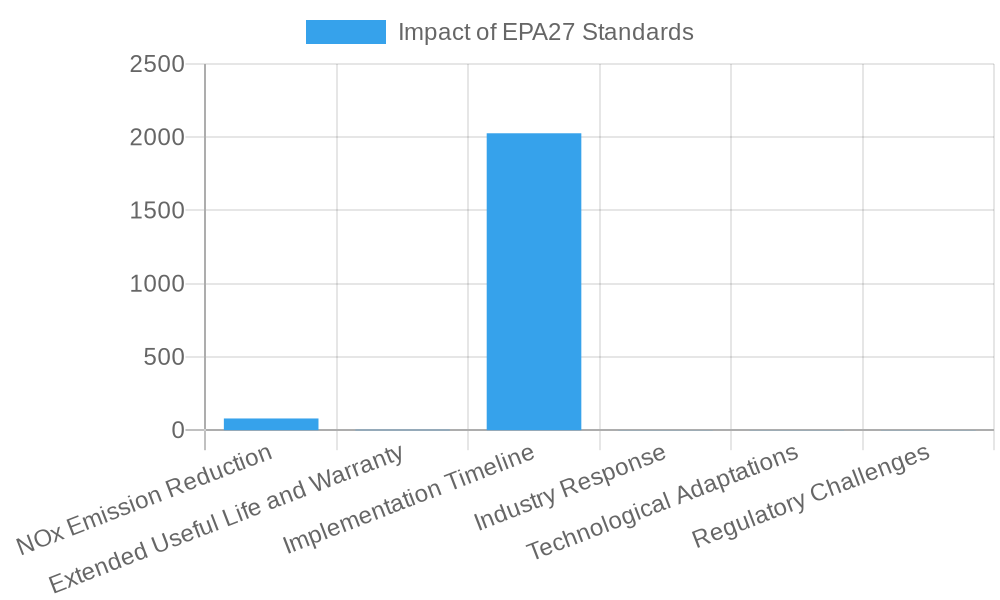
Graph illustrating the different aspects affected by the EPA27 emissions regulations including NOx emission reductions and industry response timings.
The integration of visuals like these can significantly enhance the understandability of regulatory impacts, making the information more skimmable and accessible to stakeholders in the trucking industry. The comparisons of OEM responses alongside these visuals provide a clearer perspective for industry operatives striving to navigate the changing landscape of emissions regulations.
Regulatory Landscape: Trucking Emissions
The EPA27 standards signify a transformative moment for the trucking industry, driven by urgent environmental health imperatives. Set to be fully implemented by 2027, these regulations focus on drastically reducing nitrogen oxide (NOₓ) emissions, a move that has generated significant urgency among manufacturers and fleet operators. The stipulated 82.5% reduction in NOₓ emissions means lowering emissions from 0.20 grams to just 0.035 grams per horsepower hour. This reduction requires substantial technological advancements, greatly impacting both costs and operational practices.
Leading companies like Cummins are already adapting to these changes by switching to dual-module aftertreatment systems, which demonstrate innovative approaches to meet the new standards. However, the entire sector must grapple with compliance timelines perceived as aggressive. Concerns from industry leaders suggest that these regulations could impose financial burdens, particularly in light of current economic uncertainties. For instance, the American Trucking Associations have called for the EPA to reconsider the 2027 timeline, citing potential operational strains.
Further complicating matters is the EPA’s ongoing reevaluation of the legislation, which injects uncertainty into fleet procurement strategies. Many operators are hesitant to commit to investments until clearer guidelines emerge. This highlights the importance of proactive measures for stakeholders within the industry, ensuring alignment with compliance while maintaining efficient operations. In the long run, this responsiveness not only benefits manufacturers and operators but also supports broader environmental goals aimed at improving air quality and public health.
“The most important thing the OEMs have been doing over the last five to seven years is getting ready for the 2027 NOx standards,” – Sean Waters.
OEM Concerns and Voices: Cross-Border Trucking
Original Equipment Manufacturers (OEMs) are voicing significant concerns regarding emissions regulations, especially as the January 2027 deadlines loom closer. Leading figures in the industry have articulated their need for clarity and consistent regulatory frameworks to adequately prepare for the transition to more stringent emissions standards.
Krista Toenjes, General Manager of North America On-Highway Business at Cummins, has succinctly captured the current sentiment within the industry, commenting, “Right now we’re in a waiting game when it comes to 2027. We have our strategy to hit the 2027 emissions standards… and right now it’s up in the air. I’m not really sure what is going to happen. We just want a decision one way or another. We need clarity on that.” This statement underscores the critical need for defined regulations that OEMs can rely on as they finalize their strategies and production plans.
Furthermore, she noted that no drastic changes to the base engine will be required under the new regulations, emphasizing the importance of understanding how OEMs can optimally prepare.
Paul Rosa, Senior Vice President of Procurement and Fleet Planning at Penske Truck Leasing, also emphasized the challenges that current uncertainties impose on fleet operations. In a recent industry discussion, he analogized the situation to navigating without a compass, stating, “The most important thing that we’re trying to do is to be as prepared as we can possibly be, because if you’re not prepared when a decision is finally made, boy, you could be in a tough spot.”
The Environmental Protection Agency’s proposed regulations, designed to significantly decrease nitrogen oxide (NOx) emissions, hinge on compliance timelines that OEMs must integrate into their manufacturing processes. However, the lack of definitive regulations is causing delays in procurement and planning, as fleets and manufacturers alike are caught in limbo awaiting decisions that could impact their operations and investment strategies. This creates a pressing need for regulatory bodies to issue clear, actionable guidelines that will allow OEMs to align their operations accordingly.
In conclusion, the automotive industry stands at a critical juncture where the clarity of emissions regulations is essential. As OEMs work to comply with the anticipated 2027 standards, industry leaders like Toenjes and Rosa emphasize that timely decisions from regulatory authorities are crucial to ensure readiness and the successful transition to a more sustainable future in trucking.
Cross-Border Implications
The discrepancies in emissions regulations between the United States and Canada pose significant implications for the trucking industry, impacting compliance, operational costs, and trade dynamics. With over 4 million vehicles crossing the border last year alone, the need for synchronized regulatory frameworks has become increasingly urgent.
Historically, Canada has aligned its heavy-duty vehicle emissions standards with those of the U.S. This coordination has served to maintain competitiveness in the industry and facilitate easier cross-border trade. For example, Canada issued greenhouse gas emissions regulations for heavy-duty trucks from 2014 to 2018 that mirrored standards from the U.S. (Truck News), aiming for significant reductions in emissions. However, recent enhancements to the U.S. Environmental Protection Agency (EPA) regulations, mandating stricter emissions standards that will be implemented from 2027 to 2032, have introduced potential divergences.
In March 2024, the EPA finalized regulations that aim to curb emissions of heavy-duty vehicles substantially, potentially affecting some manufacturers who may not yet be prepared to comply with these new standards (EPA). Conversely, Canada has yet to finalize equivalent regulations, creating uncertainty for companies that operate across the U.S.-Canada border. The ensuing discrepancies may lead to increased operational costs as manufacturers might need to create different models to meet each country’s standards, complicating their production processes and economic viability.
Furthermore, these inconsistencies could negatively affect trade dynamics. The considerable volume of truck traffic and the need for seamless logistics underscore the importance of harmonizing emissions standards. In particular, one challenge trucking companies face is differing vehicle configurations required to comply with the respective regulations, resulting in logistical hurdles and increased turnaround times. Ultimately, such discrepancies could jeopardize the competitiveness of trucking enterprises, as operators adhering to more stringent standards may experience higher compliance costs relative to their counterparts. Additionally, the lack of a unified approach to emissions regulations risks undermining ongoing environmental efforts in both countries, which are crucial in the face of rising air quality concerns and climate change initiatives. Harmonizing these standards would not only facilitate smoother trade operations but also support ambitious goals to reduce greenhouse gases across North America. (North American Council for Freight Efficiency)
In conclusion, while both the U.S. and Canada share a commitment to lowering greenhouse gas emissions, the existing regulatory discrepancies create challenges for the trucking industry and pose risks to public health by potentially hampering coordinated emissions reduction efforts. As the industry evolves, stakeholders on both sides of the border must advocate for harmonized regulations to ensure effective compliance and sustainable operations going forward.
As the urgency surrounding emissions regulations escalates, it is essential to consider the significant concerns expressed by OEMs. Their perspectives not only highlight the challenges in navigating evolving compliance requirements but also underscore the strategic approaches they are adopting to align with these new standards. Understanding these strategies is crucial for grasping how OEMs plan to solidify their positions in a competitive market driven by stringent emissions expectations. This sets the stage for analyzing the varied responses from different manufacturers, as outlined in the following comparison table.
| Manufacturer | Response Strategy | Notes |
|---|---|---|
| OEM A | Investment in EV technology | Focus on sustainable growth |
| OEM B | Partnerships with tech firms | Collaborative innovation |
| OEM C | Enhancing fuel efficiency | Gradual transition |

